

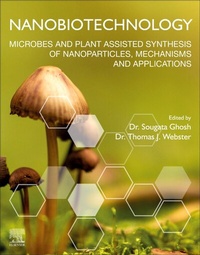
Nanobiotechnology
Microbes and Plant Assisted Synthesis of Nanoparticles, Mechanisms and Applications
Published on 25. May 2021
Book
Paperback/Softback
360 pages
978-0-12-822878-4 (ISBN)
Description
Nanobiotechnology: Microbes and Plant Assisted Synthesis of Nanoparticles, Mechanisms and Applications covers in detail the green synthesis of nanostructures of tailor-made size, shape and physico-chemical and opto-electronic properties. The rationale behind the selection of bacteria, cyanobacteria, algae, fungi, virus and medicinal plants for the synthesis of biologically active exotic nanoparticles for biomedical applications is also part of this book. It also explores metal recovery, bioconversion, detoxification and removal of heavy metals using nanobiotechnology and discusses the potential of nanobiotechnology to address environmental pollution and toxicity. The book further covers the economic and commercial aspects of such green nanobiotechnology initiatives, its current status in intellectual property rights like patents filed so far globally, technology transfers, and market potential. This information enables one to decipher the scope of biogenic nanoparticles and its prospects.
More details
Language
English
Place of publication
United States
Target group
Professional and scholarly
Dimensions
Height: 276 mm
Width: 216 mm
Weight
1000 gr
ISBN-13
978-0-12-822878-4 (9780128228784)
Copyright in bibliographic data and cover images is held by Nielsen Book Services Limited or by the publishers or by their respective licensors: all rights reserved.
Schweitzer Classification
Other editions
Additional editions
Sougata Ghosh | Thomas J Webster
Nanobiotechnology
Microbes and Plant Assisted Synthesis of Nanoparticles, Mechanisms and Applications
E-Book
05/2021
Elsevier
€200.00
Available for download
Persons
Dr. Sougata Ghosh is an Associate Professor in the Department of Microbiology at RK University, India, with a B.Sc., M.Sc., and Ph.D. in Microbiology from Savitribai Phule Pune University. He also serves as a Visiting Professor at Kasetsart University in Thailand and Northeastern University in the USA. Ghosh has led a DBT-funded Foldscope Research Project, filed seven patents, edited ten books, and authored 256 publications with 5,258 citations. He has spoken at numerous international conferences and reviews for 79 journals. A life member of the Association of Microbiologists of India, he has been recognized in Stanford's World Top 2% Scientists Ranking. His research focuses on nanobiotechnology, applied microbiology, and bioremediation. Dr. Thomas J. Webster is a pioneering professor in biomedical engineering, recognized for his leadership in academia and industry. His research focuses on applying nanotechnology to develop advanced materials for medical use, significantly improving healthcare outcomes. Dr. Webster has held prominent faculty positions in top U.S. and international universities, chaired departments, and directed international centers in biomaterials. He has also founded numerous companies translating his research into FDA-approved medical products. Widely published and a sought-after speaker, his work has been featured in major media outlets and science museums. Dr. Webster is renowned for organizing global conferences and symposia on nanomedicine and biomaterials, fostering interdisciplinary collaboration. He is the recipient of numerous prestigious awards and fellowships from leading scientific and medical organizations, demonstrating his impact and innovation in biomaterials, nanomedicine, and biomedical engineering.
Content
1. Nanobiotechnology: Methods, Applications and Future Prospects
2. Characterization techniques for nanoparticles
3. Nanotheranostics and biocompatibility
4. Bacteriogenic silver nanoparticles: Mechanisms and applications
5. Bacteriogenic gold nanoparticles: Mechanisms and applications
6. Mycosynthesis of silver nanoparticles: Mechanism and applications
7. Mycosynthesis of gold nanoparticles: Mechanism and applications
8. Genetically modified microbes for nanbiotechnology
9. Viruses and nanotechnology
10. Algae assisted synthesis of nanoparticles
11. Phytogenic synthesis of silver nanoparticles: Mechanisms and applications
12. Phytogenic synthesis of gold nanoparticles: Mechanisms and applications
13. Biological synthesis of platinum, palladium, copper and zinc nanostructures
14. Biological synthesis of magnetic nanoparticles
15. Heavy metal removal by nanobiotechnology
16. Detoxification and bioconversion of arsenic and chromium
17. Nanobiotechnology for e-waste management
18. Metal recovery using nanobiotechnology
19. Functionalized biogenic nanoparticles and their applications
20. Patents, technology transfer, commercialization aspects of biogenic nanoparticles
2. Characterization techniques for nanoparticles
3. Nanotheranostics and biocompatibility
4. Bacteriogenic silver nanoparticles: Mechanisms and applications
5. Bacteriogenic gold nanoparticles: Mechanisms and applications
6. Mycosynthesis of silver nanoparticles: Mechanism and applications
7. Mycosynthesis of gold nanoparticles: Mechanism and applications
8. Genetically modified microbes for nanbiotechnology
9. Viruses and nanotechnology
10. Algae assisted synthesis of nanoparticles
11. Phytogenic synthesis of silver nanoparticles: Mechanisms and applications
12. Phytogenic synthesis of gold nanoparticles: Mechanisms and applications
13. Biological synthesis of platinum, palladium, copper and zinc nanostructures
14. Biological synthesis of magnetic nanoparticles
15. Heavy metal removal by nanobiotechnology
16. Detoxification and bioconversion of arsenic and chromium
17. Nanobiotechnology for e-waste management
18. Metal recovery using nanobiotechnology
19. Functionalized biogenic nanoparticles and their applications
20. Patents, technology transfer, commercialization aspects of biogenic nanoparticles