

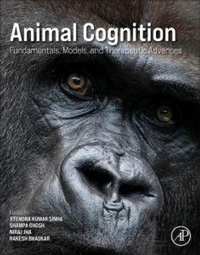
Animal Cognition
Fundamentals, Models, and Therapeutic Advances
Will be published approx. on 1. January 2027
Book
Paperback/Softback
400 pages
978-0-443-45124-9 (ISBN)
Description
Animal Cognition: Fundamentals, Models, and Therapeutic Advances provides a comprehensive overview of cognitive processes in various animal species, spanning fundamental concepts, species-specific studies, and therapeutic applications. Sections cover the foundation of animal cognition, including definitions, key concepts, and an overview of cognitive abilities, such as memory, problem-solving, and learning, delve deeper into the cognitive processes in mammals, birds, and marine animals, and more, and review the latest technological advancements in studying cognition, such as neuroimaging, machine learning, and virtual reality. With a multidisciplinary approach, this volume highlights current research while identifying gaps for future exploration, and will be of interest to researchers involved in animal cognition and behavioral neuroscience.
More details
Language
English
Place of publication
San Diego
United States
Publishing group
Elsevier Science Publishing Co Inc
Target group
Professional and scholarly
Product notice
Paperback (trade)
Unsewn / adhesive bound
Dimensions
Height: 276 mm
Width: 216 mm
Weight
449 gr
ISBN-13
978-0-443-45124-9 (9780443451249)
Copyright in bibliographic data and cover images is held by Nielsen Book Services Limited or by the publishers or by their respective licensors: all rights reserved.
Schweitzer Classification
Persons
Dr. Shampa Ghosh is a neuroscientist and biochemist, currently serving as Director and Senior Scientist at GloNeuro, Noida, India. She holds a PhD in Biochemistry from the ICMR-National Institute of Nutrition and an M.Phil. in Neurophysiology from NIMHANS. Her research integrates neurodegeneration, neurodevelopment, and metabolic influences on brain function, with a strong emphasis on translational neuroscience. Dr. Ghosh has contributed extensively to understanding molecular mechanisms linking metabolic dysfunction, oxidative stress, and brain ageing. She has published widely in high-impact journals and serves in editorial roles for leading neuroscience journals. Her work spans Alzheimer's disease, neuroinflammation, and advanced CNS drug delivery strategies, contributing to the development of innovative therapeutic approaches.
Affiliations and expertise
GloNeuro, India
Dr. Jitendra Kumar Sinha is a neuroscientist and Associate Professor at the Symbiosis Institute of Health Sciences (SIHS), Symbiosis International (Deemed University), Pune, India. He received his PhD from the ICMR-National Institute of Nutrition and has undertaken internationally collaborative research at institutions in Italy, Australia, and India. With over two decades of experience in research and teaching, his work focuses on the neurobiology of ageing and obesity, nutritional neuroscience, neuropsychiatric disorders, and neuropharmacology. He has made notable contributions to animal models of ageing and epilepsy, particularly in understanding oxidative stress, DNA damage, and biomarkers of accelerated ageing. Dr. Sinha has authored more than 150 research articles and book chapters and actively contributes to the scientific community as an editor and reviewer. He is also deeply engaged in mentoring and academic capacity building.
Affiliations and expertise
Symbiosis Institute of Health Sciences (SIHS), Symbiosis International (Deemed University), India
Dr. Niraj Kumar Jha is an Assistant Professor of Biotechnology at Galgotias University, India, with prior research affiliations at the Centre for Research Impact & Outcome (CRIO), Chitkara University, and Sharda University. His research portfolio encompasses over 200 peer-reviewed articles and scholarly reviews, along with an edited volume published by Springer, reflecting sustained contributions to biomedical research and translational science. According to Scopus metrics, Dr. Jha's publications have garnered more than 10,000 citations, with an H-index exceeding 50, underscoring the broad impact and visibility of his work within the global scientific community. He is an elected Member of the Royal Society of Biology (MRSB), London, and has been recognized among the World's Top 2% Scientists in rankings compiled by Elsevier in collaboration with Stanford University. Dr. Jha actively contributes to scientific publishing and peer review as an associate editor for the Journal of Alzheimer's Disease (IOS Press) and IET Nanobiotechnology (Wiley) and serves on the editorial boards of several international journals, including Scientific Reports. His research is centered on elucidating the molecular and cellular mechanisms underlying complex diseases such as neurodegenerative disorders, cancer, and cardiovascular pathologies. His work particularly emphasizes the modulation of key signaling pathways and explores the therapeutic potential of natural products, phytochemicals, and synthetic small molecules in disease intervention.
Dr. Rakesh Bhaskar is an Assistant Professor at Yeungnam University, South Korea. He holds a Ph.D. in Neuroendocrinology from Allahabad University, India, and has extensive research experience in aging biology, regenerative medicine, and cognitive neurosciences. His work explores molecular mechanisms underlying cellular senescence, stem cell-based therapies, and tissue engineering approaches for age-associated conditions. Dr. Bhaskar has published over 80 scientific articles in high-impact journals, holds two patents, and has contributed to multiple book chapters. He also serves as a reviewer for leading international journals. His research focuses on developing innovative biomaterials and therapeutic interventions to enhance healthspan and combat age-related degenerative diseases.
Affiliations and expertise
Yeungnam University, Republic of Korea
Affiliations and expertise
GloNeuro, India
Dr. Jitendra Kumar Sinha is a neuroscientist and Associate Professor at the Symbiosis Institute of Health Sciences (SIHS), Symbiosis International (Deemed University), Pune, India. He received his PhD from the ICMR-National Institute of Nutrition and has undertaken internationally collaborative research at institutions in Italy, Australia, and India. With over two decades of experience in research and teaching, his work focuses on the neurobiology of ageing and obesity, nutritional neuroscience, neuropsychiatric disorders, and neuropharmacology. He has made notable contributions to animal models of ageing and epilepsy, particularly in understanding oxidative stress, DNA damage, and biomarkers of accelerated ageing. Dr. Sinha has authored more than 150 research articles and book chapters and actively contributes to the scientific community as an editor and reviewer. He is also deeply engaged in mentoring and academic capacity building.
Affiliations and expertise
Symbiosis Institute of Health Sciences (SIHS), Symbiosis International (Deemed University), India
Dr. Niraj Kumar Jha is an Assistant Professor of Biotechnology at Galgotias University, India, with prior research affiliations at the Centre for Research Impact & Outcome (CRIO), Chitkara University, and Sharda University. His research portfolio encompasses over 200 peer-reviewed articles and scholarly reviews, along with an edited volume published by Springer, reflecting sustained contributions to biomedical research and translational science. According to Scopus metrics, Dr. Jha's publications have garnered more than 10,000 citations, with an H-index exceeding 50, underscoring the broad impact and visibility of his work within the global scientific community. He is an elected Member of the Royal Society of Biology (MRSB), London, and has been recognized among the World's Top 2% Scientists in rankings compiled by Elsevier in collaboration with Stanford University. Dr. Jha actively contributes to scientific publishing and peer review as an associate editor for the Journal of Alzheimer's Disease (IOS Press) and IET Nanobiotechnology (Wiley) and serves on the editorial boards of several international journals, including Scientific Reports. His research is centered on elucidating the molecular and cellular mechanisms underlying complex diseases such as neurodegenerative disorders, cancer, and cardiovascular pathologies. His work particularly emphasizes the modulation of key signaling pathways and explores the therapeutic potential of natural products, phytochemicals, and synthetic small molecules in disease intervention.
Dr. Rakesh Bhaskar is an Assistant Professor at Yeungnam University, South Korea. He holds a Ph.D. in Neuroendocrinology from Allahabad University, India, and has extensive research experience in aging biology, regenerative medicine, and cognitive neurosciences. His work explores molecular mechanisms underlying cellular senescence, stem cell-based therapies, and tissue engineering approaches for age-associated conditions. Dr. Bhaskar has published over 80 scientific articles in high-impact journals, holds two patents, and has contributed to multiple book chapters. He also serves as a reviewer for leading international journals. His research focuses on developing innovative biomaterials and therapeutic interventions to enhance healthspan and combat age-related degenerative diseases.
Affiliations and expertise
Yeungnam University, Republic of Korea
Editor
GloNeuro, India
Chief Scientific Officer at GloNeuro Academy, Noida and Neuroscience; Visiting Faculty at Jiwaji University, Gwalior, India
Department of Biotechnology and Bioengineering, School of Biosciences and Technology, Galgotias University, Greater Noida, Uttar Pradesh, India
Yeungnam University, Republic of Korea
Content
Section 1: Foundations of Animal Cognition
1. Introduction to Cognitive Processes in Animals
2. Evolution of Cognition
Section 2: Cognitive Mechanisms in Animal Models
3. Mammalian Cognition
4. Avian Intelligence: From Problem-Solving to Social Dynamics
5. Cognitive Studies in Marine Animals
6. Cognition in Reptiles and Amphibians
7. Cognitive Insights from Insects
Section 3: Advanced Topics and Therapeutics
8. Therapeutic Applications of Cognitive Research in Animals
9. Emerging Technologies in Cognitive Studies
10. Research Gaps and Future Perspectives
1. Introduction to Cognitive Processes in Animals
2. Evolution of Cognition
Section 2: Cognitive Mechanisms in Animal Models
3. Mammalian Cognition
4. Avian Intelligence: From Problem-Solving to Social Dynamics
5. Cognitive Studies in Marine Animals
6. Cognition in Reptiles and Amphibians
7. Cognitive Insights from Insects
Section 3: Advanced Topics and Therapeutics
8. Therapeutic Applications of Cognitive Research in Animals
9. Emerging Technologies in Cognitive Studies
10. Research Gaps and Future Perspectives