


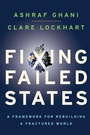
Fixing Failed States
A Framework for Rebuilding A Fractured World
Published on 22. May 2008
Book
Hardback
272 pages
978-0-19-534269-7 (ISBN)
Description
Fixing Failed States addresses one of the central issues of our times: the proliferation of failed states across the world and our inability to stabilize them. There are between forty and sixty failed states, and they house one billion people. The world's worst problems - terrorism, drug and human trafficking, absolute poverty, ethnic conflict, disease, genocide - originate in such states, and the international community has devoted billions upon billions of dollars to solving the problem. Yet by and large, the effort has failed. The authors explain the failure stems in part from an outmoded vision of the state system based on the framers of the post-World War II order's vision: relatively independent, unified states that control markets and rely on authoritarianism when necessary. The world we actually live in is far different. Identities and loyalties don't necessarily correspond to traditional nation-states, and nations are far less autonomous than in the past. The task at hand, they argue, is to develop novel strategies informed by the realities of our fully globalized world.
International institutions, therefore, should prioritize fostering mutually reinforcing bonds between states, civil societies, and markets. The book is divided into three parts - a diagnosis of the problem, a structure for dealing with it, and a discussion of examples of the new processes at work. Throughout, their own experiences in failed states ranging from Afghanistan to Nepal vividly illustrate the nature of the crisis and what we can do to to effectively improve matters. The book's uniqueness lies in its essential optimism - an optimism that the authors have earned through their own substantial real-world efforts and their acknowledged expertise on the subject. With Fixing Failed States, Ashraf Ghani and Clare Lockhart provide a framework for facing one of the most troublesome issues facing the international community.
International institutions, therefore, should prioritize fostering mutually reinforcing bonds between states, civil societies, and markets. The book is divided into three parts - a diagnosis of the problem, a structure for dealing with it, and a discussion of examples of the new processes at work. Throughout, their own experiences in failed states ranging from Afghanistan to Nepal vividly illustrate the nature of the crisis and what we can do to to effectively improve matters. The book's uniqueness lies in its essential optimism - an optimism that the authors have earned through their own substantial real-world efforts and their acknowledged expertise on the subject. With Fixing Failed States, Ashraf Ghani and Clare Lockhart provide a framework for facing one of the most troublesome issues facing the international community.
Reviews / Votes
Original and thoughtful book. Financial Times. Everything that this book advocates makes sense. Max Hastings, Sunday Times.More details
Language
English
Place of publication
New York
United States
Target group
College/higher education
Professional and scholarly
Dimensions
Height: 234 mm
Width: 156 mm
Thickness: 24 mm
Weight
524 gr
ISBN-13
978-0-19-534269-7 (9780195342697)
Copyright in bibliographic data and cover images is held by Nielsen Book Services Limited or by the publishers or by their respective licensors: all rights reserved.
Schweitzer Classification
Other editions
New editions
Book
11/2009
Oxford University Press Inc
€19.40
Shipment within 15-20 days
Additional editions
E-Book
10/2009
1st Edition
OUP eBook
€9.99
Available for download

E-Book
05/2008
1st Edition
OUP eBook
€9.99
Available for download
Persons
Ashraf Ghani played a central role in the design and implementation of the post-Taliban settlement in Afghanistan, serving as UN adviser to the Bonn process and as Finance Minister during Afghanistan's Transitional Administration. He has worked at the World Bank and taught at Johns Hopkins and Berkeley universities. He has been nominated for the job of Secretary General of the United Nations and considered for the job of President of the World
Bank. He chairs the Institute for State Effectiveness.
Clare Lockhart is co-founder and director of the Institute for State Effectiveness, established in 2007 to advise leaders on transformation of countries from instability to stability. From 2001 to 2005, she lived and worked in Afghanistan, first as a member of the UN negotiation team and then advising the Afghan Government, leading design of several national initiatives. She now advises leaders on a range of countries across Asia, Africa and the Americas. She was educated at
Oxford, Harvard and is a member of the Bar of England and Wales.
Bank. He chairs the Institute for State Effectiveness.
Clare Lockhart is co-founder and director of the Institute for State Effectiveness, established in 2007 to advise leaders on transformation of countries from instability to stability. From 2001 to 2005, she lived and worked in Afghanistan, first as a member of the UN negotiation team and then advising the Afghan Government, leading design of several national initiatives. She now advises leaders on a range of countries across Asia, Africa and the Americas. She was educated at
Oxford, Harvard and is a member of the Bar of England and Wales.
Content
Acknowledgments
Introduction
Part One: Defining the Context
1. The Creeping "Sovereignty Gap"
2. Reversing History
3. Webs and Flows of Cooperation
4. Failed Politics
5. The Promises and Perils of Aid
Part Two: Defining the State For the Twenty-First Century
6. Toward a Multifunctional View of the State
7. The Framework: The Ten Functions of the State
Part Three: A New Agenda For State Building
8. International Compacts: Sovereignty Strategies
9. National Programs: The Challenge of Implementation
Conclusion: Collective Power
Afterward
Notes
Index
Introduction
Part One: Defining the Context
1. The Creeping "Sovereignty Gap"
2. Reversing History
3. Webs and Flows of Cooperation
4. Failed Politics
5. The Promises and Perils of Aid
Part Two: Defining the State For the Twenty-First Century
6. Toward a Multifunctional View of the State
7. The Framework: The Ten Functions of the State
Part Three: A New Agenda For State Building
8. International Compacts: Sovereignty Strategies
9. National Programs: The Challenge of Implementation
Conclusion: Collective Power
Afterward
Notes
Index