


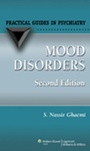
Mood Disorders
A Practical Guide
Published on 2. September 2003
Book
Paperback/Softback
270 pages
978-0-7817-2783-9 (ISBN)
Description
This practical guide will aid residents and clinicians in diagnosing and treating the full spectrum of mood disorders. Dr. Ghaemi explains how to accurately diagnose depressive and manic symptoms and bipolar disorder and offers specific, detailed, evidence-based recommendations on pharmacotherapy and psychotherapy of acute and refractory unipolar depression, bipolar depression, and mania. Chapters review the pharmacology of antidepressants, mood stabilizers, and antipsychotic agents and point out these drugs' advantages and drawbacks in specific clinical situations. Other chapters address clinical dilemmas such as treating rapid-cycling bipolar disorder, distinguishing unipolar from bipolar depression, and tapering bipolar depressed patients off antidepressants.
This practical guide will aid residents and clinicians in diagnosing and treating the full spectrum of mood disorders. Dr. Ghaemi explains how to accurately diagnose depressive and manic symptoms and bipolar disorder and offers specific, detailed, evidence-based recommendations on pharmacotherapy and psychotherapy of acute and refractory unipolar depression, bipolar depression, and mania. Chapters review the pharmacology of antidepressants, mood stabilizers, and antipsychotic agents and point out these drugs' advantages and drawbacks in specific clinical situations. Other chapters address clinical dilemmas such as treating rapid-cycling bipolar disorder, distinguishing unipolar from bipolar depression, and tapering bipolar depressed patients off antidepressants.
This practical guide will aid residents and clinicians in diagnosing and treating the full spectrum of mood disorders. Dr. Ghaemi explains how to accurately diagnose depressive and manic symptoms and bipolar disorder and offers specific, detailed, evidence-based recommendations on pharmacotherapy and psychotherapy of acute and refractory unipolar depression, bipolar depression, and mania. Chapters review the pharmacology of antidepressants, mood stabilizers, and antipsychotic agents and point out these drugs' advantages and drawbacks in specific clinical situations. Other chapters address clinical dilemmas such as treating rapid-cycling bipolar disorder, distinguishing unipolar from bipolar depression, and tapering bipolar depressed patients off antidepressants.
More details
Series
Language
English
Place of publication
Philadelphia
United States
Target group
Professional and scholarly
Product notice
Paperback (trade)
Illustrations
13
Dimensions
Height: 178 mm
Width: 102 mm
Thickness: 19 mm
Weight
240 gr
ISBN-13
978-0-7817-2783-9 (9780781727839)
Copyright in bibliographic data is held by Nielsen Book Services Limited or its licensors: all rights reserved.
Schweitzer Classification
Other editions
New editions
Book
11/2007
2nd Edition
Lippincott Williams and Wilkins
€84.50
No shipping information available
Content
SECTION I: DIAGNOSIS OF MOOD DISORDERS; Chapter 1: How are mood disorders described and diagnosed?; Chapter 2: The unipolar depressive spectrum; Chapter 3: The bipolar spectrum; SECTION II: ETIOLOGY OF MOOD DISORDERS; Chapter 4: Genes and environment; Chapter 5: The Kindling Hypothesis; SECTION III: TREATMENT OF UNIPOLAR DEPRESSION; Chapter 6: General Principles; Chapter 7: Monoamine oxidase inhibitors and tricyclic antidepressants; Chapter 8: Atypical Antidepressants; Chapter 9: Serotonin reuptake inhibitors; Chapter 10: Treatment strategies for refractory unipolar depression; SECTION IV: TREATMENT OF BIPOLAR DISORDER; Chapter 11: General principles; Chapter 12: Lithium; Chapter 13: Standard anticonvulsants; Chapter 14: Novel anticonvulsants; Chapter 15: Atypical neuroleptic agents; Chapter 16: Standard antidepressants; Chapter 17: Treatment strategies for refractory bipolar disorder; SECTION V: GENERAL PSYCHOPHARMACOLOGY ISSUES; Chapter 18: Levels of Evidence & Definitions of Drug Classes; Chapter 19: Drug Interactions with antidepressants and mood stabilizers; Chapter 20: Use of polypharmacy in mood disorders; SECTION VI: SPECIAL TOPICS; Chapter 21: The Conundrum of Schizoaffective Disorder; Chapter 22: Rapid-cycling bipolar disorder; Chapter 23: Mild varieties of the bipolar spectrum; Chapter 24: Special populations: Children, the elderly, gender, and race; Chapter 25: The use of psychotherapies for mood disorders; Chapter 26: Summary;