

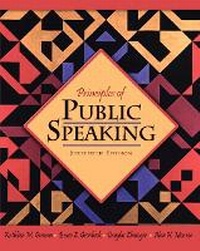
Principles of Public Speaking
16th Edition
Published on 6. July 2006
Book
Paperback/Softback
352 pages
978-0-205-49442-2 (ISBN)
Description
Balancing skills and theory, Principles of Public Speaking emphasizes orality, Internet technology, and critical thinking as it encourages the reader to see public speaking as a way to build community in today's diverse world. Within a framework that emphasizes speaker responsibility, critical thinking and listening, and cultural awareness, this classic book uses examples from college, workplace, political, and social communication to make the study of public speaking relevant, contemporary, and exciting. This brief but comprehensive book also offers the reader the latest in using technology in speechmaking, featuring a unique and exciting integrated text and technology learning system.
More details
Edition
16th edition
Language
English
Place of publication
New York
United States
Publishing group
Taylor & Francis Inc
Target group
Professional and scholarly
Dimensions
Height: 202 mm
Width: 254 mm
Thickness: 13 mm
Weight
567 gr
ISBN-13
978-0-205-49442-2 (9780205494422)
Copyright in bibliographic data and cover images is held by Nielsen Book Services Limited or by the publishers or by their respective licensors: all rights reserved.
Schweitzer Classification
Other editions
New editions
Kathleen M. German | Bruce E. Gronbeck | Douglas Ehninger
Principles of Public Speaking
Book
03/2009
17th Edition
Routledge
Unfortunately, price unknown
No shipping information available
Previous edition
Kathleen M. German | Bruce E. Gronbeck | Douglas Ehninger
Principles of Public Speaking
Book
07/2003
15th Edition
Routledge
Unfortunately, price unknown
No shipping information available
Content
I. PUBLIC SPEAKING AND CRITICAL LISTENING.
1. Study Public Speaking in Higher Education.
Studying Public Speaking.
Basic Elements in the Speechmaking Process.
Ethical Responsibilities for Speakers.
Your First Speech.
2. Getting Started.
Selecting and Narrowing Your Subject.
Determining Your Purposes and Central Idea.
Analyzing the Audience and Occasion.
Gathering Your Speech Material.
Making an Outline.
Practicing Aloud.
Developing Confident Delivery.
3. Critical Listening.
Hearing and Listening.
Barriers to Good Listening.
Practical Listening Techniques.
Developing Skills for Critical Listening.
4. Public Speaking and Cultural Life.
The Nature of Cultural Processes.
Understanding Our Multicultural Society.
Strategies for Negotiating Cultural Differences.
II. PLANNING AND PREPARING YOUR SPEECH.
5. Understanding Your Audience.
Analyzing Your Audience Demographically.
Analyzing Your Audience Psychologically.
Discovering Demographic and Psychological Factors.
Using Audience Analysis in Speech Preparation.
6. Finding and Using Supporting Materials.
Determining the Kinds of Supporting Materials You'll Need.
Finding Supporting Materials.
Deciding Where to Search for Supporting Materials.
Sources of Supporting Materials.
Forms of Supporting Materials.
Functions of Supporting Materials.
A Word about Plagiarism.
7. Organizing and Outlining Your Speech.
Developing Your Speech Plan.
Speech-Centered Patterns of Organization.
Audience-Centered Patterns of Organization.
Techniques for Creating Associative Coherence in Your Speech.
Outlining Your Speech.
8. Beginning and Ending Your Speech.
Capturing and Holding Attention.
Beginning Your Speech.
Ending Your Speech.
III. PRESENTING YOUR SPEECH.
9. Wording Your Speech.
Using Oral Style.
Using Language Strategically.
Creating an Atmosphere.
10. Delivering Your Speech.
Working Within Oral Relationships.
Selecting the Method of Presentation.
Using Your Voice to Communicate.
Using Your Body to Communicate.
11. Using Visual Aids.
The Functions of Visual Aids.
Types of Visual Support.
Strategies for Selecting and Using Visual Aids.
IV. TYPES OF PUBLIC SPEAKING.
12. Speeches to Inform.
Facts, Knowledge, and the Information Age.
Essential Qualities of Informative Speeches.
Sample Outline: Servicing Your Personal Computer.
Tips for Developing Informative Speeches.
Sample Outline: What Is Diabetes?
Sample Speech: "The Geisha" by Joyce Chapman.
13. Speeches to Persuade.
Selecting Motivational Appeals.
Organizing Persuasive Speeches: The Motivated Sequence.
Sample Outline: You're Never Too Old to Learn - Virtually!
Sample Outline: The Chain Never Stops.
14. Argumentation and Critical Thinking.
Rational Thinking and Talking: Argumentation.
Argumentation.
Evaluating Arguments.
Sample Outline: The Danger of Chewing Tobacco.
Detecting Fallacies in Reasoning.
Tips for Developing Argumentative Speeches.
15. Speaking in Community Settings.
Community-Based Special Occasion Speeches.
Sample Introduction: "Introducing a Classmate".
Sample Speech: "A Toast to Leo Brecker".
Sample Speech to Entertain: "A Case for Optimism".
Credits.
Index.
1. Study Public Speaking in Higher Education.
Studying Public Speaking.
Basic Elements in the Speechmaking Process.
Ethical Responsibilities for Speakers.
Your First Speech.
2. Getting Started.
Selecting and Narrowing Your Subject.
Determining Your Purposes and Central Idea.
Analyzing the Audience and Occasion.
Gathering Your Speech Material.
Making an Outline.
Practicing Aloud.
Developing Confident Delivery.
3. Critical Listening.
Hearing and Listening.
Barriers to Good Listening.
Practical Listening Techniques.
Developing Skills for Critical Listening.
4. Public Speaking and Cultural Life.
The Nature of Cultural Processes.
Understanding Our Multicultural Society.
Strategies for Negotiating Cultural Differences.
II. PLANNING AND PREPARING YOUR SPEECH.
5. Understanding Your Audience.
Analyzing Your Audience Demographically.
Analyzing Your Audience Psychologically.
Discovering Demographic and Psychological Factors.
Using Audience Analysis in Speech Preparation.
6. Finding and Using Supporting Materials.
Determining the Kinds of Supporting Materials You'll Need.
Finding Supporting Materials.
Deciding Where to Search for Supporting Materials.
Sources of Supporting Materials.
Forms of Supporting Materials.
Functions of Supporting Materials.
A Word about Plagiarism.
7. Organizing and Outlining Your Speech.
Developing Your Speech Plan.
Speech-Centered Patterns of Organization.
Audience-Centered Patterns of Organization.
Techniques for Creating Associative Coherence in Your Speech.
Outlining Your Speech.
8. Beginning and Ending Your Speech.
Capturing and Holding Attention.
Beginning Your Speech.
Ending Your Speech.
III. PRESENTING YOUR SPEECH.
9. Wording Your Speech.
Using Oral Style.
Using Language Strategically.
Creating an Atmosphere.
10. Delivering Your Speech.
Working Within Oral Relationships.
Selecting the Method of Presentation.
Using Your Voice to Communicate.
Using Your Body to Communicate.
11. Using Visual Aids.
The Functions of Visual Aids.
Types of Visual Support.
Strategies for Selecting and Using Visual Aids.
IV. TYPES OF PUBLIC SPEAKING.
12. Speeches to Inform.
Facts, Knowledge, and the Information Age.
Essential Qualities of Informative Speeches.
Sample Outline: Servicing Your Personal Computer.
Tips for Developing Informative Speeches.
Sample Outline: What Is Diabetes?
Sample Speech: "The Geisha" by Joyce Chapman.
13. Speeches to Persuade.
Selecting Motivational Appeals.
Organizing Persuasive Speeches: The Motivated Sequence.
Sample Outline: You're Never Too Old to Learn - Virtually!
Sample Outline: The Chain Never Stops.
14. Argumentation and Critical Thinking.
Rational Thinking and Talking: Argumentation.
Argumentation.
Evaluating Arguments.
Sample Outline: The Danger of Chewing Tobacco.
Detecting Fallacies in Reasoning.
Tips for Developing Argumentative Speeches.
15. Speaking in Community Settings.
Community-Based Special Occasion Speeches.
Sample Introduction: "Introducing a Classmate".
Sample Speech: "A Toast to Leo Brecker".
Sample Speech to Entertain: "A Case for Optimism".
Credits.
Index.