


The Rise and Fall of Al-Qaeda
Published on 22. September 2011
Book
Hardback
272 pages
978-0-19-979065-4 (ISBN)
Description
In this concise and fascinating book, Fawaz A. Gerges argues that Al-Qaeda has degenerated into a fractured, marginal body kept alive largely by the self-serving anti-terrorist bureaucracy it helped to spawn.
In The Rise and Fall of Al-Qaeda, Gerges, a leading authority on Islamic extremism, argues that the West has become mired in a "terrorism narrative," stemming from the mistaken belief that it is in danger of a devastating attack by a crippled Al-Qaeda. To explain why Al-Qaeda is no longer a threat, he provides a briskly written history of the organization, showing its emergence from the disintegrating local jihadist movements of the mid-1990s-not the Afghan resistance of the 1980s, as
many believe-in "a desperate effort to rescue a sinking ship by altering its course". During this period, Gerges interviewed many jihadis, gaining a first-hand view of the movement that Bin Laden tried to reshape by internationalizing it. He reveals that global jihad has attracted but a small minority
within the Arab world and possesses no viable social and popular base. Furthermore, he shows that the attacks of September 11, 2001, were a major miscalculation-no "river" of fighters flooded from Arab countries to defend Al-Qaeda in Afghanistan, as Bin Laden expected. Gerges concludes that the movement has splintered into feuding factions, neutralizing itself more effectively than a Predator drone.
Forceful, incisive, and written with extensive inside knowledge, this book will alter the debate on global terrorism.
In The Rise and Fall of Al-Qaeda, Gerges, a leading authority on Islamic extremism, argues that the West has become mired in a "terrorism narrative," stemming from the mistaken belief that it is in danger of a devastating attack by a crippled Al-Qaeda. To explain why Al-Qaeda is no longer a threat, he provides a briskly written history of the organization, showing its emergence from the disintegrating local jihadist movements of the mid-1990s-not the Afghan resistance of the 1980s, as
many believe-in "a desperate effort to rescue a sinking ship by altering its course". During this period, Gerges interviewed many jihadis, gaining a first-hand view of the movement that Bin Laden tried to reshape by internationalizing it. He reveals that global jihad has attracted but a small minority
within the Arab world and possesses no viable social and popular base. Furthermore, he shows that the attacks of September 11, 2001, were a major miscalculation-no "river" of fighters flooded from Arab countries to defend Al-Qaeda in Afghanistan, as Bin Laden expected. Gerges concludes that the movement has splintered into feuding factions, neutralizing itself more effectively than a Predator drone.
Forceful, incisive, and written with extensive inside knowledge, this book will alter the debate on global terrorism.
Reviews / Votes
... a masterly and trenchant account of the origins of al Qaeda and its decline after 9/11. * Foreign Affairs * Worth reading * The Economist *More details
Language
English
Place of publication
New York
United States
Dimensions
Height: 211 mm
Width: 146 mm
Thickness: 23 mm
Weight
390 gr
ISBN-13
978-0-19-979065-4 (9780199790654)
Copyright in bibliographic data and cover images is held by Nielsen Book Services Limited or by the publishers or by their respective licensors: all rights reserved.
Schweitzer Classification
Other editions
Additional editions
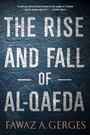
Fawaz A. Gerges
The Rise and Fall of Al-Qaeda
Book
03/2014
Oxford University Press Inc
€34.50
Shipment within 15-20 days
Fawaz A. Gerges
The Rise and Fall of Al-Qaeda
E-Book
09/2011
1st Edition
OUP eBook
€16.49
Available for download
Fawaz A. Gerges
The Rise and Fall of Al-Qaeda
E-Book
05/2011
1st Edition
OUP USA
€16.49
Available for download
Person
Fawaz A. Gerges is Professor of Middle Eastern Politics and International Relations at the London School of Economics. His books include Journey of the Jihadist and The Far Enemy: Why Jihad Went Global.
Content
Prologue The Politics of Terrorism ; Chapter 1: The Rise of al-Qa'ida ; Chapter 2: The Growing Rift: Near versus Far Enemy ; Chapter 3: A Great Success and a Monstrous Miscalculation (September 11) ; Chapter 4: Decline and Fall ; Chapter 5: Shadows and Legacies