

Seminole
Published on 27. February 2012
Book
Hardback
130 pages
978-1-5316-5707-9 (ISBN)
Description
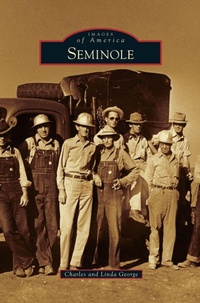
Seminole got its name from former slaves who escaped Southern
plantations in the early 1800s and fled to the swamps of Florida.
They lived alongside Seminole Indians and later came to be known
as Black Seminoles. Renowned for excellent tracking abilities, they
eventually served as guides for the Shafter expedition to West Texas
in the mid-1870s, which opened the region. In a shallow draw on
the prairie, the Black Seminoles discovered water wells dug by the
Comanche. The "Seminole Wells" demonstrated the area's livability.
Settlers arrived a few decades later, and by 1905, Gaines County and
its county seat were established. This small town became Seminole.
Ranching was the area's first industry, but it was eclipsed in the 1920s
with the discovery of oil. Today, Seminole is a thriving multicultural
farming and oil-producing center with excellent schools, a booming
economy, and the friendliest people around.
More details
Language
English
Product notice
sewn/stitched
Cloth over boards
Dimensions
Height: 250 mm
Width: 175 mm
Thickness: 12 mm
Weight
417 gr
ISBN-13
978-1-5316-5707-9 (9781531657079)
Copyright in bibliographic data and cover images is held by Nielsen Book Services Limited or by the publishers or by their respective licensors: all rights reserved.
Schweitzer Classification
Persons
James A. Davis is a professor of musicology and chair of the Music History Area at the State University of New York, Fredonia. His articles have appeared in American Music, The Journal of Military History, North & South, and the Journal of Band Research.