

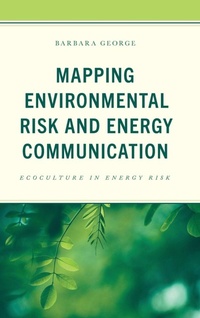
Mapping Environmental Risk and Energy Communication
Ecoculture in Energy Risk
Published on 5. February 2025
Book
Hardback
166 pages
978-1-6669-2648-4 (ISBN)
Description
As the rise of the Anthropocene has led to serious deliberation about how energy is best produced and distributed in a world pressured by both the depletion of natural resources and global climate change, advances in technology have enabled new systems of extracting energy like High Volume Hydraulic Fracturing (HVHF), commonly known as fracking, that complicate these discussions. In this book, Barbara George explores how citizens impacted by HVHF tell stories about environmental risks, the conflict they experience in attempting to articulate these risks, and the hope for a post-carbon future in which HVHF is banned. Deep ideologies linked to history, coal, and industry permeate areas like the Rust Belt and Appalachia and, George argues, create "frames" that encourage and advocate for HVHF and make it difficult for publics in these locales to find a platform to tell their stories in a meaningful way. This book offers a case study of three communities in the United States - New York, Pennsylvania, and Ohio - and how each community frames HVHF environmental and health risks differently based on their differing sociocultural histories. Scholars of communication, environmental studies, history, and sociology may find this book of particular interest.
Reviews / Votes
For those interested in literacy studies at intersection with environmental risk communication, George's book offers critical insights into how place-based responses to environmental risks posed by the fracking industry work in tandem with ideological frameworks circulating in a given region. Using intersectional feminist principles, George adds to our understanding of how procedural justice and community-based literacies can aid public deliberation and representation of environmental risk that activists and policymakers can use to better evaluate and mitigate environmental risk. * Lisa L. Phillips, Professor of Technical Communication and Rhetoric, Texas Tech University, USA *More details
Series
Language
English
Place of publication
United States
Publishing group
Bloomsbury Publishing Plc
Target group
Professional and scholarly
Illustrations
3 BW Illustrations, 8 Tables
Dimensions
Height: 235 mm
Width: 157 mm
Thickness: 14 mm
Weight
409 gr
ISBN-13
978-1-6669-2648-4 (9781666926484)
Copyright in bibliographic data and cover images is held by Nielsen Book Services Limited or by the publishers or by their respective licensors: all rights reserved.
Schweitzer Classification
Other editions
Additional editions
E-Book
10/2024
1st Edition
Lexington Books
€86.49
Available for download
E-Book
10/2024
Lexington Books
€86.49
Available for download
Person
Barbara George is lecturer of writing and communication at Carnegie Mellon University.
Content
Chapter 1 Conflict: Stories of Language, Identity, Place, and Environmental Risk Practice
Chapter 2 Frames: Stories of Environmental Regulatory Bodies and Attempts to Deliberate About Risk
Chapter 3 - Linguistic Frames: Stories from Ohio and Pennsylvania and the difficulty of revealing environmental risk
Chapter 4: Linguistic Frames: Stories of environmental activism, New York, changing policy and practice
Ch. 5 Possibilities for Reframing Energy discourse, Positive Discourse Analysis
Chapter 2 Frames: Stories of Environmental Regulatory Bodies and Attempts to Deliberate About Risk
Chapter 3 - Linguistic Frames: Stories from Ohio and Pennsylvania and the difficulty of revealing environmental risk
Chapter 4: Linguistic Frames: Stories of environmental activism, New York, changing policy and practice
Ch. 5 Possibilities for Reframing Energy discourse, Positive Discourse Analysis