

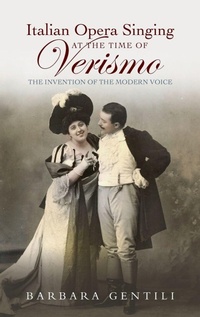
Italian Opera Singing at the Time of Verismo
The Invention of the Modern Voice
Published on 24. September 2024
Book
Hardback
194 pages
978-1-83765-078-1 (ISBN)
Description
Connects discussions of vocality and operatic culture with broader aesthetic and cultural shifts in society.
In the decades that span the turn of the twentieth century, the Italian tradition of operatic singing became 'modern'. This book identifies and explores the formative elements of this multifaceted 'modernity', and its connections with the emergence of verismo, a realistic trend that affected every aspect of creative and intellectual life in fin-de-siecle Italy. Thisnovel approach to artistic representation meant that singers had to redefine the operatic voice, exchanging the bel canto ideal of 'pure' vocal quality with an irreversible gendered connotation and an erotically charged expressive force. Pivotal to this shift was the gradual development of a homogeneous vocal colour through the compass, an aesthetic principle that was alien to the voice culture of the previous centuries. Star singers such as Enrico Caruso, Titta Ruffo, Emma Carelli and Eugenia Burzio were instrumental in this radical transition.
The book explores how and why modern singers consciously pursued a new vocal expressivity, illuminating the ways in which the changes they introduced in their vocal techniques yielded novel stylistic gestures, and ultimately shaped operatic culture.Through a comparative analysis of early vocal recordings and late nineteenth- and early twentieth-century vocal methods and drawing on archival research in London, Milan, Rome and Buenos Aires, the book connects discussions of vocality and operatic culture with broader aesthetic and cultural shifts in society. Italian Opera Singing at the Time of Verismo, will be of interest to scholars and students of opera history, performance studies and recording history, as well as voice coaches and professional singers.
In the decades that span the turn of the twentieth century, the Italian tradition of operatic singing became 'modern'. This book identifies and explores the formative elements of this multifaceted 'modernity', and its connections with the emergence of verismo, a realistic trend that affected every aspect of creative and intellectual life in fin-de-siecle Italy. Thisnovel approach to artistic representation meant that singers had to redefine the operatic voice, exchanging the bel canto ideal of 'pure' vocal quality with an irreversible gendered connotation and an erotically charged expressive force. Pivotal to this shift was the gradual development of a homogeneous vocal colour through the compass, an aesthetic principle that was alien to the voice culture of the previous centuries. Star singers such as Enrico Caruso, Titta Ruffo, Emma Carelli and Eugenia Burzio were instrumental in this radical transition.
The book explores how and why modern singers consciously pursued a new vocal expressivity, illuminating the ways in which the changes they introduced in their vocal techniques yielded novel stylistic gestures, and ultimately shaped operatic culture.Through a comparative analysis of early vocal recordings and late nineteenth- and early twentieth-century vocal methods and drawing on archival research in London, Milan, Rome and Buenos Aires, the book connects discussions of vocality and operatic culture with broader aesthetic and cultural shifts in society. Italian Opera Singing at the Time of Verismo, will be of interest to scholars and students of opera history, performance studies and recording history, as well as voice coaches and professional singers.
Reviews / Votes
Above all this book is the result of dedication, perseverance and passion for its subject. This can be read on every page and in every word. * OPERA NOSTALGIA *More details
Language
English
Place of publication
Woodbridge
United Kingdom
Publishing group
Boydell & Brewer Ltd
Target group
Professional and scholarly
Product notice
Cloth over boards
Illustrations
30 music exx. and 8 b/w illus.
Dimensions
Height: 240 mm
Width: 161 mm
Thickness: 15 mm
Weight
464 gr
ISBN-13
978-1-83765-078-1 (9781837650781)
Copyright in bibliographic data and cover images is held by Nielsen Book Services Limited or by the publishers or by their respective licensors: all rights reserved.
Schweitzer Classification
Other editions
Additional editions
E-Book
09/2024
1st Edition
Boydell & Brewer Ltd
€48.99
Available for download
Person
BARBARA GENTILI is Surrey Future Senior Fellow at the University of Surrey. She holds a PhD in Musicology from the Royal College of Music. She is also an accomplished soprano and opera singer.
Content
Introduction
1 Changing Italian Opera: Verismo, Singers and the Foreigners
Framing Verismo
The Features of Verismo Singing: New Demands on Modern Singers
The French, Changes in Dramaturgy and Librettos
Winds of Change from the North
The Anti-Modern Crusade of Vocal Pedagogues
2 Vocal Registers: Defining Key Terms
The Concept of Vocal Register
Register Division Theories
Survey of Key Historical Vocal Treatises
Aesthetics of Vocal Registration in the Latter Part of the Nineteenth Century
3 The Components of Modern Singing
A Few Essentials of Modern Singing
Bel Canto Encounters Verismo: Nellie Melba versus Emma Carelli
More on the Passaggio: Mattia Battistini versus Titta Ruffo and the Veristizzazione of Bel Canto
The Granitic Diction of the Modern Singer
4 The Pathway to Modern Singing: The Tenor at the Time of Caruso
In Search of Modernity
Caruso's 'Naturalness' and 'Spontaneity': Between Production and Reception
The Top C 'from the Chest': Between the Myth and the Recorded Evidence
Some Preliminary Conclusions on the Natural Singing of Caruso
5 Italian Sopranos and the Disruption of Tradition
The Verismo Sopranos Eugenia Burzio and Emma Carelli
The Chest Voice on Record
The Medium Register: Vocal Modulations and the Spoken Theatre
The Upper Register
Conclusions
Bibliography
Discography
Index
1 Changing Italian Opera: Verismo, Singers and the Foreigners
Framing Verismo
The Features of Verismo Singing: New Demands on Modern Singers
The French, Changes in Dramaturgy and Librettos
Winds of Change from the North
The Anti-Modern Crusade of Vocal Pedagogues
2 Vocal Registers: Defining Key Terms
The Concept of Vocal Register
Register Division Theories
Survey of Key Historical Vocal Treatises
Aesthetics of Vocal Registration in the Latter Part of the Nineteenth Century
3 The Components of Modern Singing
A Few Essentials of Modern Singing
Bel Canto Encounters Verismo: Nellie Melba versus Emma Carelli
More on the Passaggio: Mattia Battistini versus Titta Ruffo and the Veristizzazione of Bel Canto
The Granitic Diction of the Modern Singer
4 The Pathway to Modern Singing: The Tenor at the Time of Caruso
In Search of Modernity
Caruso's 'Naturalness' and 'Spontaneity': Between Production and Reception
The Top C 'from the Chest': Between the Myth and the Recorded Evidence
Some Preliminary Conclusions on the Natural Singing of Caruso
5 Italian Sopranos and the Disruption of Tradition
The Verismo Sopranos Eugenia Burzio and Emma Carelli
The Chest Voice on Record
The Medium Register: Vocal Modulations and the Spoken Theatre
The Upper Register
Conclusions
Bibliography
Discography
Index