

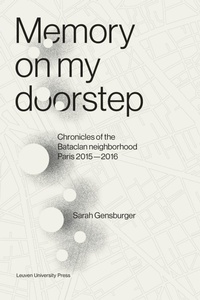
Memory on My Doorstep
Chronicles of the Bataclan Neighborhood, Paris 2015-2016
Published on 14. March 2019
Book
Paperback/Softback
252 pages
978-94-6270-134-2 (ISBN)
Description
In-depth case study of memorialisation processes after the November 2015 Paris attacks
On November 13, 2015, three gunmen opened fire in the Bataclan concert hall at 50 Boulevard Voltaire in Paris and subsequently held the venue under a three-hour siege. This was the largest in a series of coordinated terrorist attacks that eventually killed 130 people and injured 500. During the aftermath of these attacks, expressions of mourning and trauma marked and invariably transformed the urban landscape.
Sarah Gensburger, a sociologist working on social memory and its localisation, lives with her family on the Boulevard Voltaire and has been studying the city of Paris as her primary field site for several years. This time, memorialisation was taking place on her doorstep. Both a diary and an academic work, this book is a chronicle of this grassroots memorialisation process and an in-depth analysis of the way it has been embedded in the everyday lives of the author, neighbours, other Parisians and tourists.
This publication is GPRC-labeled (Guaranteed Peer-Reviewed Content).
On November 13, 2015, three gunmen opened fire in the Bataclan concert hall at 50 Boulevard Voltaire in Paris and subsequently held the venue under a three-hour siege. This was the largest in a series of coordinated terrorist attacks that eventually killed 130 people and injured 500. During the aftermath of these attacks, expressions of mourning and trauma marked and invariably transformed the urban landscape.
Sarah Gensburger, a sociologist working on social memory and its localisation, lives with her family on the Boulevard Voltaire and has been studying the city of Paris as her primary field site for several years. This time, memorialisation was taking place on her doorstep. Both a diary and an academic work, this book is a chronicle of this grassroots memorialisation process and an in-depth analysis of the way it has been embedded in the everyday lives of the author, neighbours, other Parisians and tourists.
This publication is GPRC-labeled (Guaranteed Peer-Reviewed Content).
Reviews / Votes
Memory dynamics in times of crisis: An interview with Sarah GensburgerWorking at the intersection of political science, ethnographic sociology, and contemporary historiography, Sarah Gensburger specializes in the social dynamics of memory. In this interview, she talks about her book 'Memory on My Doorstep: Chronicles of the Bataclan Neighborhood, Paris 2015-2016', which traces the evolving memorialization processes following the 2015 terrorist attacks in Paris, their impact on the local landscape, and the social appropriations of the past by visitors at memorials and commemorative sites.
Stef Craps, Catherine Gilbert, Memory Studies 2021, Vol. 14(6) 1388-1400, https://doi.org/10.1177/17506980211054345 All in all, the eye-witness testimonies and photos in Memory on My Doorstep are useful primary sources documenting the local-grassroots aftermath of the attacks. But the book is probably even more useful for the many questions it poses. Those can be read as suggestive prompts for new studies, adding more chapters to the story. For, as the book's last sentence notes, the memorialization of the 2015 attacks is "still ongoing."
Charles Rearick, H-France Review
Vol. 20 (April 2020), No. 70 Gensburger's superb visual ethnography reveals memory as lived and remade in the aftermath of the 2005 Paris terrorist attacks. Her personal and vivid chronicles offer us a radical memory studies that eases by the political limits sometimes imposed by traditional academic culture and form. Gensburger's finely attuned sociological gaze finds the city not in the paralysis of terror's shadow, but rather active in mobilised memorialisation, and deserving of our attention. Andrew Hoskins, University of Glasgow Gensburger is a careful observer, as well as a well-read one, and with a relatively light touch she is able to present the memorial efforts, the changes to them, and the tensions and cleavages that the memorialization reveals. [...] This book is unusual-in style, content, and tone. The material is inherently fascinating, and the questions at the heart of the book are crucial. This is a terrific, unique book.Scott Straus, University of Wisconsin-Madison La memoire est en vogue. Et pourtant, rares sont les travaux qui s'attaquent au coeur de ce phenomene : la memoire vive. L'ouvrage dont il est ici question fait exception. Consacre aux chroniques sociologiques d'un quartier situe entre la place de la Republique et la salle du Bataclan, de decembre 2015 a septembre 2016, il interroge les pratiques sociales liees a la memoire des attentats perpetres a Paris. Sur le plan de la forme, l'ouvrage est un petit bijou. Truffe de photographies, eclaire par plusieurs cartographies, il livre des questionnements qui debordent de loin la gestion memorielle des attentats perpetres le 7 janvier 2015 dans les bureaux du journal satirique Charlie Hebdo et le 13 novembre 2015 au Bataclan. Valerie Rosoux, Droit et Societe, 06/03/2018
More details
Language
English
Place of publication
Leuven
Belgium
Target group
College/higher education
US School Grade: College Graduate Student and over
Product notice
Paperback (trade)
Unsewn / adhesive bound
Illustrations
Illustrated
Dimensions
Height: 234 mm
Width: 156 mm
Thickness: 18 mm
Weight
481 gr
ISBN-13
978-94-6270-134-2 (9789462701342)
Copyright in bibliographic data and cover images is held by Nielsen Book Services Limited or by the publishers or by their respective licensors: all rights reserved.
Schweitzer Classification
Other editions
Additional editions
E-Book
03/2019
Leuven University Press
€31.99
Available for download
Person
Sarah Gensburger is a senior researcher in social sciences at the French National Center for Scientific Research-CNRS and a member of the executive committee of the international Memory Studies Association.
Content
Introduction
Between Research and Everyday Life: Photography, Family and Ordinary Conversations
26 Paris, 11th arrondissement, Boulevard Voltaire
December 27, 2015 - September 20, 2016
Event(s)
December 27, 2015
Distance
December 28, 2015
Traces
December 30, 2015
Trace
December 31, 2015
Disappearance
January 1, 2016
Appearance
January 4, 2016
Plaques
January 5, 2016
Gazes
January 6, 2016
Interpretation
January 8, 2016
Photography
January 9, 2016
Reflections
January 10, 2016
Messages
January 11, 2016
Detour
January 12, 2016
Solidarity
January 14, 2016
Tourism
January 15, 2016
Nationality
January 17, 2016
Nation
January 18, 2016
Normality
January 21, 2016
Data
January 26, 2016
Pilgrimage
February 2, 2016
Property
February 6, 2016
Invisibility
February 8, 2016
Witnesses
February 13, 2016
Collecting Messages
February 16, 2016
Groups
February 24, 2016
Holidays
February 28, 2016
Neighbors
March 1, 2016
Journalists
March 7, 2016
Demonstration
March 10, 2016
Conflict
March 17, 2016
Mobilizations
March 21, 2016
Normalization
March 26, 2016
A Place to Sit
April 8, 2016
Reading
April 13, 2016
Memories
April 18, 2016
Place
April 23, 2016
Meaning
May 1, 2016
Seeing and Being Seen
May 13, 2016
Privatization
May 19, 2016
Shift
May 20, 2016
Banner
May 22, 2016
Sacred
May 24, 2016
Trauma
June 13, 2016
Color
June 14, 2016
Icons
June 18, 2016
Preaching
June 18, 2016
Reconquest
June 19, 2016
Flags
June 27, 2016
Empty
July 1, 2016
Date
July 16, 2016
Silence
July 24, 2016
Ephemeral
August 1, 2016
T-Shirts
August 12, 2016
Cycle
September 1, 2016
Heritage
September 20, 2016
Conclusion
An Unfinished Memorialization: Archives, Monuments and Museums
Acknowledgement
References
Between Research and Everyday Life: Photography, Family and Ordinary Conversations
26 Paris, 11th arrondissement, Boulevard Voltaire
December 27, 2015 - September 20, 2016
Event(s)
December 27, 2015
Distance
December 28, 2015
Traces
December 30, 2015
Trace
December 31, 2015
Disappearance
January 1, 2016
Appearance
January 4, 2016
Plaques
January 5, 2016
Gazes
January 6, 2016
Interpretation
January 8, 2016
Photography
January 9, 2016
Reflections
January 10, 2016
Messages
January 11, 2016
Detour
January 12, 2016
Solidarity
January 14, 2016
Tourism
January 15, 2016
Nationality
January 17, 2016
Nation
January 18, 2016
Normality
January 21, 2016
Data
January 26, 2016
Pilgrimage
February 2, 2016
Property
February 6, 2016
Invisibility
February 8, 2016
Witnesses
February 13, 2016
Collecting Messages
February 16, 2016
Groups
February 24, 2016
Holidays
February 28, 2016
Neighbors
March 1, 2016
Journalists
March 7, 2016
Demonstration
March 10, 2016
Conflict
March 17, 2016
Mobilizations
March 21, 2016
Normalization
March 26, 2016
A Place to Sit
April 8, 2016
Reading
April 13, 2016
Memories
April 18, 2016
Place
April 23, 2016
Meaning
May 1, 2016
Seeing and Being Seen
May 13, 2016
Privatization
May 19, 2016
Shift
May 20, 2016
Banner
May 22, 2016
Sacred
May 24, 2016
Trauma
June 13, 2016
Color
June 14, 2016
Icons
June 18, 2016
Preaching
June 18, 2016
Reconquest
June 19, 2016
Flags
June 27, 2016
Empty
July 1, 2016
Date
July 16, 2016
Silence
July 24, 2016
Ephemeral
August 1, 2016
T-Shirts
August 12, 2016
Cycle
September 1, 2016
Heritage
September 20, 2016
Conclusion
An Unfinished Memorialization: Archives, Monuments and Museums
Acknowledgement
References