

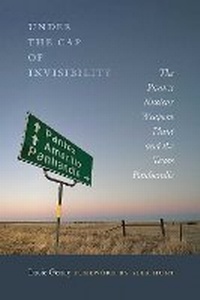
Under the Cap of Invisibility
The Pantex Nuclear Weapons Plant and the Texas Panhandle
Will be published approx. on 13. May 2025
Book
Paperback/Softback
328 pages
978-0-8263-6812-6 (ISBN)
Description
Pantex was built during World War II near the town of Amarillo, Texas. The site was converted early in the Cold War to assemble nuclear weapons and produce high explosives. For nearly fifty years Pantex has been the sole assembly and disassembly plant for nuclear weapons in the United States. Today, most of the activities of the plant consist of the manufacture of high explosive components and the dismantlement or life extension of weapons, including retrofitting aging warheads in the United States's arsenal.
Unlike the much more famous nuclear-weapons-production sites at Los Alamos, Oak Ridge, Hanford, and Rocky Flats, the Pantex plant has drawn little attention, hidden under a metaphoric "cap of invisibility." Lucie Genay now lifts that invisibility cap to give the world its first in-depth look at Pantex and the people who have spent their lives as neighbors and employees of this secretive industry. The book investigates how Pantex has impacted local identity by molding elements of the past into the guaranty of its future and its concealment. It further examines the multiple facets of Pantexism-the reasons for embracing nuclear-weapons production as a solution to economic woes, the resulting dependence on this industry, and the unconditional support for the facility-through the voices of native and adoptive Panhandlers.
Unlike the much more famous nuclear-weapons-production sites at Los Alamos, Oak Ridge, Hanford, and Rocky Flats, the Pantex plant has drawn little attention, hidden under a metaphoric "cap of invisibility." Lucie Genay now lifts that invisibility cap to give the world its first in-depth look at Pantex and the people who have spent their lives as neighbors and employees of this secretive industry. The book investigates how Pantex has impacted local identity by molding elements of the past into the guaranty of its future and its concealment. It further examines the multiple facets of Pantexism-the reasons for embracing nuclear-weapons production as a solution to economic woes, the resulting dependence on this industry, and the unconditional support for the facility-through the voices of native and adoptive Panhandlers.
Reviews / Votes
"With great insight and a rich narrative, Genay brings the history of Pantex to the fore of scholarship in the history of America's nuclear arsenal and its impact on the American West." - Ryan H. Edgington, author of Range Wars: The Environmental Contest for White Sands Missile Range"A thoughtful and important addition to the history of the atomic West. . . . It is a reminder that we are still living with the legacy of the Cold War." - Leisl Carr Childers, author of The Size of the Risk: Histories of Multiple Use in the Great Basin
More details
Language
English
Place of publication
Albuquerque, NM
United States
Target group
College/higher education
Illustrations
14 halftones - 1 map
Dimensions
Height: 229 mm
Width: 152 mm
ISBN-13
978-0-8263-6812-6 (9780826368126)
Copyright in bibliographic data and cover images is held by Nielsen Book Services Limited or by the publishers or by their respective licensors: all rights reserved.
Schweitzer Classification
Persons
Lucie Genay is an associate professor of US civilization in the English and American Studies Department at the University of Limoges, France. She is also the author of Land of Nuclear Enchantment: A New Mexican History of the Nuclear Weapons Industry (UNM Press).
Content
Acronyms
Acknowledgments
Foreword
Alex Hunt
Introduction. The Bomb Factory
Chapter One. The Bishop's Call
Chapter Two. The Novelist's Fascination
Chapter Three. The Filmmaker's Circus
Chapter Four. The Patriots' Pride
Chapter Five. The Peaceniks' Moral Crusade
Chapter Six. The Boosters' Dreams and Fears
Chapter Seven. The Farmers' Fight
Chapter Eight. The Environmentalists' Quest to Learn and Teach
Chapter Nine. The Nuclear Workers' Silence
Conclusion. Growth, Bombs, and Water
Notes
Selected Bibliography
Acknowledgments
Foreword
Alex Hunt
Introduction. The Bomb Factory
Chapter One. The Bishop's Call
Chapter Two. The Novelist's Fascination
Chapter Three. The Filmmaker's Circus
Chapter Four. The Patriots' Pride
Chapter Five. The Peaceniks' Moral Crusade
Chapter Six. The Boosters' Dreams and Fears
Chapter Seven. The Farmers' Fight
Chapter Eight. The Environmentalists' Quest to Learn and Teach
Chapter Nine. The Nuclear Workers' Silence
Conclusion. Growth, Bombs, and Water
Notes
Selected Bibliography