

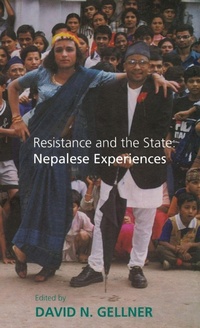
Resistance and the State
Nepalese Experiences
Published on 1. April 2007
Book
Hardback
368 pages
978-1-84545-216-2 (ISBN)
Description
There has been growing concern about "failed states" around the world, and since the massacre of the Royal family in Nepal in 2001 increasing media attention has focused on the decline of the state and the rise of the Maoist rebels in this Himalayan kingdom where so many Westerners have taken trekking vacations. Development was always going to be a problem in Nepal, but few predicted the precipitous collapse of the state in rural areas in the face of the Maoist insurgency beginning in 1996 due, to a large extent, to the failure of the state to deliver promised development and benefits; instead, it became more and more authoritarian, even oppressive. Exploring the complex relationship between a modernizing, developmentalist state and the people it professes to represent, these fascinating and readable accounts of ordinary people's lives depict the various contexts out of which the Maoist insurgency grew.
Reviews / Votes
"All of the chapters are valuable and insightful and several have genuinely new things to say...the book is an extremely important and valuable contribution to the literature on Nepal." ? JRAIMore details
Edition
Revised edition
Language
English
Place of publication
Oxford
United Kingdom
Target group
College/higher education
Product notice
Library binding
Illustrations
Bibliography; Index
Dimensions
Height: 222 mm
Width: 145 mm
Thickness: 25 mm
Weight
633 gr
ISBN-13
978-1-84545-216-2 (9781845452162)
DOI
10.3167/9781845452162
Copyright in bibliographic data and cover images is held by Nielsen Book Services Limited or by the publishers or by their respective licensors: all rights reserved.
Schweitzer Classification
Person
David Gellner is Lecturer in the Anthropology of South Asia, University of Oxford. He is the author of Monk, Householder, and Tantric Priest (1992) and The Anthropology of Buddhism and Hinduism: Weberian Themes (2001), and the co-author (with Sarah LeVine) of Rebuilding Buddhism: The Theravada Movement in Twentieth-Century Nepal (2005).
Content
List of Tables
List of Plates and Maps
Preface
List of Contributors
Introduction: Transformations of the Nepalese State
David N. Gellner
SECTION I: THE STATE, DEVELOPMENT, AND LOCAL POLITICS
Chapter 1. A Heterotopia of Resistance: Health, Community Forestry, and Challenges to State Centralization in Nepal
Ian Harper and Christopher Tarnowski
Chapter 2. Resisting the Environmentalist State
Ben Campbell
Chapter 3. The Politics of Difference and the Reach of Modernity: Reflections on the State and Civil Society in Central Nepal
William F. Fisher
Chapter 4. Nepali Politics: People-Parties Interface
Krishna Hachhethu
PART II: THE STATE AND ETHNIC ACTIVISM
Chapter 5. How Representative is the Nepali State?
Karl-Heinz Kraemer
Chapter 6. An 'Indigenous Minority' in a Border Area: Tharu Ethnic Associations, NGOs, and the Nepalese State
Gisele Krauskopff
Chapter 7. The History of the Messianic and Rebel King Lakhan Thapa: Utopia and Ideology among the Magars
Marie Lecomte-Tilouine
PART III: THE STATE AND MAOIST INSURGENCY
Chapter 8. Democracy and Dissent in Nepal: An Overview with Some Perceptions from Dhorpatan
Colin Millard
Chapter 9. Guns, Kinship, and Fear: Maoists among the Tamu-mai (Gurungs)
Judith Pettigrew
Chapter 10. The Kham Magar Country: Between Ethnic Claims and Maoism
Anne de Sales
Person Index
General Index
List of Plates and Maps
Preface
List of Contributors
Introduction: Transformations of the Nepalese State
David N. Gellner
SECTION I: THE STATE, DEVELOPMENT, AND LOCAL POLITICS
Chapter 1. A Heterotopia of Resistance: Health, Community Forestry, and Challenges to State Centralization in Nepal
Ian Harper and Christopher Tarnowski
Chapter 2. Resisting the Environmentalist State
Ben Campbell
Chapter 3. The Politics of Difference and the Reach of Modernity: Reflections on the State and Civil Society in Central Nepal
William F. Fisher
Chapter 4. Nepali Politics: People-Parties Interface
Krishna Hachhethu
PART II: THE STATE AND ETHNIC ACTIVISM
Chapter 5. How Representative is the Nepali State?
Karl-Heinz Kraemer
Chapter 6. An 'Indigenous Minority' in a Border Area: Tharu Ethnic Associations, NGOs, and the Nepalese State
Gisele Krauskopff
Chapter 7. The History of the Messianic and Rebel King Lakhan Thapa: Utopia and Ideology among the Magars
Marie Lecomte-Tilouine
PART III: THE STATE AND MAOIST INSURGENCY
Chapter 8. Democracy and Dissent in Nepal: An Overview with Some Perceptions from Dhorpatan
Colin Millard
Chapter 9. Guns, Kinship, and Fear: Maoists among the Tamu-mai (Gurungs)
Judith Pettigrew
Chapter 10. The Kham Magar Country: Between Ethnic Claims and Maoism
Anne de Sales
Person Index
General Index