

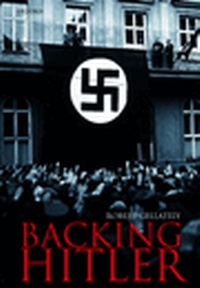
Backing Hitler
Consent and Coercion in Nazi Germany
Published in March 2001
Book
Hardback
377 pages
978-0-19-820560-9 (ISBN)
Description
The Nazis never won a majority in free elections, but soon after Hitler took power most people turned away from democracy and backed the Nazi regime. Hitler won growing support even as he established the secret police (Gestapo) and concentration camps. What has been in dispute for over fifty years is what the Germans knew about these camps, and in what ways were they involved in the persecution of 'race enemies', slave workers, and social outsiders. To answer these questions, and to explore the public sides of Nazi persecution, Robert Gellately has consulted an array of primary documents. He argues that the Nazis did not cloak their radical approaches to 'law and order' in utter secrecy, but played them up in the press and loudly proclaimed the superiority of their system over all others. They publicized their views by drawing on popular images, cherished German ideals and long held phobias, and were able to win over converts to their cause. The author traces the story from 1933, and shows how war and especially the prospect of defeat radicalized Nazism. As the country spiralled toward defeat, Germans for the most part held on stubbornly.
For anyone who contemplated surrender or resistance, terror became the order of the day.
For anyone who contemplated surrender or resistance, terror became the order of the day.
Reviews / Votes
As a whole Backing Hitler brings together in a scholarly yet readable way a number of different facets of the German domestic scene. Journal of Jewish Studies Fascinating study of coercion and consent. Not only does [Gellately] provide an admirable synthesis of the mass of secondary literature ... that has appeared over the past decade or so, but he also contributes important new insights through his own research. It is a major contribution to the study of Nazism. Times Literary Supplement An intriguing and illuminating new book. Niall Ferguson, Mail on Sunday Just how much the ordinary German knew about the apparatus of terror and discrimination in the Hitler years is the subject of Robert Gellately's fascinating and disturbing account of the bonds that drew regime and people together after 1933. Richard Overy, The Sunday Telegraph In 1933 Germans hankered for a return to traditional values of order, family, discipline, work. Noone could forsee how such ordinary aspirations would eventuate in that most extreme act, genocide. But this is one lesson the Nazis teach us and, thanks to Robert Gellately's fine book, it is available for all to learn. David Cesarani, The Independent Well-written and scholarly ... fascinating but amazingly neglected subject ... this book deserves a wide readership. History TodayMore details
Language
English
Place of publication
Oxford
United Kingdom
Target group
College/higher education
Professional and scholarly
Illustrations
num. b/w plates
numerous black and white plates
Dimensions
Height: 234 mm
Width: 156 mm
ISBN-13
978-0-19-820560-9 (9780198205609)
Copyright in bibliographic data and cover images is held by Nielsen Book Services Limited or by the publishers or by their respective licensors: all rights reserved.
Schweitzer Classification
Other editions
Additional editions
E-Book
03/2001
1st Edition
Oxford University Press
€43.24
Available for download
Content
Turning away from Weimar; police justice; concentration camps and media reports; shadows of war; social outsiders; injustice and the Jews; special "Justice" for foreign workers; enemies in the ranks; concentration camps in public spaces; dictatorship and people at the end of the Third Reich.