

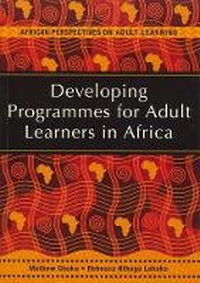
Developing Programmes for Adult Learners in Africa
1st Edition
Published on 15. July 2007
Book
Paperback/Softback
202 pages
978-92-820-1120-1 (ISBN)
Description
Developing programmes for adult learners in Africa is one of five books in the African Perspectives Series, which addresses adult learning in Africa from African perspectives. This title provides a critique of the dominant research paradigms that misrepresent or ignore Africa's cultural social and philosophical underpinnings. It explores the context of adult learning in Africa - its basis as an oral society, its colonial heritage and current legacy of colonialism, the impact of continuing postcolonial intrusions into policy development, and the need for research paradigms that expose these contexts. The title asserts the need to embed research in earth- and spiritual-centred philosophies that take into account Africans' physical and personal realities, their politics of knowledge and indigenous value systems, and proposes making cultures and values an integral part of research designs instead of merely identifying them as research objects. The title identifies quantitative, qualitative and multi-method approaches, and is based upon existing research methods teaching in Africa.
It is grounded in African adult education contexts and draws on material and experiences from research courses taught in African universities. It emphasises the importance of combining quantitative methods with qualitative research that is embedded in adult education contexts and that builds on indigenous knowledge. Examples of the contexts addressed in the title includes: village communities, agriculture development workers, literacy and income generation projects, community policing strategies, brigades, vocational training centres, mass health awareness campaigns such as HIV/AIDS, work-based education and training, management development, needs analyses, and the training of adult education trainers.
It is grounded in African adult education contexts and draws on material and experiences from research courses taught in African universities. It emphasises the importance of combining quantitative methods with qualitative research that is embedded in adult education contexts and that builds on indigenous knowledge. Examples of the contexts addressed in the title includes: village communities, agriculture development workers, literacy and income generation projects, community policing strategies, brigades, vocational training centres, mass health awareness campaigns such as HIV/AIDS, work-based education and training, management development, needs analyses, and the training of adult education trainers.
More details
Content
Introduction to programme development. Approaches for programme development in adult education. Models for programme development in adult education. The pre-planning/programme proposal phase. Identifying and assessing learning needs. Determining programme goals, objectives and content. Identifying and selecting teaching and learning materials. Marketing programmes to adult learners. Participation in programme development. Programme implementation. Evaluation of adult education programmes. References.