

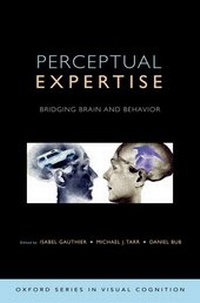
Perceptual Expertise
Bridging Brain and Behavior
Published on 4. February 2010
Book
Hardback
416 pages
978-0-19-530960-7 (ISBN)
Description
This book presents a comprehensive survey of perceptual expertise in visual object recognition, and introduces a novel collaborative model, codified as the "Perceptual Expertise Network" (PEN). This unique group effort is focused on delineating the domain-general principles of high-level visual learning that can account for how different object categories are processed and come to be associated with spatially localized activity in the primate brain. PEN's approach brings together different traditions and techniques to address questions such as how expertise develops, whether there are different kinds of experts, whether some disorders such as autism or prosopagnosia can be understood as a lack or loss of expertise, and how conceptual and perceptual information interact when experts recognize and categorize objects. The research and results that have been generated by these questions are presented here, along with a variety of other questions, background information, and extant issues that have emerged from recent studies, making this book a complete overview on the topic.
Reviews / Votes
This volume is an excellent summary of the views expressed in independent journal articles by the Perceptual Expertise Network group. Whether one agrees with them or not, these views influenced the theory of visual perception and challenged the veracity of widely accepted brain mechanisms accounting for the human ability to easily distinguish between exemplars of visually homogeneous categories such as individual faces. It is a pleasure to read, a must for scholars interested in visual object recognition. * Shlomo Bentin, Professor, Department of Psychology and Center for Neural Computation, Hebrew University of Jerusalem* Why are humans so much better than machines at seeing, thinking, and acting? Because, unlike machines, we aren't hard-wired, but develop expertise over a lifetime of experience. This volume represents the current state of the art in scientific understanding of how learning hones perception and categorization. This sweeping survey provides deep insights into how perceptual expertise is acquired and lost, ranging from infant development and patient studies, to modelling and brain imaging. At the same time, it is also a refreshingly personal testimony to how scientific collaboration can advance our understanding of fascinating questions in cognitive neuroscience. * Heinrich H. Buelthoff, Director, Department of Human Perception, Cognition, and Action, Max Planck Institute for Biological Cybernetics
* How does expertise come to be represented in the posterior part of the human brain? This beautifully crafted volume combines cognitive, patient, fMRI, ERP and developmental studies done by the world's leading researchers to summarize the state of the art on the nature and localization of expertise. It will be a major tool for researchers interested in the learning of human skills. * Michael Posner, Professor Emeritus, Department of Psychology,
Institute of Cognitive and Decision Sciences, University of Oregon
* In true interdisciplinary fashion, this ambitious book represents the efforts of developmental and cognitive psychologists, computer scientists, neuroscientists, and neuropsychologists who have come together to unravel the secrets of how neurotypical infants, children and adults, as well as individuals with autism and prosopagnosia, learn about their visual world. * Charles A. Nelson III, Professor of Pediatrics, Psychiatry and Neuroscience, Harvard Medical School
*
More details
Series
Language
English
Place of publication
New York
United States
Target group
College/higher education
Professional and scholarly
Illustrations
36 halftones, 24 line illus.
Dimensions
Height: 160 mm
Width: 236 mm
Thickness: 30 mm
Weight
732 gr
ISBN-13
978-0-19-530960-7 (9780195309607)
Copyright in bibliographic data and cover images is held by Nielsen Book Services Limited or by the publishers or by their respective licensors: all rights reserved.
Schweitzer Classification
Other editions
Additional editions
E-Book
12/2009
1st Edition
OUP eBook
€52.49
Available for download
E-Book
12/2009
1st Edition
OUP eBook
€52.49
Available for download
Persons
Isabel Gauthier is from Longueuil, Quebec. She received her PhD (advised by Michael Tarr) at Yale University, and is a Professor of Psychology in the department of Psychology at Vanderbilt University where she directs the Object Perception Laboratory. She directs the Perceptual Expertise Network since 2000 (now co-directed with Tom Palmeri).
Michael J. Tarr hails from Pittsburgh, PA and is still a loyal Steelers fan. He received his PhD in Brain and Cognitive Sciences from MIT and was an Assistant Professor at Yale until 1995, when he moved to Brown. At Brown University he is a Professor of Cognitive and Linguistic Sciences, the Fox Professor of Ophthalmology and Visual Sciences and the Co-Director of the Brown Center for Vision Research. Daniel Bub was born in Capetown, South Africa. He obtained his Ph.D. from the University of Rochester, New York and was an Associate Professor at McGill University and a member of the Laboratoire Theophile Alajouanine at the University of Montreal
Michael J. Tarr hails from Pittsburgh, PA and is still a loyal Steelers fan. He received his PhD in Brain and Cognitive Sciences from MIT and was an Assistant Professor at Yale until 1995, when he moved to Brown. At Brown University he is a Professor of Cognitive and Linguistic Sciences, the Fox Professor of Ophthalmology and Visual Sciences and the Co-Director of the Brown Center for Vision Research. Daniel Bub was born in Capetown, South Africa. He obtained his Ph.D. from the University of Rochester, New York and was an Associate Professor at McGill University and a member of the Laboratoire Theophile Alajouanine at the University of Montreal
Content
- Table of Contents
- Foreword by Robert Goldstone
- Preface: Lessons from PEN - Scientific Collaboration and the Search for Synergy, by Susan Fitzpatrick
- Introduction: Daniel Bub
- Chapter One: How Faces Become Special, by Cindy Bukach and Jessie Peissig
- Chapter Two: Objects of Expertise, by David Sheinberg and Michael J. Tarr
- Chapter Three: Development of Expertise in Face Recognition, by Catherine Mondloch, Richard Legrand, and Daphne Maurer
- Chapter Four: Degrees of Expertise, by Lisa Scott, Jim Tanaka, and Tim Curran
- Chapter Five: Face Processing in Autism: Insights from the Perceptual Expertise Framework, by Kim Curby, Verena Willenbockel, James Tanaka, and Robert Schultz
- Chapter Six: Congenital and Acquired Prosopagnosia: Flip Sides of the Same Coin? By Marlene Behrmann, Galia Avidan, Cibu Thomas, and Kate Humphreys
- Chapter Seven: Modeling Perceptual Expertise, by Thomas Palmeri and Garrison Cottrell
- Chapter Eight: Competition Between Face and Non-Face Domains of Expertise, by Kim Curby and Bruno Rossion
- Chapter Nine: The Locus of Holistic Processing, by Olivia Cheung and Isabel Gauthier
- Chapter Ten: The Case for Letter Expertise, by Karin H. James, Alan C-N Wong, and Gael Jobard
- Chapter Eleven: Perceptual and Conceptual Interactions in Object Recognition and Expertise, by Thomas James and George Cree
- Chapter Twelve: Lessons from Neuropsychology, by Daniel Bub
- End Piece, by Isabel Gauthier
- Foreword by Robert Goldstone
- Preface: Lessons from PEN - Scientific Collaboration and the Search for Synergy, by Susan Fitzpatrick
- Introduction: Daniel Bub
- Chapter One: How Faces Become Special, by Cindy Bukach and Jessie Peissig
- Chapter Two: Objects of Expertise, by David Sheinberg and Michael J. Tarr
- Chapter Three: Development of Expertise in Face Recognition, by Catherine Mondloch, Richard Legrand, and Daphne Maurer
- Chapter Four: Degrees of Expertise, by Lisa Scott, Jim Tanaka, and Tim Curran
- Chapter Five: Face Processing in Autism: Insights from the Perceptual Expertise Framework, by Kim Curby, Verena Willenbockel, James Tanaka, and Robert Schultz
- Chapter Six: Congenital and Acquired Prosopagnosia: Flip Sides of the Same Coin? By Marlene Behrmann, Galia Avidan, Cibu Thomas, and Kate Humphreys
- Chapter Seven: Modeling Perceptual Expertise, by Thomas Palmeri and Garrison Cottrell
- Chapter Eight: Competition Between Face and Non-Face Domains of Expertise, by Kim Curby and Bruno Rossion
- Chapter Nine: The Locus of Holistic Processing, by Olivia Cheung and Isabel Gauthier
- Chapter Ten: The Case for Letter Expertise, by Karin H. James, Alan C-N Wong, and Gael Jobard
- Chapter Eleven: Perceptual and Conceptual Interactions in Object Recognition and Expertise, by Thomas James and George Cree
- Chapter Twelve: Lessons from Neuropsychology, by Daniel Bub
- End Piece, by Isabel Gauthier