

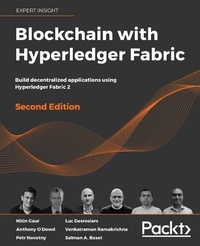
Blockchain with Hyperledger Fabric
Build decentralized applications using Hyperledger Fabric 2
2nd Edition
Published on 27. November 2020
Book
Paperback/Softback
756 pages
978-1-83921-875-0 (ISBN)
Description
Learn to develop blockchain-based distributed ledgers and deploy a Hyperledger Fabric network with concrete exercises and examples
Key Features
Updated with the latest features and additions that come with Hyperledger Fabric 2
Write your own smart contracts and services using Java and JavaScript on a Hyperledger Fabric network
Dive into real-world blockchain challenges such as integration and scalability
Book DescriptionBlockchain with Hyperledger Fabric - Second Edition is a refreshed and extended version of the successful book on practical Hyperledger Fabric blockchain development. This edition includes many new chapters, alongside comprehensive updates and additions to the existing ones. Entirely reworked for Hyperledger Fabric version 2, this edition will bring you right up to date with the latest in blockchain. Using a real-world Trade Finance and Logistics example, with working code available on GitHub, you'll really understand both how and why Hyperledger Fabric can be used to maximum effect. This book is your comprehensive guide and reference to explore and build blockchain networks using Hyperledger Fabric version 2.
This edition of the book begins by outlining the evolution of blockchain, including an overview of relevant blockchain technologies. Starting from first principles, you'll learn how to design and operate a permissioned blockchain network based on Hyperledger Fabric version 2. You will learn how to configure the main architectural components of a permissioned blockchain network including Peers, Orderers, Certificate Authorities, Channels, and Policies. You'll then learn how to design, develop, package, and deploy smart contracts, and how they are subsequently used by applications. This edition also contains chapters on DevOps, blockchain governance, and security, making this your go-to book for Hyperledger Fabric version 2.What you will learn
Discover why blockchain is a technology and business game changer
Set up blockchain networks using Hyperledger Fabric version 2
Understand how to create decentralized applications
Learn how to integrate blockchains with existing systems
Write smart contracts and services quickly with Hyperledger Fabric and Visual Studio Code
Design transaction models and smart contracts with Java, JavaScript, TypeScript, and Golang
Deploy REST gateways to access smart contracts and understand how wallets maintain user identities for access control
Maintain, monitor, and govern your blockchain solutions
Who this book is forThis book is designed in such a way that professionals from different areas including business leaders, technology leaders, blockchain application developers, and even beginners can benefit from it.
Key Features
Updated with the latest features and additions that come with Hyperledger Fabric 2
Write your own smart contracts and services using Java and JavaScript on a Hyperledger Fabric network
Dive into real-world blockchain challenges such as integration and scalability
Book DescriptionBlockchain with Hyperledger Fabric - Second Edition is a refreshed and extended version of the successful book on practical Hyperledger Fabric blockchain development. This edition includes many new chapters, alongside comprehensive updates and additions to the existing ones. Entirely reworked for Hyperledger Fabric version 2, this edition will bring you right up to date with the latest in blockchain. Using a real-world Trade Finance and Logistics example, with working code available on GitHub, you'll really understand both how and why Hyperledger Fabric can be used to maximum effect. This book is your comprehensive guide and reference to explore and build blockchain networks using Hyperledger Fabric version 2.
This edition of the book begins by outlining the evolution of blockchain, including an overview of relevant blockchain technologies. Starting from first principles, you'll learn how to design and operate a permissioned blockchain network based on Hyperledger Fabric version 2. You will learn how to configure the main architectural components of a permissioned blockchain network including Peers, Orderers, Certificate Authorities, Channels, and Policies. You'll then learn how to design, develop, package, and deploy smart contracts, and how they are subsequently used by applications. This edition also contains chapters on DevOps, blockchain governance, and security, making this your go-to book for Hyperledger Fabric version 2.What you will learn
Discover why blockchain is a technology and business game changer
Set up blockchain networks using Hyperledger Fabric version 2
Understand how to create decentralized applications
Learn how to integrate blockchains with existing systems
Write smart contracts and services quickly with Hyperledger Fabric and Visual Studio Code
Design transaction models and smart contracts with Java, JavaScript, TypeScript, and Golang
Deploy REST gateways to access smart contracts and understand how wallets maintain user identities for access control
Maintain, monitor, and govern your blockchain solutions
Who this book is forThis book is designed in such a way that professionals from different areas including business leaders, technology leaders, blockchain application developers, and even beginners can benefit from it.
More details
Edition
2nd Revised edition
Language
English
Place of publication
Birmingham
United Kingdom
Target group
Professional and scholarly
US School Grade: College Graduate Student
Edition type
Revised edition
Dimensions
Height: 235 mm
Width: 191 mm
Thickness: 41 mm
Weight
1385 gr
ISBN-13
978-1-83921-875-0 (9781839218750)
Copyright in bibliographic data and cover images is held by Nielsen Book Services Limited or by the publishers or by their respective licensors: all rights reserved.
Schweitzer Classification
Other editions
Additional editions

Nitin Gaur | Anthony O'Dowd | Petr Novotny
Blockchain with Hyperledger Fabric
Build decentralized applications using Hyperledger Fabric 2
E-Book
09/2024
2nd Edition
Packt Publishing
€32.99
Available for download
Persons
Nitin Gaur, is the director of IBM's Blockchain Labs, and an IBM Distinguished Engineer. Anthony O'Dowd is a Distinguished Engineer at IBM, focusing on Blockchain. He led IBM's contribution to the design and development of the new smart contract and application SDKs found in Hyperledger Fabric v2. Anthony has also made significant contributions to Hyperledger Fabric documentation and samples. Petr Novotny is a research scientist at IBM Research, with an MSc from University College London and PhD from Imperial College London, where he was also a post-doctoral research associate. Luc Desrosiers is an IBM-certified IT architect with 20+ years of experience. Venkatraman Ramakrishna is an IBM researcher, with a BTech from IIT Kharagpur and PhD from UCLA. Dr. Salman A. Baset is the CTO of security in IBM Blockchain Solutions.
Content
Table of Contents
Blockchain
Exploring Hyperledger Fabric
Business Networks
Setting the Stage with a Business Scenario
Designing Smart Contract Transactions and Ledger Data Structures
Developing Smart Contracts
Developing Applications
Advanced Topics for Developing Smart Contracts and Applications
Network Operation and Distributed Application Building
Enterprise Design Patterns and Considerations
Agility in a Blockchain Network
Governance
Life in a Blockchain Network
Hyperledger Fabric Security
Blockchain's Future, Protocol Commercialization, and Challenges Ahead
Blockchain
Exploring Hyperledger Fabric
Business Networks
Setting the Stage with a Business Scenario
Designing Smart Contract Transactions and Ledger Data Structures
Developing Smart Contracts
Developing Applications
Advanced Topics for Developing Smart Contracts and Applications
Network Operation and Distributed Application Building
Enterprise Design Patterns and Considerations
Agility in a Blockchain Network
Governance
Life in a Blockchain Network
Hyperledger Fabric Security
Blockchain's Future, Protocol Commercialization, and Challenges Ahead