


Java
First Contact
Published on 4. September 1997
Book
Paperback/Softback
512 pages
978-1-85032-316-7 (ISBN)
Description
Java, as a modern object-oriented programming language with a clean and elegant design, is an ideal language for teaching object-oriented programming skills to first year computer science students. Reflecting the authors' experience of teaching Java to their first year students, this undergraduate programming text, assumes no prior knowledge of general programming concepts. It provides coverage of the fundamental aspects of object-oriented programming using Java. Structured into five parts, the book introduces students to using objects from "day one", using them to introduce the basic concepts of programming and allowing the reader to become familiar with using objects in a variety of applications. The book then moves on to explain how to write objects, whilst parts three and four cover more advanced object and Java language features. The book concludes with a section on object-oriented design.
More details
Language
English
Place of publication
Boston, MA
United States
Publishing group
Cengage Learning, Inc
Target group
College/higher education
Illustrations
illustrations
Dimensions
Height: 230 mm
ISBN-13
978-1-85032-316-7 (9781850323167)
Copyright in bibliographic data is held by Nielsen Book Services Limited or its licensors: all rights reserved.
Schweitzer Classification
Other editions
New editions
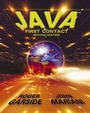
Book
07/2002
2nd Edition
Course Technology Inc
€115.31
Article not available
Content
Introduction - Java and the World Wide Web. Using objects: Object-Orientation; declaring objects and calling methods; selecting among alternatives; repitition; simple class II; arrays; basic Java types; a simple class; objects within objects; putting objects to work. Advanced object features: Inheritance; Inheritance II; Inheritance III; linked data structures; graphics. Advanced objects: trees and recursion; file handling; applets; other Java features. Object-Oriented Design.