

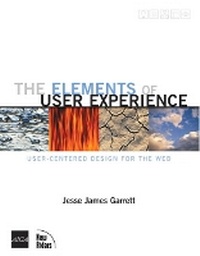
The Elements of User Experience
User-Centered Design for the Web
Published on 22. October 2002
Book
Paperback/Softback
208 pages
978-0-7357-1202-7 (ISBN)
Description
Smart organizations recognize that Web design is more than just creating clean code and sharp graphics. A site that really works fulfills your strategic objectives while meeting the needs of your users. Even the best content and the most sophisticated technology won't help you balance those goals without a cohesive, consistent user experience to support it.
But creating the user experience can seem overwhelmingly complex. With so many issues involved-usability, brand identity, information architecture, interaction design-it can seem as if the only way to build a successful site is to spend a fortune on specialists who understand all the details.
The Elements of User Experience cuts through the complexity of user-centered design for the Web with clear explanations and vivid illustrations that focus on ideas rather than tools or techniques. Jesse James Garrett gives readers the big picture of Web user experience development, from strategy and requirements to information architecture and visual design. This accessible introduction helps any Web development team, large or small, to create a successful user experience.
But creating the user experience can seem overwhelmingly complex. With so many issues involved-usability, brand identity, information architecture, interaction design-it can seem as if the only way to build a successful site is to spend a fortune on specialists who understand all the details.
The Elements of User Experience cuts through the complexity of user-centered design for the Web with clear explanations and vivid illustrations that focus on ideas rather than tools or techniques. Jesse James Garrett gives readers the big picture of Web user experience development, from strategy and requirements to information architecture and visual design. This accessible introduction helps any Web development team, large or small, to create a successful user experience.
More details
Language
English
Place of publication
United States
Publishing group
Pearson Education (US)
Target group
College/higher education
Dimensions
Height: 176 mm
Width: 229 mm
Thickness: 9 mm
Weight
340 gr
ISBN-13
978-0-7357-1202-7 (9780735712027)
Copyright in bibliographic data and cover images is held by Nielsen Book Services Limited or by the publishers or by their respective licensors: all rights reserved.
Schweitzer Classification
Other editions
New editions
Jesse James Garrett
Elements of User Experience, The: User-Centered Design for the Web and Beyond
User-Centered Design for the Web and Beyond
Book
01/2011
2nd Edition
New Riders
€56.99
Shipment within 10-20 days
Person
Jesse James Garrett is one of the founders of Adaptive Path, a user experience consultancy based in San Francisco. Since it was first released in March 2000, his "Elements of User Experience" model has been downloaded more than 20,000 times. Jesse's Web experience includes projects for companies such as AT&T, Intel, Boeing, Motorola, Hewlett-Packard, and National Public Radio. His other contributions to the field of user experience include the Visual Vocabulary, an open notation system for information architecture documentation that is now used by organizations around the world. His personal site at www.jjg.net is one of the Web's most popular destinations for information architecture resources.
Content
Introduction.
1. User Experience and Why It Matters.
Everyday Miseries. Introducing User Experience. User Experience and the Web. Competitive Advantage and ROI. Minding Your Users.
2. Meet the Elements.
The Five Planes. Building from Bottom to Top. A Basic Duality. The Elements of User Experience. Using the Elements.
3. The Strategy Plane: Site Objectives and User Needs.
Defining the Strategy. Site Objectives. User Needs. Team Roles and Process. Further Reading.
4. The Scope Plane: Functional Specifications and Content Requirements.
Defining the Scope. Functionality and Content. Gathering Requirements. Functional Specifications. Content Requirements. Prioritizing Requirements. Further Reading.
5. The Structure Plane: Interaction Design and Information Architecture.
Defining the Structure. Interaction Design. Information Architecture. Team Roles and Process. Further Reading.
6. The Skeleton Plane: Interface Design, Navigation Design, and Information Design.
Defining the Skeleton. Convention and Metaphor. Interface Design. Navigation Design. Information Design. Wireframes. Further Reading.
7. The Surface Plane: Visual Design.
Defining the Surface. Follow the Eye. Contrast and Uniformity. Internal and External Consistency. Color Palettes and Typography. Design Comps and Style Guides. Further Reading.
8. The Elements Applied.
An Example: Search Engine Implementation. Asking the Right Questions. The Marathon and the Sprint.
Index.
1. User Experience and Why It Matters.
Everyday Miseries. Introducing User Experience. User Experience and the Web. Competitive Advantage and ROI. Minding Your Users.
2. Meet the Elements.
The Five Planes. Building from Bottom to Top. A Basic Duality. The Elements of User Experience. Using the Elements.
3. The Strategy Plane: Site Objectives and User Needs.
Defining the Strategy. Site Objectives. User Needs. Team Roles and Process. Further Reading.
4. The Scope Plane: Functional Specifications and Content Requirements.
Defining the Scope. Functionality and Content. Gathering Requirements. Functional Specifications. Content Requirements. Prioritizing Requirements. Further Reading.
5. The Structure Plane: Interaction Design and Information Architecture.
Defining the Structure. Interaction Design. Information Architecture. Team Roles and Process. Further Reading.
6. The Skeleton Plane: Interface Design, Navigation Design, and Information Design.
Defining the Skeleton. Convention and Metaphor. Interface Design. Navigation Design. Information Design. Wireframes. Further Reading.
7. The Surface Plane: Visual Design.
Defining the Surface. Follow the Eye. Contrast and Uniformity. Internal and External Consistency. Color Palettes and Typography. Design Comps and Style Guides. Further Reading.
8. The Elements Applied.
An Example: Search Engine Implementation. Asking the Right Questions. The Marathon and the Sprint.
Index.