

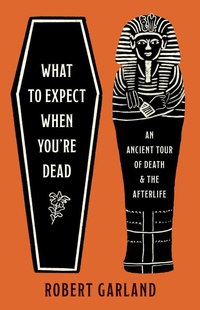
What to Expect When You're Dead
An Ancient Tour of Death and the Afterlife
Published on 8. April 2025
Book
Hardback
344 pages
978-0-691-26617-6 (ISBN)
Description
An entertaining and enlightening book about how ancient peoples dealt with death-and what we might learn from them
A lively story of death, What to Expect When You're Dead explores the fascinating death-related beliefs and practices of a wide range of ancient cultures and traditions-Mesopotamian, Egyptian, Hindu, Jewish, Zoroastrian, Etruscan, Greek, Roman, Early Christian, and Islamic. By drawing on the latest scholarship on ancient archaeology, art, literature, and funerary inscriptions, Robert Garland invites readers to put themselves in the sandals of ancient peoples and to imagine their mental state moment by moment as they sought-in ways that turn out to be remarkably similar to ours-to assist the dead on their journey to the next world and to understand life's greatest mystery.
What to Expect When You're Dead chronicles the ways ancient peoples answered questions such as: How to achieve a good death and afterlife? What's the best way to dispose of a body? Do the dead face a postmortem judgement-and where do they end up? Do the dead have bodies in the afterlife-and can they eat, drink, and have sex? And what can the living do to stay on good terms with the nonliving?
Filled with intriguing stories and frequent humor, What to Expect When You're Dead will be a morbidly delicious treat for every reader alive.
A lively story of death, What to Expect When You're Dead explores the fascinating death-related beliefs and practices of a wide range of ancient cultures and traditions-Mesopotamian, Egyptian, Hindu, Jewish, Zoroastrian, Etruscan, Greek, Roman, Early Christian, and Islamic. By drawing on the latest scholarship on ancient archaeology, art, literature, and funerary inscriptions, Robert Garland invites readers to put themselves in the sandals of ancient peoples and to imagine their mental state moment by moment as they sought-in ways that turn out to be remarkably similar to ours-to assist the dead on their journey to the next world and to understand life's greatest mystery.
What to Expect When You're Dead chronicles the ways ancient peoples answered questions such as: How to achieve a good death and afterlife? What's the best way to dispose of a body? Do the dead face a postmortem judgement-and where do they end up? Do the dead have bodies in the afterlife-and can they eat, drink, and have sex? And what can the living do to stay on good terms with the nonliving?
Filled with intriguing stories and frequent humor, What to Expect When You're Dead will be a morbidly delicious treat for every reader alive.
Reviews / Votes
"Fascinating. . . .As well as an incredible depth of knowledge, one of the highlights of this book is the occasional light, humorous touch that Garland brings to one of life's most difficult topics. He shows us how past societies dealt with death and the idea of an afterlife in a way that was often full of vibrancy."---Jackson von Uden, All About History "[A] rollicking excursion into death in the ancient world. . . .Enlightening."---Caitlin Mahar, Inside StoryMore details
Language
English
Place of publication
New Jersey
United States
Product notice
Trade binding
Illustrations
25 b/w illus.
Dimensions
Height: 221 mm
Width: 145 mm
Thickness: 34 mm
Weight
570 gr
ISBN-13
978-0-691-26617-6 (9780691266176)
Copyright in bibliographic data and cover images is held by Nielsen Book Services Limited or by the publishers or by their respective licensors: all rights reserved.
Schweitzer Classification
Other editions
Additional editions
E-Book
02/2025
1st Edition
Princeton University Press
€28.99
Available for download
Person
Robert Garland is the Roy D. and Margaret B. Wooster Professor Emeritus of the Classics at Colgate University. He is the author of many books, including The Greek Way of Death, Wandering Greeks (Princeton), and Athens Burning. He has also recorded six courses for the Great Courses, most recently God against the Gods.