


Buddhist Ethics
A Philosophical Exploration
Published on 2. February 2022
Book
Hardback
248 pages
978-0-19-090763-1 (ISBN)
Description
Buddhist Ethics presents an outline of Buddhist ethical thought. It is not a defense of Buddhist approaches to ethics as opposed to any other, nor is it a critique of the Western tradition. Garfield presents a broad overview of a range of Buddhist approaches to the question of moral philosophy. He draws on a variety of thinkers, reflecting the great diversity of this 2500-year-old tradition in philosophy but also the principles that tie them together. In particular, he engages with the literature that argues that Buddhist ethics is best understood as a species of virtue ethics, and with those who argue that it is best understood as consequentialist. Garfield argues that while there are important points of contact with these Western frameworks, Buddhist ethics is distinctive, and is a kind of moral phenomenology that is concerned with the ways in which we experience ourselves as agents and others as moral fellows. With this framework, Garfield explores the connections between Buddhist ethics and recent work in moral particularism, such as that of Jonathan Dancy, as well as the British and Scottish sentimentalist tradition represented by Hume and Smith.
Reviews / Votes
the book fills an important gap among presentations of Buddhist ethics. It presents Buddhist ethics as a live option, inviting readers to consider turning their attention away from the traditional questions of Western ethics and toward Buddhist questions. * Amod Lele, Journal of Buddhist Ethics * As a teacher and student of Buddhist thought, I am tremendously grateful for this vivid introduction to the full edifice of Buddhist ethics. Garfield sets upright and tightens the bolts on the structure of Buddhist ethics, adds dimension with rich readings of Buddhist narrative and path literature, paints upon it a fascinating, pioneering interpretation of Buddhist vows, and opens the door for contemporary applications. * JONATHAN GOLD, Princeton University* In this accessible, clear, and constructive engagement with Buddhist moral phenomenology, Jay Garfield continues his program to render contemporary philosophy's neglect of Asian thought rationally indefensible. Students and scholars alike will learn much from this book. * MARIA HEIM, Amherst College
* Garfield's book offers a bold statement of Buddhist ethics that eschews attempts to assimilate it to familiar Western ethical approaches like con-sequentialism and deontology. Instead, Garfield argues that Buddhism promotes a very different model of ethics focused on cultivating how we experience ourselves rather than on what outcomes we seek in the world. Garfield builds a clear and engaging case for this interpretation of Buddhist ethics as a kind of moral phenomenology. Buddhist Ethics demands that we rethink not just Buddhist philosophy, but the familiar assumptions about the very form moral philosophy might take. * SHAUN NICHOLS, Cornell University
* Garfield's comprehensive presentation of Buddhist ethical thought is an invaluable contribution not only to philosophy, ethical theory, and theology but also a fascinating read for anyone wondering how to relate Buddhism to Western philosophy. Showing how Buddhist ethics aims for 'the trans-formation of our moral perception,' Garfield presents a compelling reading of Buddhism as a call for greater interconnectedness and universal moral responsibility. * DR. PHIL. CAROLA ROLOFF, Academy of World Religions, University of Hamburg
* This volume attempts to philosophically outline Buddhist ethics with occasional references to non-mainstream/alternative views from various (non-) Buddhist traditions and scholars. * Hua>> (3)nh Cao Nha>>+/-t Quang, Religious Studies Review *
More details
Series
Language
English
Place of publication
New York
United States
Target group
College/higher education
Dimensions
Height: 159 mm
Width: 241 mm
Thickness: 18 mm
Weight
481 gr
ISBN-13
978-0-19-090763-1 (9780190907631)
Copyright in bibliographic data and cover images is held by Nielsen Book Services Limited or by the publishers or by their respective licensors: all rights reserved.
Schweitzer Classification
Other editions
Additional editions
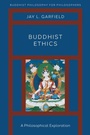
Book
02/2022
Oxford University Press Inc
€28.00
Shipment within 15-20 days
E-Book
10/2021
OUP eBook
€11.99
Available for download
E-Book
10/2021
OUP eBook
€11.99
Available for download
Person
Jay L Garfield is Doris Silbert Professor in the Humanities and Professor of Philosophy, Logic and Buddhist Studies, Chair of the Philosophy department, and director of the Logic program at Smith College. He is also Visiting Professor of Buddhist Philosophy at Harvard Divinity School, Professor of Philosophy at Melbourne University and Adjunct Professor of Philosophy at the Central University of Tibetan Studies. He has taught in Australia, Singapore, Japan and Germany and is a regular lecturer at major universities, Buddhist Studies centers and research institutions around the world. Professor Garfield is author, co-author, or editor of 30 books and over 180 articles and book reviews.
Content
- Preface
- Part I: Structure
- 1. Methodological Introduction
- 2. The Broad Structure of Buddhist Ethics
- 3. Buddhist Ethics as Moral Phenomenology
- 4. Agency and Action Theory
- 5. Narrative in Buddhist Ethics
- Part II: Doctrine
- 6. The Four Noble Truths
- 7. Path as a Structure for Buddhist Ethics
- 8. The Six Perfections and the Bodhisattva Path
- 9. The Brahmavih?ras and the Achievement of Nonegocentricity
- 10. The Importance of Vow
- Part III: Contemporary Issues
- 11. Naturalism
- 12. Engaged Buddhism
- 13. Coda: What Buddhist Ethics Brings to the Table
- References
- Part I: Structure
- 1. Methodological Introduction
- 2. The Broad Structure of Buddhist Ethics
- 3. Buddhist Ethics as Moral Phenomenology
- 4. Agency and Action Theory
- 5. Narrative in Buddhist Ethics
- Part II: Doctrine
- 6. The Four Noble Truths
- 7. Path as a Structure for Buddhist Ethics
- 8. The Six Perfections and the Bodhisattva Path
- 9. The Brahmavih?ras and the Achievement of Nonegocentricity
- 10. The Importance of Vow
- Part III: Contemporary Issues
- 11. Naturalism
- 12. Engaged Buddhism
- 13. Coda: What Buddhist Ethics Brings to the Table
- References