

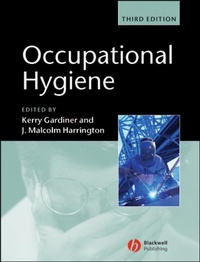
Occupational Hygiene
3rd Edition
Published on 17. May 2005
Book
Hardback
520 pages
978-1-4051-0621-4 (ISBN)
Description
Employees, employers and the government have all become very aware of the effects on health of the work environment. As a result, this subject area is rapidly developing with recent changes in legislation, sampling and measurement methods, as well as a new emphasis on the psychological impact of work, and the importance of an appropriate work-life balance.
The purpose of this book is to provide a clear and concise account of the principles of occupational hygiene and, as such, it is suitable for students studying for degree courses in this subject and for the MFOM. It is also suitable for occupational physicians and nurses, to safety representatives and to trade unionists.
This edition sees the introduction of nine new chapters covering recently emerged topics such as work/life balance, work organisation and pyschological issues.
The purpose of this book is to provide a clear and concise account of the principles of occupational hygiene and, as such, it is suitable for students studying for degree courses in this subject and for the MFOM. It is also suitable for occupational physicians and nurses, to safety representatives and to trade unionists.
This edition sees the introduction of nine new chapters covering recently emerged topics such as work/life balance, work organisation and pyschological issues.
Reviews / Votes
Quotes on the previous editions:'A very welcome, strongly recommended and well presented book.'--Hazardous Substances
'this book provides an excellent introduction to the field of industrila hygiene.'--AIHA journal
'This book provides an excellent overview of occupational hygiene and it will remain on the essential reading list of all AFOM and Diploma students.'--Occupational Medicine
'It should fairly quickly become the textbook for students of occupational hygiene ... and it would be valuable reading for physicians new to occupational health.'--Occupational & Environmental Medicine
More details
Edition
3rd edition
Language
English
Place of publication
Hoboken
United Kingdom
Publishing group
John Wiley and Sons Ltd
Target group
Professional and scholarly
Product notice
sewn/stitched
Cloth over boards
Dimensions
Height: 252 mm
Width: 195 mm
Thickness: 31 mm
Weight
1433 gr
ISBN-13
978-1-4051-0621-4 (9781405106214)
Copyright in bibliographic data and cover images is held by Nielsen Book Services Limited or by the publishers or by their respective licensors: all rights reserved.
Schweitzer Classification
Other editions
Additional editions
Kerry Gardiner | J. Malcolm Harrington
Occupational Hygiene
E-Book
05/2008
3rd Edition
Wiley-Blackwell
€212.99
Available for download
Persons
Dr Kerry Gardiner was the Acting Director of the Institute of Occupational Health, University of Birmingham, from mid-2000 to early 2003. He joined the Institute in 1987, having gained approximately a year's field experience as a consultant in London directly after graduating with a degree in Occupational Hygiene. His career at the IOH started as a Research Associate with specific responsibility for a large trans-European respiratory morbidity study; from which he gained his PhD. Despite a multitude of interests his particular area of research revolves around the use of exposure data in exposure-response analyses. Over time, he was appointed to a Lectureship, followed in 1997 by a Senior Lectureship. From March 2000 until April 2001, he was the President of the British Occupational Hygiene Society; during this term he spent his time ensuring that the Society contributed actively to Securing Health Together and trying to persuade other Learned/Professional Bodies to work actively together to address the essential tenet of disease/illness prevention. He is currently visiting Professor at the University of Witwatersrand, South Africa.
Malcolm Harrington CBE, BSc, MSc, MD, FRCP, FFOM, is Emeritus Professor of Occupational Health at the University of Birmingham.
Malcolm Harrington CBE, BSc, MSc, MD, FRCP, FFOM, is Emeritus Professor of Occupational Health at the University of Birmingham.
Content
List of Contributors. Preface..
Part 1: Introduction.
Occupational Hygiene (Kerry Gardiner).
Global Strategies and Trends in Occupational Health: Well-being at Work in Focus (Bengt Knave).
Part 2: Organ Structure and Function and the Adverse Effects of Work.
The Structure and Function if the Lung (J. Malcolm Harrington and Anthony J. Newman-Taylor).
Organ Structure and Function: The Skin (Iain S. Foulds).
Musculoskeletal Disorders (Grahmae Brown).
The Effects of Inhaled Materials on the Lung and Other Target Organs (Jon G. Ayres).
The Effects of Some Physical Agents (Philip Raffaelli).
Toxicology (Julian Delic, Steven Fairburst and Maureen Meldreum).
Part 3: Principles of Occupational Hygiene.
The Nature and Properties of Workplace Airborne Contaminants (Lisa M. Brosseau and Claudiu T. Lungu).
Principles of Risk Assessment (Steven S. Sadhra).
Design of Exposure Measurement Surveys and their Statistical Analyses (Hans Krombout, Martie van Tongeren and Igor Burstyn).
Retrospective Exposure Assessment (Tom J. Smith, Patricia A. Stewart and Robert F. Herrick).
Biological Monitoring ((Tar-Ching Aw).
Epidemiology (J. Malcolm Harrington).
Part 4: Environmental Hazards: Principles and Methods of their Assessment.
The Sampling of Aerosols: Principles and Methods. (David Mark).
The Sampling of gases and Vapours: Principles and Methods (Richard H. Brown).
Noise (Kerry Gardiner).
Vibration (Michael J. Griffin).
Light and Lighting (N. Alan Smith).
The Thermal Environment (Antony Youle).
Non-ionizing Radiation: Electromagnetic Field and Optical Radiation (Philip Chadwick).
Ionizing Radiation: Physics, Measurement, Biological Effects and Control (Ronald F. Clayton).
Biological Agents (Julia M. Greig and Chris J. Ellis).
Psychological Issues (Anne Spurgeon).
The Development of Argonomics as a Scientific Discipline (Joanne Crawford).
Dermal Exposure Assessment (John W. Cherrie)..
Part 5: Allied and Emerging Issues.
Occupational Accident Prevention (Richard T. Booth and Anthony J. Boyle).
Part 6: Control.
Work Organization and Work-related Stress (Tom Cox, Amanda Griffiths and Stavroula Leka).
Control Philosophy (Kerry Gardiner).
Ventilation (Frank Gill).
Personal Protective Equipment (Robin M. Howie).
Occupational Health and Hygiene Management (Lawrence Waterman and Karen Baxter)
Part 1: Introduction.
Occupational Hygiene (Kerry Gardiner).
Global Strategies and Trends in Occupational Health: Well-being at Work in Focus (Bengt Knave).
Part 2: Organ Structure and Function and the Adverse Effects of Work.
The Structure and Function if the Lung (J. Malcolm Harrington and Anthony J. Newman-Taylor).
Organ Structure and Function: The Skin (Iain S. Foulds).
Musculoskeletal Disorders (Grahmae Brown).
The Effects of Inhaled Materials on the Lung and Other Target Organs (Jon G. Ayres).
The Effects of Some Physical Agents (Philip Raffaelli).
Toxicology (Julian Delic, Steven Fairburst and Maureen Meldreum).
Part 3: Principles of Occupational Hygiene.
The Nature and Properties of Workplace Airborne Contaminants (Lisa M. Brosseau and Claudiu T. Lungu).
Principles of Risk Assessment (Steven S. Sadhra).
Design of Exposure Measurement Surveys and their Statistical Analyses (Hans Krombout, Martie van Tongeren and Igor Burstyn).
Retrospective Exposure Assessment (Tom J. Smith, Patricia A. Stewart and Robert F. Herrick).
Biological Monitoring ((Tar-Ching Aw).
Epidemiology (J. Malcolm Harrington).
Part 4: Environmental Hazards: Principles and Methods of their Assessment.
The Sampling of Aerosols: Principles and Methods. (David Mark).
The Sampling of gases and Vapours: Principles and Methods (Richard H. Brown).
Noise (Kerry Gardiner).
Vibration (Michael J. Griffin).
Light and Lighting (N. Alan Smith).
The Thermal Environment (Antony Youle).
Non-ionizing Radiation: Electromagnetic Field and Optical Radiation (Philip Chadwick).
Ionizing Radiation: Physics, Measurement, Biological Effects and Control (Ronald F. Clayton).
Biological Agents (Julia M. Greig and Chris J. Ellis).
Psychological Issues (Anne Spurgeon).
The Development of Argonomics as a Scientific Discipline (Joanne Crawford).
Dermal Exposure Assessment (John W. Cherrie)..
Part 5: Allied and Emerging Issues.
Occupational Accident Prevention (Richard T. Booth and Anthony J. Boyle).
Part 6: Control.
Work Organization and Work-related Stress (Tom Cox, Amanda Griffiths and Stavroula Leka).
Control Philosophy (Kerry Gardiner).
Ventilation (Frank Gill).
Personal Protective Equipment (Robin M. Howie).
Occupational Health and Hygiene Management (Lawrence Waterman and Karen Baxter)