

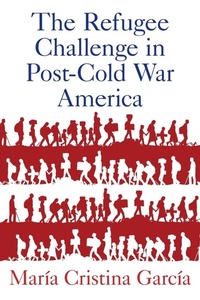
The Refugee Challenge in Post-Cold War America
Published on 8. September 2020
Book
Paperback/Softback
356 pages
978-0-19-753359-8 (ISBN)
Description
For over forty years, Cold War concerns about the threat of communism shaped the contours of refugee and asylum policy in the United States, and the majority of those admitted as refugees came from communist countries. In the post-Cold War period, a wider range of geopolitical and domestic interests influence which populations policymakers prioritize for admission.
The Refugee Challenge in Post-Cold War America examines the actors and interests that have shaped refugee and asylum policy since 1989. Policymakers are now considering a wider range of populations as potentially eligible for protection: victims of civil unrest, genocide, trafficking, environmental upheaval, and gender-based discrimination, among others. Many of those granted protected status since 1989 would never have been considered for admission during the Cold War.
Among the challenges of the post-Cold War era are the growing number of asylum seekers who have petitioned for protection at a port of entry and are backlogging the immigration courts. Concerns over national security have also resulted in deterrence policies that have raised important questions about the rights of refugees and the duties of nations. Maria Cristina Garcia evaluates the challenges of reconciling international humanitarian obligations with domestic concerns for national security.
The Refugee Challenge in Post-Cold War America examines the actors and interests that have shaped refugee and asylum policy since 1989. Policymakers are now considering a wider range of populations as potentially eligible for protection: victims of civil unrest, genocide, trafficking, environmental upheaval, and gender-based discrimination, among others. Many of those granted protected status since 1989 would never have been considered for admission during the Cold War.
Among the challenges of the post-Cold War era are the growing number of asylum seekers who have petitioned for protection at a port of entry and are backlogging the immigration courts. Concerns over national security have also resulted in deterrence policies that have raised important questions about the rights of refugees and the duties of nations. Maria Cristina Garcia evaluates the challenges of reconciling international humanitarian obligations with domestic concerns for national security.
Reviews / Votes
The scholarly community owes Garcia a huge debt of gratitude for blazing a trail upon which the next generation of scholarship can travel. Her latest book is essential reading. * Amanda C. Demmer, Journal of American Ethnic History * [T]imely....[S]he masterfully covers this difficult topic of causes and effects of public policy in a way that should make her book required reading for advanced students, scholars, and many general readers attempting to understand recent immigration....Essential. * CHOICE * This volume stands alone as the best history of U.S. refugee policy in post-Cold War America. Garcia chronicles the struggles of Russian refuseniks, Chinese dissidents, Rwandans fleeing genocide, as well as Haitian and Cuban boat people among those seeking sanctuary from persecution. Her meticulous research and incisive analysis illuminates the confusions and inadequacies of United States refugee policy under Republican and Democratic presidents alike. * Alan M. Kraut, University Professor of History, American University and Past President of the Organization of American Historians * The Refugee Challenge in Post-Cold War America is vital contemporary history. Garcia explains the increasingly complex motivations that shape U.S. policy and the role of stakeholders inside and outside government. This book is essential reading on the politics of protection. * David Scott FitzGerald, author of Culling the Masses: The Democratic Origins of Racist Immigration Policy in the Americas* Garcia illustrates the ways in which refugee flows have evolved while refugee law has been slow to adapt. This important work provides new insights on the past that may inform policy responses to the current refugee crises. * Ruth Ellen Wasem, Clinical Professor of Public Policy, Lyndon B. Johnson School of Public Affairs, The University of Texas at Austin
* This book deftly explains how domestic politics, economic circumstances, and national security concerns have shaped what the United States has done-and not done-in the face of multiple refugee crises in the two decades after the end of the Cold War. With this masterful and elegant account, the first history to untangle post-Cold War U.S. refugee policies, Garcia demonstrates again why she is one of our most important scholars of immigration and refugees. * -Carl Bon Tempo, author of Americans at the Gate: The United States and Refugees during the Cold War
*
More details
Language
English
Place of publication
New York
United States
Target group
Professional and scholarly
Dimensions
Height: 234 mm
Width: 156 mm
Thickness: 21 mm
Weight
606 gr
ISBN-13
978-0-19-753359-8 (9780197533598)
Copyright in bibliographic data and cover images is held by Nielsen Book Services Limited or by the publishers or by their respective licensors: all rights reserved.
Schweitzer Classification
Other editions
Additional editions
Maria Garcia
The Refugee Challenge in Post-Cold War America
Book
09/2017
Oxford University Press Inc
€51.70
Shipment within 15-20 days
María Cristina García
The Refugee Challenge in Post-Cold War America
E-Book
08/2017
OUP eBook
€12.99
Available for download
María Cristina García
The Refugee Challenge in Post-Cold War America
E-Book
08/2017
OUP eBook
€12.99
Available for download
Person
Maria Cristina Garcia is the Howard A. Newman Professor of American Studies in the Department of History at Cornell University. She also holds a joint appointment in the Latino Studies Program. She has served as President of the Immigration and Ethnic History Society. Her books include Havana USA: Cuban Exiles and Cuban Americans in South Florida and Seeking Refuge: Central American Migration to Mexico, the United States, and Canada, and several other publications on immigration and refugee history.
Content
Introduction
Chapter One: Now that the Cold War is over, who is a refugee?
Chapter Two: US Refugee Policy in the 'Age of Genocide'
Chapter Three: Refuge in the National Security State
Chapter Four: The New Asylum Seekers
Epilogue
Bibliography
Chapter One: Now that the Cold War is over, who is a refugee?
Chapter Two: US Refugee Policy in the 'Age of Genocide'
Chapter Three: Refuge in the National Security State
Chapter Four: The New Asylum Seekers
Epilogue
Bibliography