

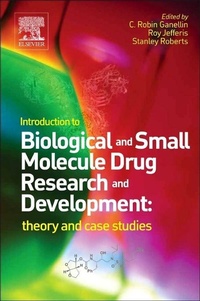
Introduction to Biological and Small Molecule Drug Research and Development
Theory and Case Studies
Published on 29. May 2013
Book
Hardback
472 pages
978-0-12-397176-0 (ISBN)
Description
Introduction to Biological and Small Molecule Drug Research and Development provides, for the first time, an introduction to the science behind successful pharmaceutical research and development programs. The book explains basic principles, then compares and contrasts approaches to both biopharmaceuticals (proteins) and small molecule drugs, presenting an overview of the business and management issues of these approaches. The latter part of the book provides carefully selected real-life case studies illustrating how the theory presented in the first part of the book is actually put into practice. Studies include Herceptin/T-DM1, erythropoietin (Epogen/Eprex/NeoRecormon), anti-HIV protease inhibitor Darunavir, and more.
Introduction to Biological and Small Molecule Drug Research and Development is intended for late-stage undergraduates or postgraduates studying chemistry (at the biology interface), biochemistry, medicine, pharmacy, medicine, or allied subjects. The book is also useful in a wide variety of science degree courses, in post-graduate taught material (Masters and PhD), and as basic background reading for scientists in the pharmaceutical industry.
Introduction to Biological and Small Molecule Drug Research and Development is intended for late-stage undergraduates or postgraduates studying chemistry (at the biology interface), biochemistry, medicine, pharmacy, medicine, or allied subjects. The book is also useful in a wide variety of science degree courses, in post-graduate taught material (Masters and PhD), and as basic background reading for scientists in the pharmaceutical industry.
Reviews / Votes
"This book covers all important aspects of modern drug development for small molecules and biologics...I very much enjoyed reading this book. I learned a lot myself and will use it in my Medicinal Chemistry class. I would strongly recommend it to anyone who is interested in drug development and not a professional in this field." --ChemMedChem.org, April 2014"Pharmacologists, pharmacists, and medical chemists review recent research and the current status of developing drugs from proteins, a practice that began with the advent of protein chemistry and genetic engineering during the 1990s." --Reference & Research Book News, October 2013
"From the perspective of the world's leading experts in the field of drug discovery, this book is the first to bridge the fundamental principles of drug discovery gained from developing small molecules with the newer approaches of developing peptide/protein biopharmaceuticals as therapeutic entities...I highly recommend this book to anyone who has a role in the drug discovery process." --Doody.com, October 2013
More details
Language
English
Place of publication
United States
Target group
Professional and scholarly
undergraduate / postgraduate scientists who wish to understand or who are working on drug discovery or starting their careers in the biotech, medicinal chemistry, pharmaceutical industry and corporates
Product notice
sewn/stitched
Cloth over boards
Dimensions
Height: 241 mm
Width: 195 mm
Thickness: 30 mm
Weight
1117 gr
ISBN-13
978-0-12-397176-0 (9780123971760)
Copyright in bibliographic data and cover images is held by Nielsen Book Services Limited or by the publishers or by their respective licensors: all rights reserved.
Schweitzer Classification
Other editions
Additional editions
C. Robin Ganellin | Roy Jefferis | Stanley M. Roberts
Introduction to Biological and Small Molecule Drug Research and Development
Theory and Case Studies
E-Book
05/2013
Elsevier
€68.95
Available for download
Content
1. 'Introduction to Enzymes, Receptors and Small Molecule Drugs'
2. Proteins: Structure and Function
3. The Drug Discovery Process - from Target Selection to Candidate
4. Introduction to Biopharmaceuticals
5. Similarities and Differences in the Discovery, Development and Use of Biopharmaceuticals versus Small Molecule Drugs
6. 'Approaching the Same...Treatment of Diabetes
7. The Structure and Business of Bio/pharmaceutical Companies including the Management of Risks and Resources
8. Gefitinib
9. Herceptin/T-DM1
10. Erythropoietin (Epogen/Eprex/NeoRecormon)
11. Lysosomal Storage diseases
12. Steroids for HRT
13. Anti-HIV protease inhibitor Darunavir
14. Anti-TNF Agents Remicade/Humira/Enbrel/Cimzia
15. The Cholesterol Lowering Drug - Ezetimibe
2. Proteins: Structure and Function
3. The Drug Discovery Process - from Target Selection to Candidate
4. Introduction to Biopharmaceuticals
5. Similarities and Differences in the Discovery, Development and Use of Biopharmaceuticals versus Small Molecule Drugs
6. 'Approaching the Same...Treatment of Diabetes
7. The Structure and Business of Bio/pharmaceutical Companies including the Management of Risks and Resources
8. Gefitinib
9. Herceptin/T-DM1
10. Erythropoietin (Epogen/Eprex/NeoRecormon)
11. Lysosomal Storage diseases
12. Steroids for HRT
13. Anti-HIV protease inhibitor Darunavir
14. Anti-TNF Agents Remicade/Humira/Enbrel/Cimzia
15. The Cholesterol Lowering Drug - Ezetimibe