


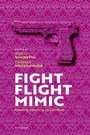
Fight, Flight, Mimic
Identity Mimicry in Conflict
Published on 20. June 2024
Book
Hardback
264 pages
978-0-19-873947-0 (ISBN)
Description
Fight, Flight, Mimic is the first systematic study of deceptive mimicry in the context of wars. Deceptive mimicry -- the manipulation of individual or group identity -- includes passing off as a different individual, as a member of a group to which one does not belong, or, for a group, to 'sign' its action as another group.
Mimicry exploits the reputation of the model it mimics to avoid capture (flight), to strike undetected at the enemy (fight), or to hide behind or besmirch the reputation of the model group ('false flag' operations). These tactics have previously been described anecdotally, mixed in with other ruses de guerre, but the authors show that mimicry is a distinct form of deception with its own logic and particularly consequential effects on those involved. The book offers a theory and game-theoretic model of mimicry, an overview of its use through history, and a deep empirical exploration of its modern manifestations through several case studies by leading social scientists. The chapters cover mimicry in the context of the Northern Ireland conflict, terrorism campaigns in 1970s Italy, the height of the Iraq insurgency, the Rwandan genocide, the Naxalite rebellion in India, and jihadi discussion forums on the Internet.
Mimicry exploits the reputation of the model it mimics to avoid capture (flight), to strike undetected at the enemy (fight), or to hide behind or besmirch the reputation of the model group ('false flag' operations). These tactics have previously been described anecdotally, mixed in with other ruses de guerre, but the authors show that mimicry is a distinct form of deception with its own logic and particularly consequential effects on those involved. The book offers a theory and game-theoretic model of mimicry, an overview of its use through history, and a deep empirical exploration of its modern manifestations through several case studies by leading social scientists. The chapters cover mimicry in the context of the Northern Ireland conflict, terrorism campaigns in 1970s Italy, the height of the Iraq insurgency, the Rwandan genocide, the Naxalite rebellion in India, and jihadi discussion forums on the Internet.
Reviews / Votes
Fight, Flight, Mimic is a thought-provoking read that will spark debate on mimicry in violent conflicts. * Krzysztof Krakowski, Journal of Peace Research *More details
Language
English
Place of publication
Oxford
United Kingdom
Target group
Professional and scholarly
Product notice
sewn/stitched
Cloth over boards
Dimensions
Height: 240 mm
Width: 167 mm
Thickness: 25 mm
Weight
553 gr
ISBN-13
978-0-19-873947-0 (9780198739470)
Copyright in bibliographic data and cover images is held by Nielsen Book Services Limited or by the publishers or by their respective licensors: all rights reserved.
Schweitzer Classification
Other editions
Additional editions
E-Book
07/2024
1st Edition
OUP eBook
€38.49
Available for download
Persons
Diego Gambetta (PhD, FBA) is Carlo Alberto Chair in social and political science at the Collegio Carlo Alberto, Turin, Italy, and Emeritus Fellow of Nuffield College, Oxford. He has published academic books and articles, on trust and signalling theory, criminal organisations, the North-South Italian divide, and violent extremists. For the general public he has written on Primo Levi's death, discursive machismo, and heroic impatience. He was awarded the "Paolo Borsellino Prize" for his book on the Sicilian Mafia. He has held visiting positions at several universities (Chicago, Columbia, Science Po, College de France, ETH, Stanford, NYU). In 2000 he became a Fellow of the British Academy.
Thomas Hegghammer is Senior Research Fellow in Politics at All Souls College, Oxford University. He is a political scientist and historian who specializes in the study of militant Islamist groups. His books include Jihad in Saudi Arabia: Violence and Pan-Islamism since 1979 (Cambridge 2010), JIihadi Culture: The Art and Social Practices of Militant Islamists (Cambridge 2017), and The Caravan: Abdallah Azzam and the Rise of Global Jihad (Cambridge 2020). He worked for two decades at the Norwegian Defence Research Establishment (FFI) in Oslo and has held fellowships at Princeton, Harvard, and Stanford Universitites as well as at the Institute for Advanced Study in Princeton.
Thomas Hegghammer is Senior Research Fellow in Politics at All Souls College, Oxford University. He is a political scientist and historian who specializes in the study of militant Islamist groups. His books include Jihad in Saudi Arabia: Violence and Pan-Islamism since 1979 (Cambridge 2010), JIihadi Culture: The Art and Social Practices of Militant Islamists (Cambridge 2017), and The Caravan: Abdallah Azzam and the Rise of Global Jihad (Cambridge 2020). He worked for two decades at the Norwegian Defence Research Establishment (FFI) in Oslo and has held fellowships at Princeton, Harvard, and Stanford Universitites as well as at the Institute for Advanced Study in Princeton.
Content
1: DIEGO GAMBETTA and THOMAS HEGGHAMMER: The Theory and History of Mimicry in Conflict
2: JAMES D. FEARON: Strategic Dynamics of Social Mimicry
3: THOMAS HEGGHAMMER: Can You Trust Anyone on Jihadi Internet Forums?
4: HEATHER HAMILL: The Codeword Conundrum in the Northern Ireland Conflict
5: VALERIA PIZZINI-GAMBETTA and DIEGO GAMBETTA: Mimics among Violent Extremists Italy, 1969-1980
6: DAVID D. LAITIN: Where Are the Mimics when Passing Seems Easy? The Rwandan Genocide in Comparative Perspective
7: PAVAN MAMIDI: 'Trademark Wars': Naxals vs. Criminal Extortionists in India
8: STEPHEN HOLMES: Mimicry and its Double in the Iraqi Civil War
2: JAMES D. FEARON: Strategic Dynamics of Social Mimicry
3: THOMAS HEGGHAMMER: Can You Trust Anyone on Jihadi Internet Forums?
4: HEATHER HAMILL: The Codeword Conundrum in the Northern Ireland Conflict
5: VALERIA PIZZINI-GAMBETTA and DIEGO GAMBETTA: Mimics among Violent Extremists Italy, 1969-1980
6: DAVID D. LAITIN: Where Are the Mimics when Passing Seems Easy? The Rwandan Genocide in Comparative Perspective
7: PAVAN MAMIDI: 'Trademark Wars': Naxals vs. Criminal Extortionists in India
8: STEPHEN HOLMES: Mimicry and its Double in the Iraqi Civil War