

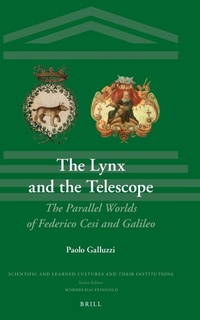
The Lynx and the Telescope
The Parallel Worlds of Cesi and Galileo
Published on 2. November 2017
Book
Hardback
540 pages
978-90-04-34231-6 (ISBN)
Description
Set in the context of Counter-Reformation Rome, this book focuses on the twenty-year long relationship (1611-1630) between Galileo Galilei and Federico Cesi, the founder of the Academy of the Lynx-eyed. Contrary to the historiographical tradition, it demonstrates that the visions of Galileo and Cesi were not at all convergent. In the course of the events that led to the adoption of the anti-Copernican decree of 1616, Galileo realized that the Lynceans were not prepared to support his battle for freedom of thought. In addition to identifying the author of the anonymous denunciation of Galileo's Assayer, Paolo Galluzzi offers an original reconstruction of the dynamics which culminated in the Church's condemnation of the famous Tuscan scientist in 1633.
This book was originally published in Italian as Liberta di filosofare in naturalibus: I mondi paralleli di Cesi e Galileo (Storia dell'Accademia dei Lincei, Studi 4). Rome: Scienze e Lettere, Editore Commerciale, 2014.
This book was originally published in Italian as Liberta di filosofare in naturalibus: I mondi paralleli di Cesi e Galileo (Storia dell'Accademia dei Lincei, Studi 4). Rome: Scienze e Lettere, Editore Commerciale, 2014.
Reviews / Votes
"Many of the details presented by Galluzzi will certainly be new to the uninitiated reader, as is the perspective of his narrative. Whereas Galileo's scientific achievements in general and his conflict with the Church hierarchy are all well known and have been documented many times over, his relationship with the Accademia dei Lincei and the influence exerted in both directions present a new and interesting view on the episode in question. All this makes valuable reading for anyone who works in the field or is interested in these developments at the threshold of the scientific age."Wolfgang Osterhage, in: Isis, Vol. 110, No. 2 (June 2019), pp. 403-404.
"This book is an important revision to our understanding of the Lincean Academy, one of the earliest scientific societies."
Sheila J. Rabin, Saint Peter's University, emerita. In: Renaissance Quarterly, Vol. 72, No. 3 (Fall 2019), pp. 1045-1046.
Praise for the Italian edition:
"Paolo Galluzzi's most recent publication is a deep immersion into the first quarter of the seventeenth century, with a narrative that switches back and forth between Florence and Rome and between Federico Cesi, founder and soul of the Accademia dei Lincei, and Galileo Galilei, member of the same academy."
Matteo Valleriani, Max Planck Institute for the History of Science. In: Isis, Vol. 106, No. 4 (December 2015), pp. 919-920.
"In his latest big book, Paolo Galluzzi presents all the known material on the relations between Galileo and Cesi and evaluates it in his usual exact and judicious manner. As a bonus, he describes Cesi's complicated publications on natural history with immense patience and admirable clarity."
John L. Heilbron, University of California Berkeley. In: Quaderni storici, Vol. 150. No. 3 (December 2015), pp. 873-882.
"By resorting to an impressive amount of primary sources and by tackling Cesi's often obscure Latin writings, Galluzzi provides historians with a meticulous investigation of Cesi's works and sheds new light on a key topic in Galileo's career."
Antonio Clericuzio, Universita di Roma Tre. In: Nuncius, Vol. 30, No. 3 (2015), pp. 709-714.
More details
Series
Language
English
Place of publication
Leiden
Netherlands
Target group
Professional and scholarly
Product notice
sewn/stitched
Cloth over boards
Dimensions
Height: 241 mm
Width: 159 mm
Thickness: 38 mm
Weight
908 gr
ISBN-13
978-90-04-34231-6 (9789004342316)
Copyright in bibliographic data and cover images is held by Nielsen Book Services Limited or by the publishers or by their respective licensors: all rights reserved.
Schweitzer Classification
Persons
Paolo Galluzzi is Director of the Museo Galileo, Florence, member of the Royal Academy of Science, Stockholm and the Accademia Nazionale dei Lincei, Rome. He authored more than 250 publications on Leonardo da Vinci, the Scientific Revolution, Galileo and scientific academies.
Content
List of Figures
Preface
Abbreviations
Note to the Reader
1 "The Secret of the Eyeglass"
?A 'Piece of Nonsense'?
?Winning Over the Minds at the Collegio Romano
?Second Class Telescopes
2 Parallel Convergences?
?The Encounter
?Mutant Lynxes in the Academy's Menagerie
?Initiation Ceremonies
3 Fluid Heavens
?Wavering Certainties
?Tycho or Telesio?
?The Revival of Martianus Capella
?Coup de theatre
?Storm Clouds Gather
4 Building a Friendship
?New Spectacles in the Heavens
?Books, Frontispieces, Theatres, Mirrors and Ladders
?Embarrassing Omissions
?The 'Lincean Telescope'
5 The Copernican System versus Holy Scripture
?The Spectre of Giordano Bruno
?Celestial Animals
?Questions of Character?
?The League of Pigeons Launches the Attack
6 Images of Nature: Book or Theatre?
?Prohibition 'Is Also Done in Case of Doubt'
?The Natural Desire for Knowledge
?Simulated versus True Religion
?Miraculous Rains
7 Confronting the New Scenario
?Cesi-Bellarmine: Attempts at Dialogue
?'The Time Has Come to Grant Greater Freedom of Thought'
?Kepler Enters the Scene
8 Relaunching Copernicanism
?Ariosto versus Tasso
?The Copernican System Overthrown?
?A Delicate Balance
?The Ebb and Flow of Fortune
?Tommaso Caccini Back on Stage?
9 Metamorphosis of a Conjuncture: from 'Marvellous' to 'Unfavourable'
?Boating on the Lake
?An Ambiguous Funeral
?A Copernican Carriage
?Calamitous Novelties
?The Turncoat
?Elephants and Mites
10 From the Heavens to the Bowels of the Earth
?The Merging of the Two Projects
?Up and Down the Ladder of Nature
?Flowing Natures
?Mother Earth
?Botany for Metaphysicians?
?The Fate of Cesi's Fossil Wood Researches
11 The Immaculate Conception of the Barberini Bees
?Honey as a Gift from the Heavens and the Earth
?'This Work Has Been Done for the Sole Purpose of Pleasing Patrons'
12 Plants as Compendium of Nature
?Laying Out the Pages of the Book of Nature
?Syntax, Painting, Theatre, Garden
?A Galilean Syntaxis?
?The Multiple Gaze of the Botanist
?The Elusive Geometry of Plants
?Glimmerings of Consciousness and Sexual Drives
?The Bologna Stone Again
?The Garden of Flavours
?Food for the Mind
?A Preformistic Conception?
?Nature Was Not Created Once and for All
?Names as Shadows of Things
Epilogue
?'It Has Been Impossible to Persuade Him to Make a Will'
Bibliography
Index of Names
Preface
Abbreviations
Note to the Reader
1 "The Secret of the Eyeglass"
?A 'Piece of Nonsense'?
?Winning Over the Minds at the Collegio Romano
?Second Class Telescopes
2 Parallel Convergences?
?The Encounter
?Mutant Lynxes in the Academy's Menagerie
?Initiation Ceremonies
3 Fluid Heavens
?Wavering Certainties
?Tycho or Telesio?
?The Revival of Martianus Capella
?Coup de theatre
?Storm Clouds Gather
4 Building a Friendship
?New Spectacles in the Heavens
?Books, Frontispieces, Theatres, Mirrors and Ladders
?Embarrassing Omissions
?The 'Lincean Telescope'
5 The Copernican System versus Holy Scripture
?The Spectre of Giordano Bruno
?Celestial Animals
?Questions of Character?
?The League of Pigeons Launches the Attack
6 Images of Nature: Book or Theatre?
?Prohibition 'Is Also Done in Case of Doubt'
?The Natural Desire for Knowledge
?Simulated versus True Religion
?Miraculous Rains
7 Confronting the New Scenario
?Cesi-Bellarmine: Attempts at Dialogue
?'The Time Has Come to Grant Greater Freedom of Thought'
?Kepler Enters the Scene
8 Relaunching Copernicanism
?Ariosto versus Tasso
?The Copernican System Overthrown?
?A Delicate Balance
?The Ebb and Flow of Fortune
?Tommaso Caccini Back on Stage?
9 Metamorphosis of a Conjuncture: from 'Marvellous' to 'Unfavourable'
?Boating on the Lake
?An Ambiguous Funeral
?A Copernican Carriage
?Calamitous Novelties
?The Turncoat
?Elephants and Mites
10 From the Heavens to the Bowels of the Earth
?The Merging of the Two Projects
?Up and Down the Ladder of Nature
?Flowing Natures
?Mother Earth
?Botany for Metaphysicians?
?The Fate of Cesi's Fossil Wood Researches
11 The Immaculate Conception of the Barberini Bees
?Honey as a Gift from the Heavens and the Earth
?'This Work Has Been Done for the Sole Purpose of Pleasing Patrons'
12 Plants as Compendium of Nature
?Laying Out the Pages of the Book of Nature
?Syntax, Painting, Theatre, Garden
?A Galilean Syntaxis?
?The Multiple Gaze of the Botanist
?The Elusive Geometry of Plants
?Glimmerings of Consciousness and Sexual Drives
?The Bologna Stone Again
?The Garden of Flavours
?Food for the Mind
?A Preformistic Conception?
?Nature Was Not Created Once and for All
?Names as Shadows of Things
Epilogue
?'It Has Been Impossible to Persuade Him to Make a Will'
Bibliography
Index of Names