

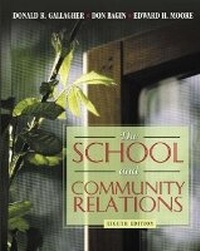
The School and Community Relations
8th Edition
Published on 2. September 2004
Book
Hardback
368 pages
978-0-205-41206-8 (ISBN)
Description
Well researched and applied, this best-selling text provides school officials the "how" and the "why" for effective communication with their staff and the community to improve school quality and student learning. Chapters are sequenced so that the reader can learn how to establish a public/community relations program that will be effective with every audience a school administrator will encounter. The authors continue to teach, research and work extensively with school administrators and this experience allows them to provide sound advice that is field tested and successful.
More details
Edition
8th edition
Language
English
Place of publication
United States
Publishing group
Pearson Education (US)
Target group
Professional and scholarly
Dimensions
Height: 235 mm
Width: 191 mm
Weight
744 gr
ISBN-13
978-0-205-41206-8 (9780205412068)
Copyright in bibliographic data and cover images is held by Nielsen Book Services Limited or by the publishers or by their respective licensors: all rights reserved.
Schweitzer Classification
Other editions
New editions
Don H. Bagin | Donald R. Gallagher | Edward H. Moore
The School and Community Relations
Book
04/2007
9th Edition
Pearson
€109.27
Article exhausted; check for reprint
Previous edition

Don H. Bagin | Donald R. Gallagher
The School and Community Relations
Book
05/2001
7th Edition
Pearson
€80.75
Article exhausted; check for reprint
Content
All chapters include one or more of the following: "Questions," "Notes," and/or "Readings."
Preface.
I. ESSENTIAL CONSIDERATIONS.
1. The Importance of Public Relations.
Why School Public Relations?
Suggestions for Improving Public Confidence.
Need for a Communication Plan.
2. Public Character of the School.
Public Character of the School.
The Meaning of Public Opinion.
School-Community Relations.
Models of Public Relations.
3. Understanding the Community.
Sociological Inventory.
Power Structures.
Measuring Public Opinion.
Electronic Polling.
4. Policies, Goals, and Strategies.
Nature of Policy.
Goals and Strategies.
Planning Checklist.
5. Administering the Program.
The Board of Education.
The Superintendent's Role.
The Administrative Team.
Director of School-Community Relations.
Standards for Educational Public Relations Professionals.
Plans of Organization.
Responsibilities of Other Team Members.
Budgetary Provisions.
Staff Members.
General Community Relations Responsibilities.
Specific Community Relations Responsibilities.
In-Service Training.
II. RELATIONS WITH SPECIAL PUBLICS.
6. The Communication Process.
Elements of Communication.
Communication and Persuasion.
The Mass Media.
Words.
Crisis Communication.
7. Communicating with Internal Publics.
Why Internal Communications?
School Board Actions.
Administration-Employee Relations.
Relations among Teachers.
Relations with Noninstructional Personnel.
Improvement of Staff Relations.
Communicating during Negotiations and Strikes.
Communicating with Diverse Cultures.
Communicating with Pupils.
Instructional Practices.
Relations Outside the Classroom.
The Pupil and Internal Community Relations.
Student Unrest.
8. Communicating with External Publics.
The Pupil and External Community Relations.
Community Relations Role of Teachers' Associations.
Importance of Parent Relations.
School Liaison Groups.
Key Communicators.
General Community Groups.
Older Adults and the School-An Intergenerational Public Relations Approach.
Opportunities for Cooperation.
Meeting Criticism and Attacks.
Communication during Negotiations and a Strike.
Communicating with Diverse Cultures.
9. Getting Ready for a Crisis.
A Crisis Plan Is Essential.
Why Is a Crisis Management Team Important?
What Types of Crisis Can We Expect?
Where Do Acts of Violence Take Place?
When Violence Strikes...What to Do.
Working with the Media.
Access to Students and Staff.
Special Considerations.
Prevention...Your First and Best Strategy.
The Warning Signs.
The Aftermath.
10. Communication About School Services Special Events.
Contacts with the Board of Education.
Receiving School Visitors.
Handling Telephone Calls and Correspondence.
Servicing Complaints.
Meeting Everyday Contacts.
Requests for Information.
Participation in Community Life.
School Plant Appearance.
Special Programs for Older People.
Open House.
Closing a School.
Building Dedications.
American Education Week.
Business-Industry-Education Cooperation.
Community Use of School Facilities.
Adult Education.
Community Education.
III. COMMUNICATION TOOLS.
11. Working with the Press.
Guidelines.
The Role of Reporters.
The Press and School Board Meetings.
The News Conference.
Drafting a News Relations Plan.
What People Want to Know about the Schools.
Foreign-Language Newspapers.
News Topics in Your Schools.
Types of Stories.
News Sources.
News Organizations.
Getting News to the Press.
Mechanics of the News Release.
12. Radio, Television, Exhibits, and Audiovisual Aids.
Using Radio.
Writing for Radio.
Working with Radio Personnel.
Television Opportunities.
Getting Television Time.
Planning for Effective Television.
School Exhibits.
Filmstrips and Slides.
Movies and Videotapes.
Other Audiovisual Aids.
13. Schools and the New Media.
Study Technology's Past Impact.
Apply Yesterday's Lessons.
Forget the Gee-Whiz Factor.
Consider the New-Media Mix.
Focus on Relevancy.
Listen to Your New-Media Customers.
Create New Worlds: The Snaring and Feeding of New-Media Customers.
Tap the Power of Digital Face-to-Face.
Deal with the New World of Communication Chaos.
Prepare for the Unexpected.
Expect Grassroots Involvement.
The New Media's Real Promise and Threat to School Communication.
The Design & Technology Primer for Communicating Digitally.
Understand the User's Power.
Take Advantage of New Developments.
Follow These Tips.
14. Preparing Printed Materials.
Objectives and School Publications.
Knowing the Audience.
Choosing Content.
Determining Who Should Write the Publications.
Knowing How to Print It.
Determining Printing Priorities.
Getting Expert Assistance.
Saving Money on Printing Costs.
Designing and Laying Out the Publication.
Getting the Most Out of Typography.
Using Photos to Enhance Publications.
Distributing Publications.
Evaluating School Publications.
Deciding Which Publications to Print.
The Role of Student Publications.
15. Conducting Campaigns.
How a Community Accepts a New Idea.
The Change Agent.
How People Accept Change.
Introducing an Innovation.
School Finance Elections.
What the Research Says.
Planning the Campaign.
Determining the Proposal.
Establishing a Philosophy.
Naming a Campaign Director.
Timing of the Campaign.
Financing the Campaign.
Citizens' Advisory Committee.
Registration of Voters.
Other Campaign Participants.
Knowing the Community's Thinking before the Election.
Adopting a Theme or Slogan.
Personalizing the Campaign.
Keep It Simple.
Working with Media.
Publications Can Help.
Speakers' Bureau.
Endorsements.
Small Group Meetings.
House-to-House Canvass.
Absentee Ballots.
Election-Day Plans.
Campaign Timetable.
Recommendations to Improve Election-Day Results.
A New Jersey Example of a Campaign.
A Nevada Example of a Campaign.
16. School Public Relations and the School Choice Challenge.
What Are the Challenges?
Counteracting a Competitor's Marketing Plan.
Questions to Address.
Statements a Competitor Might Use to Attract Students.
Suggestions to Get People to Choose Your Schools.
How Memphis Told Its School Story.
IV. EVALUATION.
17. Assessment of the Program.
Scope of Assessment.
Myths about Measurements.
Importance of Evaluation to a Public Relations Plan.
Approaches to Evaluation.
Appraising the Results.
Appendix A: Organizations That Could Be Helpful.
About the Authors.
Index.
Preface.
I. ESSENTIAL CONSIDERATIONS.
1. The Importance of Public Relations.
Why School Public Relations?
Suggestions for Improving Public Confidence.
Need for a Communication Plan.
2. Public Character of the School.
Public Character of the School.
The Meaning of Public Opinion.
School-Community Relations.
Models of Public Relations.
3. Understanding the Community.
Sociological Inventory.
Power Structures.
Measuring Public Opinion.
Electronic Polling.
4. Policies, Goals, and Strategies.
Nature of Policy.
Goals and Strategies.
Planning Checklist.
5. Administering the Program.
The Board of Education.
The Superintendent's Role.
The Administrative Team.
Director of School-Community Relations.
Standards for Educational Public Relations Professionals.
Plans of Organization.
Responsibilities of Other Team Members.
Budgetary Provisions.
Staff Members.
General Community Relations Responsibilities.
Specific Community Relations Responsibilities.
In-Service Training.
II. RELATIONS WITH SPECIAL PUBLICS.
6. The Communication Process.
Elements of Communication.
Communication and Persuasion.
The Mass Media.
Words.
Crisis Communication.
7. Communicating with Internal Publics.
Why Internal Communications?
School Board Actions.
Administration-Employee Relations.
Relations among Teachers.
Relations with Noninstructional Personnel.
Improvement of Staff Relations.
Communicating during Negotiations and Strikes.
Communicating with Diverse Cultures.
Communicating with Pupils.
Instructional Practices.
Relations Outside the Classroom.
The Pupil and Internal Community Relations.
Student Unrest.
8. Communicating with External Publics.
The Pupil and External Community Relations.
Community Relations Role of Teachers' Associations.
Importance of Parent Relations.
School Liaison Groups.
Key Communicators.
General Community Groups.
Older Adults and the School-An Intergenerational Public Relations Approach.
Opportunities for Cooperation.
Meeting Criticism and Attacks.
Communication during Negotiations and a Strike.
Communicating with Diverse Cultures.
9. Getting Ready for a Crisis.
A Crisis Plan Is Essential.
Why Is a Crisis Management Team Important?
What Types of Crisis Can We Expect?
Where Do Acts of Violence Take Place?
When Violence Strikes...What to Do.
Working with the Media.
Access to Students and Staff.
Special Considerations.
Prevention...Your First and Best Strategy.
The Warning Signs.
The Aftermath.
10. Communication About School Services Special Events.
Contacts with the Board of Education.
Receiving School Visitors.
Handling Telephone Calls and Correspondence.
Servicing Complaints.
Meeting Everyday Contacts.
Requests for Information.
Participation in Community Life.
School Plant Appearance.
Special Programs for Older People.
Open House.
Closing a School.
Building Dedications.
American Education Week.
Business-Industry-Education Cooperation.
Community Use of School Facilities.
Adult Education.
Community Education.
III. COMMUNICATION TOOLS.
11. Working with the Press.
Guidelines.
The Role of Reporters.
The Press and School Board Meetings.
The News Conference.
Drafting a News Relations Plan.
What People Want to Know about the Schools.
Foreign-Language Newspapers.
News Topics in Your Schools.
Types of Stories.
News Sources.
News Organizations.
Getting News to the Press.
Mechanics of the News Release.
12. Radio, Television, Exhibits, and Audiovisual Aids.
Using Radio.
Writing for Radio.
Working with Radio Personnel.
Television Opportunities.
Getting Television Time.
Planning for Effective Television.
School Exhibits.
Filmstrips and Slides.
Movies and Videotapes.
Other Audiovisual Aids.
13. Schools and the New Media.
Study Technology's Past Impact.
Apply Yesterday's Lessons.
Forget the Gee-Whiz Factor.
Consider the New-Media Mix.
Focus on Relevancy.
Listen to Your New-Media Customers.
Create New Worlds: The Snaring and Feeding of New-Media Customers.
Tap the Power of Digital Face-to-Face.
Deal with the New World of Communication Chaos.
Prepare for the Unexpected.
Expect Grassroots Involvement.
The New Media's Real Promise and Threat to School Communication.
The Design & Technology Primer for Communicating Digitally.
Understand the User's Power.
Take Advantage of New Developments.
Follow These Tips.
14. Preparing Printed Materials.
Objectives and School Publications.
Knowing the Audience.
Choosing Content.
Determining Who Should Write the Publications.
Knowing How to Print It.
Determining Printing Priorities.
Getting Expert Assistance.
Saving Money on Printing Costs.
Designing and Laying Out the Publication.
Getting the Most Out of Typography.
Using Photos to Enhance Publications.
Distributing Publications.
Evaluating School Publications.
Deciding Which Publications to Print.
The Role of Student Publications.
15. Conducting Campaigns.
How a Community Accepts a New Idea.
The Change Agent.
How People Accept Change.
Introducing an Innovation.
School Finance Elections.
What the Research Says.
Planning the Campaign.
Determining the Proposal.
Establishing a Philosophy.
Naming a Campaign Director.
Timing of the Campaign.
Financing the Campaign.
Citizens' Advisory Committee.
Registration of Voters.
Other Campaign Participants.
Knowing the Community's Thinking before the Election.
Adopting a Theme or Slogan.
Personalizing the Campaign.
Keep It Simple.
Working with Media.
Publications Can Help.
Speakers' Bureau.
Endorsements.
Small Group Meetings.
House-to-House Canvass.
Absentee Ballots.
Election-Day Plans.
Campaign Timetable.
Recommendations to Improve Election-Day Results.
A New Jersey Example of a Campaign.
A Nevada Example of a Campaign.
16. School Public Relations and the School Choice Challenge.
What Are the Challenges?
Counteracting a Competitor's Marketing Plan.
Questions to Address.
Statements a Competitor Might Use to Attract Students.
Suggestions to Get People to Choose Your Schools.
How Memphis Told Its School Story.
IV. EVALUATION.
17. Assessment of the Program.
Scope of Assessment.
Myths about Measurements.
Importance of Evaluation to a Public Relations Plan.
Approaches to Evaluation.
Appraising the Results.
Appendix A: Organizations That Could Be Helpful.
About the Authors.
Index.