

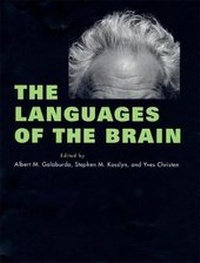
The Languages of the Brain
Published on 15. December 2002
Book
Hardback
432 pages
978-0-674-00772-7 (ISBN)
Description
The only way we can convey our thoughts in detail to another person is through verbal language. Does this imply that our thoughts ultimately rely on words? Is there only one way in which thoughts can occur? This ambitious book takes the contrary position, arguing that many possible "languages of thought" play different roles in the life of the mind.
"Language" is more than communication. It is also a means of representing information in both working and long-term memory. It provides a set of rules for combining and manipulating those representations.
A stellar lineup of international cognitive scientists, philosophers, and artists make the book's case that the brain is multilingual. Among topics discussed in the section on verbal languages are the learning of second languages, recovering language after brain damage, and sign language, and in the section on nonverbal languages, mental imagery, representations of motor activity, and the perception and representation of space.
"Language" is more than communication. It is also a means of representing information in both working and long-term memory. It provides a set of rules for combining and manipulating those representations.
A stellar lineup of international cognitive scientists, philosophers, and artists make the book's case that the brain is multilingual. Among topics discussed in the section on verbal languages are the learning of second languages, recovering language after brain damage, and sign language, and in the section on nonverbal languages, mental imagery, representations of motor activity, and the perception and representation of space.
Reviews / Votes
This is an extremely useful book, one that will have wide appeal to an audience of cognitive scientists, neuroscientists, psychologists, philosophers, and possibly the growing number of humanities scholars interested in the interface of cognitive science and the arts. I can't think of any book that collects so many approaches to mental representation between one set of covers and that gathers together the latest work and thoughts of so many stellar researchers in cognitive science. The introductory chapter, moreover serves as an excellent survey and overview. -- Steven Pinker, Professor in the Department of Brain and Cognitive Sciences, Massachusetts Institute of Technology, and author of <i>How the Mind Works</i>More details
Series
Language
English
Place of publication
Cambridge, Mass
United States
Target group
College/higher education
Professional and scholarly
Illustrations
13 halftones, 18 line illustrations, 3 tables, 8 boxes
Dimensions
Height: 235 mm
Width: 156 mm
Thickness: 38 mm
Weight
812 gr
ISBN-13
978-0-674-00772-7 (9780674007727)
Copyright in bibliographic data and cover images is held by Nielsen Book Services Limited or by the publishers or by their respective licensors: all rights reserved.
Schweitzer Classification
Other editions
Additional editions
Albert M. Galaburda | Stephen M. Kosslyn | Yves Christen
The Languages of the Brain
E-Book
12/2002
Harvard University Press
€222.99
Available for download
Persons
Albert M. Galaburda is Emily Fisher-Landau Professor of Neurology (Neuroscience) at Harvard Medical School. Stephen M. Kosslyn is John Lindsley Professor of Psychology in Memory of William James, Emeritus, at Harvard University and Director of the Center for Advanced Study in the Behavioral Sciences at Stanford University. Yves Christen is Vice President of Fondation Ipsen in Paris.
Content
Preface Introduction Albert M. Galaburda, Stephen M. Kosslyn, and Yves Christen Part I Verbal Representation Section 1 Verbal Processes 1. The Neuroanatomy of Categories Albert M. Galaburda 2. The Neurological Organization of Some Language-Processing Constituents Edgar Zurif 3. Brain Organization for Syntactic Processing David Caplan, Nathaniel Alpert, and Gloria Waters 4. Spatial and Temporal Dynamics of Phonological and Semantic Processes Jean-Francois Demonet and Guillaume Thierry Discussion: Section 1 Section 2 Verbal Content