

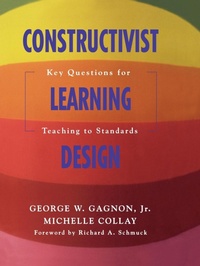
Constructivist Learning Design
Key Questions for Teaching to Standards
1st Edition
Published on 15. February 2006
Book
Paperback/Softback
256 pages
978-1-4129-0956-3 (ISBN)
Description
"Very practical and user-friendly . . ."
--Linda R. Kroll, Professor
Department of Education, Mills College
Build student-centered learning into your standards-based curriculum and lesson plans!
Educators expect learners to solve problems, think critically, communicate effectively, and collaborate well. These complex processes require young learners to engage in active learning and to understand that their own experience is the foundation for new learning. They also require teachers to move from the traditional role of "sage on the stage" to the new role of "guide on the side."
Constructivist Learning Design offers teachers a six-step framework for lesson planning and assessment:
Situation: develop goals, tasks, and curriculum standards
Grouping: group students and materials, and use cooperative learning
Bridge: recall prior knowledge using students' cognitive maps, skills, values, motivation, and expectations
Task: use higher-level thinking skills and problem-based learning
Exhibit: arrange student portfolios and work samples
Reflection: synthesize critical thinking and knowledge
With clear classroom applications and ready-to-use planning templates, this research-based resource guides teachers through the complex process of aligning constructivist learning events with standards-based curriculum. Engage students in tasks, help them think for themselves, and support them in making meaning of their learning!
--Linda R. Kroll, Professor
Department of Education, Mills College
Build student-centered learning into your standards-based curriculum and lesson plans!
Educators expect learners to solve problems, think critically, communicate effectively, and collaborate well. These complex processes require young learners to engage in active learning and to understand that their own experience is the foundation for new learning. They also require teachers to move from the traditional role of "sage on the stage" to the new role of "guide on the side."
Constructivist Learning Design offers teachers a six-step framework for lesson planning and assessment:
Situation: develop goals, tasks, and curriculum standards
Grouping: group students and materials, and use cooperative learning
Bridge: recall prior knowledge using students' cognitive maps, skills, values, motivation, and expectations
Task: use higher-level thinking skills and problem-based learning
Exhibit: arrange student portfolios and work samples
Reflection: synthesize critical thinking and knowledge
With clear classroom applications and ready-to-use planning templates, this research-based resource guides teachers through the complex process of aligning constructivist learning events with standards-based curriculum. Engage students in tasks, help them think for themselves, and support them in making meaning of their learning!
Reviews / Votes
"A very useful contribution to the field. . . . Provides a model that even the newest of teachers can use." -- Geraldine Lefoe "Provides a structured format for helping teachers design constructivist learning opportunities. . . There are a lot of useful strategies here for teachers and good examples throughout." -- Bruce Marlowe, Associate Professor of Educational Psychology and Special Education "Provides sound advice on many matters, including how to establish a teaching "situation," how and why to group students, how to "hook" students and draw on their interests and past experiences, and how to promote authentic exhibits of their learning." -- Clive Beck "Very practical and user-friendly. ..This book presents a very clear set of directions and plans for instituting a new way to think about teaching and learning on a very detailed and moment-to-moment basis. The ideas are also grounded in theory and the connections between theory and practice are made explicit." -- Linda R. Kroll, Professor "This book should be read by neophyte and seasoned teachers, by teacher educators in colleges of education, and by trainees in preservice programs. It should also be read by school administrators for insights into how to improve teacher supervision and staff development, by open-minded behaviorists looking for alternatives to direct instruction, by liberal arts professors who want to learn how to teach so that their students want to keep on learning, and by parents with children in school or with children they are schooling at home. For that matter, everyone concerned with formal education should read this book unless, of course, they already have signed the Faustian pact to search only after the qualities and techniques of authoritarian, direct instruction.I invite you now to do as I have done. Read this fine book three times. Read it first for a general understanding of its concepts. Read it again and reflect on your own practice. Read it a third time to engage its ideas as you would engage dance partners. Then keep the book at your side for reference to its many action ideas." -- Richard A. Schmuck "The authors make it clear that this is not your ordinary lesson planning book. This is an interactive workbook in which Gagnon and Collay encourage us as readers to work through the design process by applying the model to our own subject matter, preferrably with a partner or as part of a group so ideas can be shared and collectively reflected upon." -- Teaching Theology and Religion, July 2008, Vol. 11(3)
More details
Language
English
Place of publication
Thousand Oaks
United States
Publishing group
SAGE Publications Inc
Target group
Professional and scholarly
Dimensions
Height: 280 mm
Width: 210 mm
Thickness: 14 mm
Weight
635 gr
ISBN-13
978-1-4129-0956-3 (9781412909563)
Copyright in bibliographic data and cover images is held by Nielsen Book Services Limited or by the publishers or by their respective licensors: all rights reserved.
Schweitzer Classification
Other editions
Additional editions
George W. Gagnon | Michelle Collay
Constructivist Learning Design
Key Questions for Teaching to Standards
Book
03/2006
1st Edition
Corwin Press Inc
€90.00
Shipment within 10-20 days
Persons
George W. Gagnon, Jr. is the Director of K-12 Partnerships in the College of Engineering at the University of California, Berkeley. He works with teacher and parent partners to support students who would be the first generation in their family to be engineers or scientists. George uses Math Models he has designed to support students in developing a conceptual understanding of mathematics. George has studied learning for thirty years as a teacher, principal, and teacher educator. Now he applies his research on constructivist learning design, appropriate assessment, and learning communities to encourage educational equity in urban public schools. George and Michelle live in Oakland, California, and are actively involved with the neighborhood public schools their children attend. Michelle Collay is a School Coach for the Bay Area Coalition for Equitable Schools (BayCES) in Oakland, California, a private non-profit organization supporting urban small school initiatives. She supports school leader development and coordinates classroom-based teacher inquiry for the purposes of improving student achievement. Previously, she worked as a faculty member and administrator in teacher preparation and graduate teacher education in public and private universities. Collay conducts seminars and workshops about professional learning communities, constructivist learning design, and portfolio development. Before completing doctoral studies in Curriculum and Instruction at the University of Oregon, she taught music and mathematics in elementary and junior high school and continues to play the bassoon in local ensembles. She and her husband, George Gagnon, write, teach, and parent together and are parent leaders in their children's neighborhood school in Oakland.
Content
Preface
Acknowledgments
About the Authors
Introduction: Learning Design
Situation Section: Constructivist Learning Design
Groups Section: Learning Considerations
Bridge Section: What Is Learning?
Task Section: Learning Characteristics
Exhibit: Fairy Tales Learning Episodes
Reflection Section: Precedents for Constructivist Learning Design
Concluding Remarks: Where Do We Stand?
Chapter 1: Designing Situations
Situation Section: Defining Guiding Questions
Groups Section: Co-constructing the CLD
Bridge Section: Questions for Analyzing Situations
Task Section: Revising a Situation Element
Exhibit Section: Example Situation Elements
Reflection Section: Precedents for a Situation Element
Concluding Remarks: Thoughts on Designing Situations
Chapter 2: Organizing Groups
Situation Section: Deciding on Groups
Groups Section: The Power of Collaborative Thinking
Bridge Section: Questions for Forming Groups
Task Section: Revising a Groups Element
Exhibit Section: Example Groups Elements
Reflection Section: Precedents for a Groups Element
Concluding Remarks: Thoughts on Arranging Groups
Chapter 3: Building Bridges
Situation Section: Surfacing Prior Knowledge
Groups Section: Connecting With Students' Thinking
Bridge Section: Questions for Structuring Bridges
Task Section: Revising a Bridge Element
Exhibit Section: Example Bridge Elements
Reflection Section: Precedents for a Bridge Element
Concluding Remarks: Thoughts on Building Bridges
Chapter 4: Crafting Tasks
Situation Section: Crafting a Task
Groups Section: Thinking Together to Make Meaning
Bridge Section: Questions for Framing Tasks
Task Section: Revising a Task Element
Exhibit Section: Example Task Elements
Reflection Section: Precedents for a Task element
Concluding Remarks: Thoughts on Crafting Tasks
Chapter 5: Arranging Exhibits
Situation Section: Defining the Nature of an Exhibit
Groups Section: The Power of Students Presenting their Thinking
Bridge Section: Questions for Encouraging Exhibits
Task Section: Revising an Exhibit Element
Exhibit Section: Example Exhibit Elements
Reflection Section: Precedents for an Exhibit Element
Concluding Remarks: Thoughts on Arranging Exhibits
Chapter 6: Leading Reflections
Situation Section: Leading Reflection on Thinking
Groups Section: Reflecting on Making Meaning
Bridge Section: Questions for Inviting Reflections
Task Section: Revising a Reflection Element
Exhibit Section: Example Reflection Elements
Reflection Section: Precedents for a Reflection Element
Concluding Remarks: Thoughts on Leading Reflections
Chapter 7: Teaching Designs
Dancing a Design
Pacing, Rhythm, and Footwork
Choosing Music for the Dance
Rehearsing the Dance
A Tale of Three Dancers
Dancing Together
Inviting Administrators to the Dance
Inviting Others to the Dance
Resources
References
Index
Acknowledgments
About the Authors
Introduction: Learning Design
Situation Section: Constructivist Learning Design
Groups Section: Learning Considerations
Bridge Section: What Is Learning?
Task Section: Learning Characteristics
Exhibit: Fairy Tales Learning Episodes
Reflection Section: Precedents for Constructivist Learning Design
Concluding Remarks: Where Do We Stand?
Chapter 1: Designing Situations
Situation Section: Defining Guiding Questions
Groups Section: Co-constructing the CLD
Bridge Section: Questions for Analyzing Situations
Task Section: Revising a Situation Element
Exhibit Section: Example Situation Elements
Reflection Section: Precedents for a Situation Element
Concluding Remarks: Thoughts on Designing Situations
Chapter 2: Organizing Groups
Situation Section: Deciding on Groups
Groups Section: The Power of Collaborative Thinking
Bridge Section: Questions for Forming Groups
Task Section: Revising a Groups Element
Exhibit Section: Example Groups Elements
Reflection Section: Precedents for a Groups Element
Concluding Remarks: Thoughts on Arranging Groups
Chapter 3: Building Bridges
Situation Section: Surfacing Prior Knowledge
Groups Section: Connecting With Students' Thinking
Bridge Section: Questions for Structuring Bridges
Task Section: Revising a Bridge Element
Exhibit Section: Example Bridge Elements
Reflection Section: Precedents for a Bridge Element
Concluding Remarks: Thoughts on Building Bridges
Chapter 4: Crafting Tasks
Situation Section: Crafting a Task
Groups Section: Thinking Together to Make Meaning
Bridge Section: Questions for Framing Tasks
Task Section: Revising a Task Element
Exhibit Section: Example Task Elements
Reflection Section: Precedents for a Task element
Concluding Remarks: Thoughts on Crafting Tasks
Chapter 5: Arranging Exhibits
Situation Section: Defining the Nature of an Exhibit
Groups Section: The Power of Students Presenting their Thinking
Bridge Section: Questions for Encouraging Exhibits
Task Section: Revising an Exhibit Element
Exhibit Section: Example Exhibit Elements
Reflection Section: Precedents for an Exhibit Element
Concluding Remarks: Thoughts on Arranging Exhibits
Chapter 6: Leading Reflections
Situation Section: Leading Reflection on Thinking
Groups Section: Reflecting on Making Meaning
Bridge Section: Questions for Inviting Reflections
Task Section: Revising a Reflection Element
Exhibit Section: Example Reflection Elements
Reflection Section: Precedents for a Reflection Element
Concluding Remarks: Thoughts on Leading Reflections
Chapter 7: Teaching Designs
Dancing a Design
Pacing, Rhythm, and Footwork
Choosing Music for the Dance
Rehearsing the Dance
A Tale of Three Dancers
Dancing Together
Inviting Administrators to the Dance
Inviting Others to the Dance
Resources
References
Index