

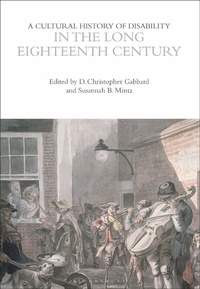
A Cultural History of Disability in the Long Eighteenth Century
Published on 18. April 2024
Book
Paperback/Softback
200 pages
978-1-350-43673-2 (ISBN)
Description
18th century philosopher Edmund Burke wrote, 'deformity is opposed, not to beauty, but to the complete, common form. If one of the legs of a man be found shorter than the other, the man is deformed; because there is something wanting to complete the whole idea we form of a man'. During the long 18th century, new ideas from aesthetics and the emerging scientific disciplines of physics, biology and zoology contributed to changing fundamental notions about human form, function and ability. The interrelated concepts of the natural and the beautiful coalesced into a hegemonic ideology of form, one which defined communal standards regarding which aspects of human appearance and ability would be considered typical and socially acceptable and which would not.
An essential resource for researchers, scholars and students of history, literature, culture and education, A Cultural History of Disability in the Long Eighteenth Century explores such themes and topics as: atypical bodies; mobility impairment; chronic pain and illness; blindness; deafness; speech; learning difficulties; and mental health.
An essential resource for researchers, scholars and students of history, literature, culture and education, A Cultural History of Disability in the Long Eighteenth Century explores such themes and topics as: atypical bodies; mobility impairment; chronic pain and illness; blindness; deafness; speech; learning difficulties; and mental health.
More details
Series
Language
English
Place of publication
London
United Kingdom
Publishing group
Bloomsbury Publishing PLC
Target group
College/higher education
Illustrations
15 bw illus
Dimensions
Height: 170 mm
Width: 244 mm
Thickness: 11 mm
Weight
390 gr
ISBN-13
978-1-350-43673-2 (9781350436732)
Copyright in bibliographic data and cover images is held by Nielsen Book Services Limited or by the publishers or by their respective licensors: all rights reserved.
Schweitzer Classification
Persons
D. Christopher Gabbard is Associate Professor of English at the University of North Florida, USA. He is the author of A Life Beyond Reason and serves on the editorial board of the Journal of Literary and Cultural Disability Studies.
Susannah B. Mintz is Professor of English at Skidmore College, USA. She is author of Unruly Bodies: Life Writing by Women with Disabilities, The Disabled Detective and is co-editor of a critical volume on the essayist Nancy Mairs.
Susannah B. Mintz is Professor of English at Skidmore College, USA. She is author of Unruly Bodies: Life Writing by Women with Disabilities, The Disabled Detective and is co-editor of a critical volume on the essayist Nancy Mairs.
Content
List of Illustrations
Notes of Contributors
Series Preface
Introduction, Christopher Gabbard, University of North Florida, USA and Susannah B. Mintz, Skidmore College, USA
Ch 1: Atypical Bodies: Anomalous Bodies in the Eighteenth Century, Sara van den Berg, Saint Louis University, USA
Ch. 2: Mobility Impairment, David Turner, Swansea University, UK
Ch. 3: Chronic Pain: Chronic Pain and Illness in the Long Eighteenth Century, Isabella Lucy Cooper, University of Maryland, USA
Ch. 4: Blindness: Conversations with the Blind, or "Aren't You Surprised I Can Speak?" Kate E. Tunstall, University of Oxford, UK
Ch 5: Deafness: Deafness in the Age of Enlightenment, Kristin Lindgren, Haverford College, USA
Ch. 6: Speech: Speech and Disability in the Long Eighteenth Century, Dwight Codr, University of Connecticut, USA and Jared Richman, Colorado College, USA
Ch. 7: Learning Difficulties: Intellectual disability in the long eighteenth century, C. F. Goodey, University of Leicester, UK and Simon Jarrett, Birkbeck University, UK
Ch. 8: Mental Health Issues: Listening for Ghosts: Madpeople in the Eighteenth Century, Allison Hobgood, Willamette University, USA
Notes
Bibliography
Index
Notes of Contributors
Series Preface
Introduction, Christopher Gabbard, University of North Florida, USA and Susannah B. Mintz, Skidmore College, USA
Ch 1: Atypical Bodies: Anomalous Bodies in the Eighteenth Century, Sara van den Berg, Saint Louis University, USA
Ch. 2: Mobility Impairment, David Turner, Swansea University, UK
Ch. 3: Chronic Pain: Chronic Pain and Illness in the Long Eighteenth Century, Isabella Lucy Cooper, University of Maryland, USA
Ch. 4: Blindness: Conversations with the Blind, or "Aren't You Surprised I Can Speak?" Kate E. Tunstall, University of Oxford, UK
Ch 5: Deafness: Deafness in the Age of Enlightenment, Kristin Lindgren, Haverford College, USA
Ch. 6: Speech: Speech and Disability in the Long Eighteenth Century, Dwight Codr, University of Connecticut, USA and Jared Richman, Colorado College, USA
Ch. 7: Learning Difficulties: Intellectual disability in the long eighteenth century, C. F. Goodey, University of Leicester, UK and Simon Jarrett, Birkbeck University, UK
Ch. 8: Mental Health Issues: Listening for Ghosts: Madpeople in the Eighteenth Century, Allison Hobgood, Willamette University, USA
Notes
Bibliography
Index