

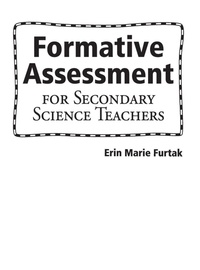
Formative Assessment for Secondary Science Teachers
1st Edition
Published on 28. July 2009
Book
Hardback
176 pages
978-1-4129-7220-8 (ISBN)
Description
"This book places students center stage in the discussion of how we know what students know. Using formative assessment to understand student learning is a theme grounded in good teaching and good assessment!"
-Jo Topps, Regional Directorth
K-12 Alliance/WestEd
"This book incorporates current research and not only provides an explanation of the necessity of formative assessment, but offers a system for planning lessons and a variety of tools to implement formative assessment in the classroom."
-Susan Leeds, Science Department Chair and Gifted Studies Teacher
Howard Middle School, Winter Park, FL
Use this powerful tool to enhance science teaching and learning!
Research has shown that when teachers use formative assessments effectively, they have a clearer understanding of what students know and are better able to design instruction that meets learners' needs. This practical guide shows teachers how to create and implement formative assessments in their middle and high school science classrooms.
Grounded in extensive and solid research, this guide covers all science content areas-physics/physical science, life science/biology, earth and space science, and chemistry-as well as five types of formative assessments: big idea questions, concept maps, evidence-to-explanation, predict-observe-explain, and multiple choice. Teachers will find additional support in:
Richly detailed, concrete examples of the five types of assessments
In-depth guidelines for implementing the assessments
Brief case studies with transcript excerpts that demonstrate how teachers have used formative assessments
Easy-to-use templates to help analyze lessons in current units and identify places for inserting formative assessments
With this easy-to-use, hands-on guide, any teacher can learn how to use formative assessment strategies to improve student achievement in science!
-Jo Topps, Regional Directorth
K-12 Alliance/WestEd
"This book incorporates current research and not only provides an explanation of the necessity of formative assessment, but offers a system for planning lessons and a variety of tools to implement formative assessment in the classroom."
-Susan Leeds, Science Department Chair and Gifted Studies Teacher
Howard Middle School, Winter Park, FL
Use this powerful tool to enhance science teaching and learning!
Research has shown that when teachers use formative assessments effectively, they have a clearer understanding of what students know and are better able to design instruction that meets learners' needs. This practical guide shows teachers how to create and implement formative assessments in their middle and high school science classrooms.
Grounded in extensive and solid research, this guide covers all science content areas-physics/physical science, life science/biology, earth and space science, and chemistry-as well as five types of formative assessments: big idea questions, concept maps, evidence-to-explanation, predict-observe-explain, and multiple choice. Teachers will find additional support in:
Richly detailed, concrete examples of the five types of assessments
In-depth guidelines for implementing the assessments
Brief case studies with transcript excerpts that demonstrate how teachers have used formative assessments
Easy-to-use templates to help analyze lessons in current units and identify places for inserting formative assessments
With this easy-to-use, hands-on guide, any teacher can learn how to use formative assessment strategies to improve student achievement in science!
Reviews / Votes
"This book places students center stage in the discussion of how we know what students know. The vignettes and examples of student work illustrate the text and make the author's points resonate with real teachers. Using formative assessment to understand student learning is a theme grounded in good teaching and good assessment!" -- Jo Topps, Regional Director "Timely, relevant, easy to read and follow, with real examples from the classroom about different approaches to assessment in science classes." -- Ellen Osmundson, Senior Researcher "This book incorporates current research and not only provides an explanation of the necessity of formative assessment, but offers a system for planning lessons and a variety of tools to implement formative assessment in the classroom. It will help educators rethink the methods and the type of content they deliver in the classroom." -- Susan Leeds, Science Department Chair and Gifted Studies TeacherMore details
Language
English
Place of publication
Thousand Oaks
United States
Publishing group
SAGE Publications Inc
Target group
Professional and scholarly
Dimensions
Height: 286 mm
Width: 221 mm
Thickness: 14 mm
Weight
723 gr
ISBN-13
978-1-4129-7220-8 (9781412972208)
Copyright in bibliographic data and cover images is held by Nielsen Book Services Limited or by the publishers or by their respective licensors: all rights reserved.
Schweitzer Classification
Other editions
Additional editions
Book
09/2009
1st Edition
Corwin Press Inc
€38.70
Shipment within 10-20 days
Person
Erin Marie Furtak, had a brief career as a high school science teacher before completing her PhD in curriculum and teacher education at Stanford University in 2006 as an advisee of Richard J. Shavelson. Then, with the support of a Chancellor Fellowship from the Alexander von Humboldt Foundation, she moved to Germany to complete a postdoc at the Max Planck Institute for Human Development in Berlin and the Leibniz Institute for Science Education in Kiel. She studies professional learning environments that support science teachers in formative assessment design and practice. Her research has been awarded the Presidential Early Career Award for Scientists and Engineers (2011). She is now Associate Professor of Curriculum and Instruction: Science Education at the University of Colorado Boulder, where she has worked since January 2008.
Content
List of Figures and Tables
Preface
Acknowledgments
About the Author
1. What Is Formative Assessment?
Where Are You Going, and How Are You Going to Get There?
What Is Formative Assessment?
Effectiveness of Formative Assessment
Overview of the Book
Part I. Defining the Feedback Loop
2. Step One: Setting Learning Goals
The Importance of Setting Learning Goals
What Is a Learning Goal?
Multiple Types of Learning Goals
Identifying Science Content
Bringing Goals Together: Planning for Formative Assessment
3. Step Two: What Do the Students Know Now?
Where Are the Students Now?
Strategies for Making Students? Thinking Explicit
Determining What Counts as Evidence
Planning for Formative Assessment: Finding Out What Students Know
4. Step Three: Anticipating Feedback
Feedback: Plotting a Learning Course for Students
Anticipating Students? Alternative Conceptions
Providing Feedback
Anticipating Feedback
Putting It All Together: Planning the Steps in the Feedback Loop
Part II. Formats for Formative Assessment
5. Big Idea Questions
What Is a Big Idea Question?
When Should I Use Big Idea Questions in My Unit?
How Can I Develop My Own Big Idea Asssessment?
How Can I Enact Big Idea Questions in My Classroom?
Big Idea Question Example 5.1: Scientific Questions
Big Idea Question Example 5.2: Work and Energy
6. Concept Maps
What Is a Concept Map?
When Should I Use Concept Maps in My Unit?
How Can I Develop My Own Concept Maps?
How Can I Enact Concept Maps in My Classroom?
Concept Map Example 6.1: Pollutants in the Atmosphere
Concept Map Example 6.2: Electricity
7. Predict-Observe-Explain (POE) Assessments
What Is a POE?
When Should I Use POEs in My Unit?
How Can I Develop My Own POEs?
How Can I Enact POEs in My Classroom?
POE Example 7.1: Sinking and Floating
POE Example 7.2: Air Pressure
8. Evidence-to-Explanation Assessments
What Is an Evidence-to-Explanation Formative Assessment?
When Should I Use Evidence-to-Explanation Assessments in My Unit?
How Can I Develop My Own Evidence-to-Explanation Assessments?
How Can I Enact Evidence-to-Explanation Assessments in My Classroom?
Evidence-to-Explanation Example 8.1: Natural Selection
Evidence-to-Explanation Example 8.2: Phase Changes in Water
9. Multiple-Choice Questions
What Is a Multiple-Choice Formative Assessment?
When Should I Use Multiple-Choice Questions in my Unit?
How Can I Develop My Own Multiple-Choice Questions?
How Can I Enact Multiple-Choice Questions in My Classroom?
Mulitple-Choice Question Example 9.1: Uniform and Nonuniform Motion
Multple-Choice Question Example 9.2: Diffusion
Resources
Glossary
References
Index
Preface
Acknowledgments
About the Author
1. What Is Formative Assessment?
Where Are You Going, and How Are You Going to Get There?
What Is Formative Assessment?
Effectiveness of Formative Assessment
Overview of the Book
Part I. Defining the Feedback Loop
2. Step One: Setting Learning Goals
The Importance of Setting Learning Goals
What Is a Learning Goal?
Multiple Types of Learning Goals
Identifying Science Content
Bringing Goals Together: Planning for Formative Assessment
3. Step Two: What Do the Students Know Now?
Where Are the Students Now?
Strategies for Making Students? Thinking Explicit
Determining What Counts as Evidence
Planning for Formative Assessment: Finding Out What Students Know
4. Step Three: Anticipating Feedback
Feedback: Plotting a Learning Course for Students
Anticipating Students? Alternative Conceptions
Providing Feedback
Anticipating Feedback
Putting It All Together: Planning the Steps in the Feedback Loop
Part II. Formats for Formative Assessment
5. Big Idea Questions
What Is a Big Idea Question?
When Should I Use Big Idea Questions in My Unit?
How Can I Develop My Own Big Idea Asssessment?
How Can I Enact Big Idea Questions in My Classroom?
Big Idea Question Example 5.1: Scientific Questions
Big Idea Question Example 5.2: Work and Energy
6. Concept Maps
What Is a Concept Map?
When Should I Use Concept Maps in My Unit?
How Can I Develop My Own Concept Maps?
How Can I Enact Concept Maps in My Classroom?
Concept Map Example 6.1: Pollutants in the Atmosphere
Concept Map Example 6.2: Electricity
7. Predict-Observe-Explain (POE) Assessments
What Is a POE?
When Should I Use POEs in My Unit?
How Can I Develop My Own POEs?
How Can I Enact POEs in My Classroom?
POE Example 7.1: Sinking and Floating
POE Example 7.2: Air Pressure
8. Evidence-to-Explanation Assessments
What Is an Evidence-to-Explanation Formative Assessment?
When Should I Use Evidence-to-Explanation Assessments in My Unit?
How Can I Develop My Own Evidence-to-Explanation Assessments?
How Can I Enact Evidence-to-Explanation Assessments in My Classroom?
Evidence-to-Explanation Example 8.1: Natural Selection
Evidence-to-Explanation Example 8.2: Phase Changes in Water
9. Multiple-Choice Questions
What Is a Multiple-Choice Formative Assessment?
When Should I Use Multiple-Choice Questions in my Unit?
How Can I Develop My Own Multiple-Choice Questions?
How Can I Enact Multiple-Choice Questions in My Classroom?
Mulitple-Choice Question Example 9.1: Uniform and Nonuniform Motion
Multple-Choice Question Example 9.2: Diffusion
Resources
Glossary
References
Index