

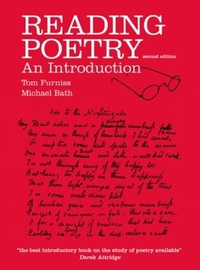
Reading Poetry
An Introduction
2nd Edition
Published on 28. June 2007
Book
Paperback/Softback
648 pages
978-0-582-89420-4 (ISBN)
Description
Reading Poetry offers a comprehensive and accessible guide to the art of reading poetry. Successive chapters introduce key skills and critical or theoretical issues, enabling users to read poetry with enjoyment, insight and an awareness of the implications of what they are doing.
This new edition includes a new chapter on ?Post-colonial Poetry?, a substantial increase in the number of end-of-chapter interactive exercises, and a comprehensive Glossary of poetic terms. Not just an add-on, the Glossary works as a key resource for the structuring of particular topics in any individual teaching or learning programme. Many of the exercises and interactive discussions develop not only the skills of competent close reading but also the necessary confidence and experience in locating historical and other contextual information through library or internet searches. The aim is to enhance readers' literary and scholarly competence ? and to make it fun!
This new edition includes a new chapter on ?Post-colonial Poetry?, a substantial increase in the number of end-of-chapter interactive exercises, and a comprehensive Glossary of poetic terms. Not just an add-on, the Glossary works as a key resource for the structuring of particular topics in any individual teaching or learning programme. Many of the exercises and interactive discussions develop not only the skills of competent close reading but also the necessary confidence and experience in locating historical and other contextual information through library or internet searches. The aim is to enhance readers' literary and scholarly competence ? and to make it fun!
Reviews / Votes
"ReadingPoetrystands out from other introductions to poetry in its brilliant combination of practical guidance and theoretical savvy. Students who use this book will be helped to enjoy and discuss poems, introduced to some of the major varieties of poetic criticism, and invited to reflect on what makes poetry important today. Reading Poetry is, in my view, the best introductory book on the study of poetry available. "Professor Derek Attridge, Universityof York
More details
Edition
2nd edition
Language
English
Place of publication
London
United Kingdom
Publishing group
Taylor & Francis Ltd
Target group
Professional and scholarly
Dimensions
Height: 240 mm
Width: 170 mm
Thickness: 35 mm
Weight
1040 gr
ISBN-13
978-0-582-89420-4 (9780582894204)
Copyright in bibliographic data and cover images is held by Nielsen Book Services Limited or by the publishers or by their respective licensors: all rights reserved.
Schweitzer Classification
Other editions
New editions
Book
04/2022
3rd Edition
Routledge
€58.70
Shipment within 15-20 days
Additional editions
Book
09/2018
2nd Edition
Routledge
€178.56
Article exhausted; check for reprint
Persons
Dr Tom Furniss is Senior Lecturer in English Studies at the Universityof Strathclyde in Glasgow, where he has spent nearly twenty years teaching poetry, literary theory and Romanticism. He is co-author of Ways of Reading, now in its third edition, and Edmund Burke's Aesthetic Ideology (1993).
Professor Michael Bath was also at the University of Strathclyde until his retirement, specialising in Renaissance emblem books, iconography, iconology and poetics. His publications include Speaking Pictures: English Emblem Books and Renaissance Culture (1994) and Decorative Painting in Scotland (2002).
Professor Michael Bath was also at the University of Strathclyde until his retirement, specialising in Renaissance emblem books, iconography, iconology and poetics. His publications include Speaking Pictures: English Emblem Books and Renaissance Culture (1994) and Decorative Painting in Scotland (2002).
Content
Contents
Acknowledgements
Preface
Part One Formal Introduction
1 What Is Poetry? How Do We Read It?
2 Rhythm and Metre
3 Significant Form: Metre and Syntax
4 Creative Form and the Arbitrary Nature of Language
Part Two Textual Strategies
5 Figurative Language
6 Poetic Metaphor
7 Hearing Voices in Poetic Texts
8 Voices with Attitude: Tone and Irony
9 Ambiguity
Part Three Texts in Contexts/Contexts in Texts
10 Introducing Contexts
11 Genre
12 The Sonnet
13 Allusion, Influence and Intertextuality
14 Poetry, Discourse, History
15 The Locations of Poetry
16 Post-Colonial Poetry
Part Four An Open-ended Conclusion
17 Closure, Pluralism and Undecidability
Glossary
Key to Poems and Passages Discussed or Used for Exercises
Bibliography
Index
Acknowledgements
Preface
Part One Formal Introduction
1 What Is Poetry? How Do We Read It?
2 Rhythm and Metre
3 Significant Form: Metre and Syntax
4 Creative Form and the Arbitrary Nature of Language
Part Two Textual Strategies
5 Figurative Language
6 Poetic Metaphor
7 Hearing Voices in Poetic Texts
8 Voices with Attitude: Tone and Irony
9 Ambiguity
Part Three Texts in Contexts/Contexts in Texts
10 Introducing Contexts
11 Genre
12 The Sonnet
13 Allusion, Influence and Intertextuality
14 Poetry, Discourse, History
15 The Locations of Poetry
16 Post-Colonial Poetry
Part Four An Open-ended Conclusion
17 Closure, Pluralism and Undecidability
Glossary
Key to Poems and Passages Discussed or Used for Exercises
Bibliography
Index