

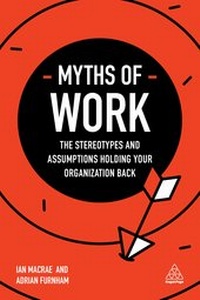
Myths of Work
The Stereotypes and Assumptions Holding Your Organization Back
1st Edition
Published on 3. October 2017
Book
Paperback/Softback
192 pages
978-0-7494-8128-5 (ISBN)
Description
Buying a table tennis table will make your staff happier. Working eight hours a day, five days a week, will result in the most productivity. Paying higher salaries will always result in higher motivation. But will it really?
There are a staggering number of myths, stereotypes and out-of-date rules that abound in the workplace. This can make it feel impossible to truly know how to get the most out of your career, your team and your organization. In Myths of Work, Ian MacRae and Adrian Furnham take an entertaining and evidence-based look at the most pervasive myths about our working lives, from the serious to the ridiculous, to give you the insight you need to become a better manager in the modern workplace. Fascinating real life case studies from organizations around the world display the myths (and how to overcome them) in practice.
Myths of Work takes the most up-to-date academic research in business and psychology and combines it with practical insights, a lively writing style and a handy dip-in-and-out structure to form your ultimate guide to becoming a better enlightened manager.
There are a staggering number of myths, stereotypes and out-of-date rules that abound in the workplace. This can make it feel impossible to truly know how to get the most out of your career, your team and your organization. In Myths of Work, Ian MacRae and Adrian Furnham take an entertaining and evidence-based look at the most pervasive myths about our working lives, from the serious to the ridiculous, to give you the insight you need to become a better manager in the modern workplace. Fascinating real life case studies from organizations around the world display the myths (and how to overcome them) in practice.
Myths of Work takes the most up-to-date academic research in business and psychology and combines it with practical insights, a lively writing style and a handy dip-in-and-out structure to form your ultimate guide to becoming a better enlightened manager.
Reviews / Votes
"Myths of Work challenges many common assumptions about the workplace in a fun and accessible style, anchored in a much-needed veracity that is both refreshing and engaging." * Jayson Darby, Psychology Manager, Thomas International * "This book is informative, interesting and useful to not only HR Professionals but all employees. It uses humour, research and storytelling to challenge some commonly held beliefs we all have about work which was eye opening. A must read!" * Karen Fox, Talent and Development Advisor, JLT *More details
Series
Language
English
Place of publication
London
United Kingdom
Target group
College/higher education
Professional and scholarly
Product notice
Paperback (trade)
Dimensions
Height: 235 mm
Width: 157 mm
Thickness: 11 mm
Weight
330 gr
ISBN-13
978-0-7494-8128-5 (9780749481285)
Copyright in bibliographic data and cover images is held by Nielsen Book Services Limited or by the publishers or by their respective licensors: all rights reserved.
Schweitzer Classification
Other editions
New editions
Book
10/2022
2nd Edition
Kogan Page Ltd
€20.00
Shipment within 10-20 days
Persons
Ian MacRae is Director of High Potential, an organizational consultancy providing customized psychological tests and reports for improving performance, predicting potential and developing people.
Adrian Furnham is Professor of Psychology at UCL and Adjunct Professor of Management at the Norwegian School of Management. He has written over 1000 scientific papers and 70 books and is among the most well-known psychologists in the world. Adrian is also a newspaper columnist at The Sunday Times. He has written regularly for The Financial Times, The Daily Telegraph and is a contributor to stations including the BBC, CNN, and ITV.
Adrian Furnham is Professor of Psychology at UCL and Adjunct Professor of Management at the Norwegian School of Management. He has written over 1000 scientific papers and 70 books and is among the most well-known psychologists in the world. Adrian is also a newspaper columnist at The Sunday Times. He has written regularly for The Financial Times, The Daily Telegraph and is a contributor to stations including the BBC, CNN, and ITV.
Content
Chapter - 01: Myth 1 - Staff Should Work 8 Hours a Day Monday to Friday;
Chapter - 02: Myth 2 - Working From Home Reduces Productivity;
Chapter - 03: Myth 3 - Social Media Should Never Be Used at Work;
Chapter - 04: Myth 4 - Listening to Music Whilst Working is Distracting;
Chapter - 05: Myth 5 - Health and Safety is the Enemy;
Chapter - 06: Myth 6 - Surveillance Improves Performance;
Chapter - 07: Myth 7 - Creating a Google-Style Office Environment Will Make Staff More Innovative;
Chapter - 08: Myth 8 - Mindfulness is the Answer to all Problems;
Chapter - 09: Myth 9 - Neuroscience is the Silver Bullet to Workplace Problems;
Chapter - 10: Myth 10 - Start-Ups Need a Different Type of Leader to Succeed;
Chapter - 11: Myth 11 - It's Better to have Higher Self-Esteem at Work;
Chapter - 12: Myth 12 - We Only Use 10% of our Brain at Work;
Chapter - 13: Myth 13 - Making Workplaces Sustainable is a Burden;
Chapter - 14: Myth 14 - The Best Way to Motivate People is to Pay Them More;
Chapter - 15: Myth 15 - Employees Who Work the Longest are the Most Valuable People;
Chapter - 16: Myth 16 - People Should Retire at 65;
Chapter - 17: Myth 17 - Perfectionists Make the Best Employees;
Chapter - 18: Myth 18 - Women aren't as Competitive as Men at Work;
Chapter - 19: Myth 19 - People Personalities can be Categorised;
Chapter - 20: Myth 20 - Sexuality and Gender should be Taken into Account at Work;
Chapter - 21: Myth 21 - Millennials are Changing the Workplace;
Chapter - 22: Myth 22 - Co-Workers Shouldn't Form Romantic Relationships;
Chapter - 23: Myth 23 - Teaching and Training are the Same;
Chapter - 24: Myth 24 - Annual Appraisals are the Best Way to Measure Performance;
Chapter - 25: Myth 25 - High Achievers Make Great Managers;
Chapter - 26: Myth 26 - A Computer is Going to Take Your Job;
Chapter - 27: Myth 27 - Open Plan Offices are Always the Best Option
Chapter - 02: Myth 2 - Working From Home Reduces Productivity;
Chapter - 03: Myth 3 - Social Media Should Never Be Used at Work;
Chapter - 04: Myth 4 - Listening to Music Whilst Working is Distracting;
Chapter - 05: Myth 5 - Health and Safety is the Enemy;
Chapter - 06: Myth 6 - Surveillance Improves Performance;
Chapter - 07: Myth 7 - Creating a Google-Style Office Environment Will Make Staff More Innovative;
Chapter - 08: Myth 8 - Mindfulness is the Answer to all Problems;
Chapter - 09: Myth 9 - Neuroscience is the Silver Bullet to Workplace Problems;
Chapter - 10: Myth 10 - Start-Ups Need a Different Type of Leader to Succeed;
Chapter - 11: Myth 11 - It's Better to have Higher Self-Esteem at Work;
Chapter - 12: Myth 12 - We Only Use 10% of our Brain at Work;
Chapter - 13: Myth 13 - Making Workplaces Sustainable is a Burden;
Chapter - 14: Myth 14 - The Best Way to Motivate People is to Pay Them More;
Chapter - 15: Myth 15 - Employees Who Work the Longest are the Most Valuable People;
Chapter - 16: Myth 16 - People Should Retire at 65;
Chapter - 17: Myth 17 - Perfectionists Make the Best Employees;
Chapter - 18: Myth 18 - Women aren't as Competitive as Men at Work;
Chapter - 19: Myth 19 - People Personalities can be Categorised;
Chapter - 20: Myth 20 - Sexuality and Gender should be Taken into Account at Work;
Chapter - 21: Myth 21 - Millennials are Changing the Workplace;
Chapter - 22: Myth 22 - Co-Workers Shouldn't Form Romantic Relationships;
Chapter - 23: Myth 23 - Teaching and Training are the Same;
Chapter - 24: Myth 24 - Annual Appraisals are the Best Way to Measure Performance;
Chapter - 25: Myth 25 - High Achievers Make Great Managers;
Chapter - 26: Myth 26 - A Computer is Going to Take Your Job;
Chapter - 27: Myth 27 - Open Plan Offices are Always the Best Option