

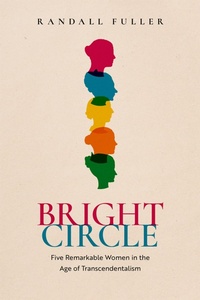
Bright Circle
Five Remarkable Women in the Age of Transcendentalism
1st Edition
Published on 24. October 2024
Book
Hardback
416 pages
978-0-19-284363-0 (ISBN)
Description
A group biography of five women who played path-breaking roles in the transcendentalist movement
In November 1839, a group of young women in Boston formed a conversation society "to answer the great questions" of special importance to women: "What are we born to do? How shall we do it?" The lives and works of the five women who discussed these questions are at the center of Bright Circle, a group biography of remarkable thinkers and artists who played pathbreaking roles in the transcendentalist movement.
Transcendentalism remains the most important literary and philosophical movement to have originated in the United States. Most accounts of it, however, trace its emergence to a group of young intellectuals (primarily Ralph Waldo Emerson and Henry David Thoreau) dissatisfied with their religious, literary, and social culture. Yet there is a forgotten history of transcendentalism--a submerged counternarrative--that features a network of fiercely intelligent women who were central to the development of the movement even as they found themselves silenced by their culturally-assigned roles as women.
Bright Circle is intended to reorient our understanding of transcendentalism: to help us see the movement as a far more collaborative and interactive project between women and men than is commonly understood. It recounts the lives of Mary Moody Emerson, Elizabeth Palmer Peabody, Sophia Peabody Hawthorne, Lydia Jackson Emerson, and Margaret Fuller as they developed crucial ideas about the self, nature, and feeling even as they pushed their male counterparts to consider the rights of enslaved people of color and women.
Many ideas once considered original to Emerson and Thoreau are shown to have originated with women who had little opportunity of publicly expressing them. Together, the five women of Bright Circle helped form the foundations of American feminism.
In November 1839, a group of young women in Boston formed a conversation society "to answer the great questions" of special importance to women: "What are we born to do? How shall we do it?" The lives and works of the five women who discussed these questions are at the center of Bright Circle, a group biography of remarkable thinkers and artists who played pathbreaking roles in the transcendentalist movement.
Transcendentalism remains the most important literary and philosophical movement to have originated in the United States. Most accounts of it, however, trace its emergence to a group of young intellectuals (primarily Ralph Waldo Emerson and Henry David Thoreau) dissatisfied with their religious, literary, and social culture. Yet there is a forgotten history of transcendentalism--a submerged counternarrative--that features a network of fiercely intelligent women who were central to the development of the movement even as they found themselves silenced by their culturally-assigned roles as women.
Bright Circle is intended to reorient our understanding of transcendentalism: to help us see the movement as a far more collaborative and interactive project between women and men than is commonly understood. It recounts the lives of Mary Moody Emerson, Elizabeth Palmer Peabody, Sophia Peabody Hawthorne, Lydia Jackson Emerson, and Margaret Fuller as they developed crucial ideas about the self, nature, and feeling even as they pushed their male counterparts to consider the rights of enslaved people of color and women.
Many ideas once considered original to Emerson and Thoreau are shown to have originated with women who had little opportunity of publicly expressing them. Together, the five women of Bright Circle helped form the foundations of American feminism.
Reviews / Votes
In Bright Circle, Randall Fuller shines a light on the women behind - and before - the male philosophers of 19th-century Massachusetts. * New York Times * Filled with coruscating insights, Bright Circle reintroduces the women who helped create one of America's most exciting and progressive intellectual movements. * Peggy Kurkowski, Foreword * In gorgeous prose, Randall Fuller tells these women's stories with rigor but also with curiosity and compassion. In short, Bright Circle is both scholarly and deeply moving. * Open Letters Review * They say that history is written by the victors, you know...the men. Usually books about the flowering of New England leave out the extraordinary Peabody sisters, the irresistible Margaret Fuller, the Alcott girls, Mary Moody Emerson and the two Mrs. Ralph Waldo Emersons to name a few. In intimate, dazzling language that brings these women to life, Randall Fuller's stories transcend the predictable parade of whales, cobbled Boston streets, scummy ponds, Salem witches and gabled houses creating a compelling story of how our literature was written. * Susan Cheever, Author of Louisa May Alcott: A Personal Biography and American Bloomsbury (Simon & Schuster) * Beautifully written and thoroughly researched, Bright Circle introduces readers--many perhaps for the first time--to the brilliant and fierce women of the Transcendentalist movement. With intertwined biographies of Mary Moody Emerson, Elizabeth Palmer Peabody, Sophia Peabody, Lydia Emerson, and Margaret Fuller, Randall Fuller provides a signal contribution to the study of the women of this important intellectual and artistic movement. * Justine S. Murison, Professor of English, University of Illinois, Urbana-Champaign * Randall Fuller offers fresh portraits of five women whose lives intersected at the heart of the transcendentalist movement, and he defines that heart as Boston rather than Concord, a place of collaboration rather than solitude. Expanding on recent recovery work, he interprets from the rich legacy of these women's letters and diaries as well as the surviving record of Margaret Fuller's Conversations at Elizabeth Peabody's bookshop. The result is wonderfully readable, as well as an advance in our understanding of both transcendentalist thought and pre-feminist questioning. * Phyllis Cole, Author of Mary Moody Emerson and the Origins of Transcendentalism (Oxford University Press) * ...Fuller's book shows that these bright women were wholly, gloriously human. * Lydia Moland, American Scholar * The text is written with engaging and descriptive prose that incorporates thorough footnotes and indexes. It also makes effective use of numerous color illustrations and plates depicting relevant and interesting primary sources. Overall, Bright Circle is meticulously researched and guides the reader clearly through the ample primary and secondary source material used. * C. Huffaker, CHOICE * ... Mr. Fuller lets his characters speak for themselves, cheering them on from the sidelines. * Christoph Irmscher, Wall Street Journal * A "deeply satisfying... tribute to a set of 19th-century women who made an art of contrarian thinking". * Christoph Irmscher, Wall Street Journal * Randall Fuller's "Bright Circle: Five Remarkable Women in the Age of Transcendentalism"... argues that the history of Transcendentalism has long been distorted by an undue stress on its marquee figures, all of them male. Instead,... the movement owes just as much to its female participants, very much including Margaret Fuller. * James Marcus, The New Yorker *More details
Language
English
Place of publication
Oxford
United Kingdom
Target group
Professional and scholarly
Illustrations
50 illustrations
Dimensions
Height: 243 mm
Width: 163 mm
Thickness: 27 mm
Weight
786 gr
ISBN-13
978-0-19-284363-0 (9780192843630)
Copyright in bibliographic data and cover images is held by Nielsen Book Services Limited or by the publishers or by their respective licensors: all rights reserved.
Schweitzer Classification
Other editions
Additional editions
E-Book
06/2025
OUP eBook
€12.99
Available for download
Person
Randall Fuller is the Herman Melville Distinguished Professor at the University of Kansas. His books include Emerson's Ghosts: Literature, Politics, and the Making of Americanists (OUP 2007); From Battlefields Rising: How the Civil War Transformed American Literature (OUP, 2011); and a New York Times "notable book," The Book that Changed America: How Darwin's Theory of Evolution Ignited a Nation (Viking 2017). He is the recipient of the Christian Gauss Award for best literary criticism, two National Endowment for the Humanities fellowships, and a Guggenheim Fellowship.
Content
Introduction: Bright Circle
1: Mary Moody Emerson Among the Stars
2: Elizabeth Palmer Peabody at 13 West Street
3: Sophia Peabody in Cuba
4: Lydia Emerson's Marriage of Heaven and Hell
5: The Tempests of Margaret Fuller
Epilogue: Circles
Acknowledgments
Abbreviations
Bibliographic Essay
Notes
1: Mary Moody Emerson Among the Stars
2: Elizabeth Palmer Peabody at 13 West Street
3: Sophia Peabody in Cuba
4: Lydia Emerson's Marriage of Heaven and Hell
5: The Tempests of Margaret Fuller
Epilogue: Circles
Acknowledgments
Abbreviations
Bibliographic Essay
Notes