

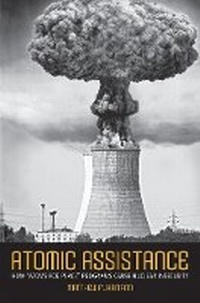
Atomic Assistance
How "Atoms for Peace" Programs Cause Nuclear Insecurity
Published on 5. July 2012
Book
Hardback
344 pages
978-0-8014-5090-7 (ISBN)
Description
Nuclear technology is dual use in nature, meaning that it can be used to produce nuclear energy or to build nuclear weapons. Despite security concerns about proliferation, the United States and other nuclear nations have regularly shared with other countries nuclear technology, materials, and knowledge for peaceful purposes. In Atomic Assistance, Matthew Fuhrmann argues that governments use peaceful nuclear assistance as a tool of economic statecraft. Nuclear suppliers hope that they can reap the benefits of foreign aid-improving relationships with their allies, limiting the influence of their adversaries, enhancing their energy security by gaining favorable access to oil supplies-without undermining their security. By providing peaceful nuclear assistance, however, countries inadvertently help spread nuclear weapons.
Fuhrmann draws on several cases of "Atoms for Peace," including U.S. civilian nuclear assistance to Iran from 1957 to 1979; Soviet aid to Libya from 1975 to 1986; French, Italian, and Brazilian nuclear exports to Iraq from 1975 to 1981; and U.S. nuclear cooperation with India from 2001 to 2008. He also explores decision making in countries such as Japan, North Korea, Pakistan, South Africa, and Syria to determine why states began (or did not begin) nuclear weapons programs and why some programs succeeded while others failed. Fuhrmann concludes that, on average, countries receiving higher levels of peaceful nuclear assistance are more likely to pursue and acquire the bomb-especially if they experience an international crisis after receiving aid.
Fuhrmann draws on several cases of "Atoms for Peace," including U.S. civilian nuclear assistance to Iran from 1957 to 1979; Soviet aid to Libya from 1975 to 1986; French, Italian, and Brazilian nuclear exports to Iraq from 1975 to 1981; and U.S. nuclear cooperation with India from 2001 to 2008. He also explores decision making in countries such as Japan, North Korea, Pakistan, South Africa, and Syria to determine why states began (or did not begin) nuclear weapons programs and why some programs succeeded while others failed. Fuhrmann concludes that, on average, countries receiving higher levels of peaceful nuclear assistance are more likely to pursue and acquire the bomb-especially if they experience an international crisis after receiving aid.
Reviews / Votes
In a world where officials presume there is a clear, bright line between generating nuclear electricity and producing nuclear weapons, Fuhrmann's book is a sorely needed slap of reality. His thesis, captured in the book's title, certainly is timely:... even purported proliferation-resistant nuclear power plants can produce nuclear weapons-usable plutonium and their fresh fuel can be used to accelerate weapons uranium production.- Henry Sokolski (Nonproliferation Review) The book is a delight as it provides numerous insights into the empirical analysis of data. The author has analysed the comprehensive system of demand and supply of atomic assistance very well. The book is worth reading for everyone who wishes to analyse the never-ending cycle of nuclear proliferation. It provides a comprehensive analysis in simple, clear and easy language with suitable statistical data to support the findings.
- Priyamvada Mishra (Political Studies Review)
More details
Series
Language
English
Place of publication
Ithaca
United States
Product notice
Paper over boards
Illustrations
27 tables, 1 line figure, 18 charts - 7 Maps - 40 Halftones, black and white - 27 Tables, unspecified
Dimensions
Height: 235 mm
Width: 155 mm
Thickness: 27 mm
Weight
907 gr
ISBN-13
978-0-8014-5090-7 (9780801450907)
Copyright in bibliographic data and cover images is held by Nielsen Book Services Limited or by the publishers or by their respective licensors: all rights reserved.
Schweitzer Classification
Other editions
Additional editions
E-Book
07/2012
Cornell University Press
€29.99
Available for download
Person
Matthew Fuhrmann is Assistant Professor of Political Science at Texas A&M University.
Content
Introduction: Unintended Consequences in International Politics1. Definitions and Patterns of Peaceful Nuclear CooperationPart I: Atoms for Peace2. Economic Statecraft and Atoms for Peace: A Theory of Peaceful Nuclear Assistance3. The Historical Record: A First Cut4. Nuclear Arms and Infl uence: Assisting India, Iran, and Libya5. The Thirst for Oil and Other Motives: Nine Puzzling Cases of Assistance6. Oil for Peaceful Nuclear Assistance?Part II: Atoms for War7. Spreading Temptation: Why Nuclear Export Strategies Backfire8. Who Builds Bombs? How Peaceful Nuclear Cooperation Facilitates the Spread of Nuclear Weapons9. Have International Institutions Made the World Safer?Conclusion: What Peaceful Nuclear Assistance Teaches Us about International RelationsNotes
Index
Index