

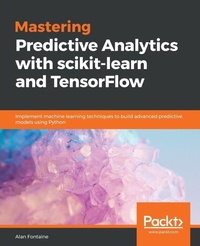
Mastering Predictive Analytics with scikit-learn and TensorFlow
Implement machine learning techniques to build advanced predictive models using Python
Published on 29. September 2018
Book
Paperback/Softback
154 pages
978-1-78961-774-0 (ISBN)
Description
Learn advanced techniques to improve the performance and quality of your predictive models
Key Features
Use ensemble methods to improve the performance of predictive analytics models
Implement feature selection, dimensionality reduction, and cross-validation techniques
Develop neural network models and master the basics of deep learning
Book DescriptionPython is a programming language that provides a wide range of features that can be used in the field of data science. Mastering Predictive Analytics with scikit-learn and TensorFlow covers various implementations of ensemble methods, how they are used with real-world datasets, and how they improve prediction accuracy in classification and regression problems.
This book starts with ensemble methods and their features. You will see that scikit-learn provides tools for choosing hyperparameters for models. As you make your way through the book, you will cover the nitty-gritty of predictive analytics and explore its features and characteristics. You will also be introduced to artificial neural networks and TensorFlow, and how it is used to create neural networks. In the final chapter, you will explore factors such as computational power, along with improvement methods and software enhancements for efficient predictive analytics.
By the end of this book, you will be well-versed in using deep neural networks to solve common problems in big data analysis.
What you will learn
Use ensemble algorithms to obtain accurate predictions
Apply dimensionality reduction techniques to combine features and build better models
Choose the optimal hyperparameters using cross-validation
Implement different techniques to solve current challenges in the predictive analytics domain
Understand various elements of deep neural network (DNN) models
Implement neural networks to solve both classification and regression problems
Who this book is forMastering Predictive Analytics with scikit-learn and TensorFlow is for data analysts, software engineers, and machine learning developers who are interested in implementing advanced predictive analytics using Python. Business intelligence experts will also find this book indispensable as it will teach them how to progress from basic predictive models to building advanced models and producing more accurate predictions. Prior knowledge of Python and familiarity with predictive analytics concepts are assumed.
Key Features
Use ensemble methods to improve the performance of predictive analytics models
Implement feature selection, dimensionality reduction, and cross-validation techniques
Develop neural network models and master the basics of deep learning
Book DescriptionPython is a programming language that provides a wide range of features that can be used in the field of data science. Mastering Predictive Analytics with scikit-learn and TensorFlow covers various implementations of ensemble methods, how they are used with real-world datasets, and how they improve prediction accuracy in classification and regression problems.
This book starts with ensemble methods and their features. You will see that scikit-learn provides tools for choosing hyperparameters for models. As you make your way through the book, you will cover the nitty-gritty of predictive analytics and explore its features and characteristics. You will also be introduced to artificial neural networks and TensorFlow, and how it is used to create neural networks. In the final chapter, you will explore factors such as computational power, along with improvement methods and software enhancements for efficient predictive analytics.
By the end of this book, you will be well-versed in using deep neural networks to solve common problems in big data analysis.
What you will learn
Use ensemble algorithms to obtain accurate predictions
Apply dimensionality reduction techniques to combine features and build better models
Choose the optimal hyperparameters using cross-validation
Implement different techniques to solve current challenges in the predictive analytics domain
Understand various elements of deep neural network (DNN) models
Implement neural networks to solve both classification and regression problems
Who this book is forMastering Predictive Analytics with scikit-learn and TensorFlow is for data analysts, software engineers, and machine learning developers who are interested in implementing advanced predictive analytics using Python. Business intelligence experts will also find this book indispensable as it will teach them how to progress from basic predictive models to building advanced models and producing more accurate predictions. Prior knowledge of Python and familiarity with predictive analytics concepts are assumed.
More details
Language
English
Place of publication
Birmingham
United Kingdom
Dimensions
Height: 235 mm
Width: 191 mm
Thickness: 9 mm
Weight
302 gr
ISBN-13
978-1-78961-774-0 (9781789617740)
Copyright in bibliographic data and cover images is held by Nielsen Book Services Limited or by the publishers or by their respective licensors: all rights reserved.
Schweitzer Classification
Other editions
Additional editions
Alvaro Fuentes
Mastering Predictive Analytics with scikit-learn and TensorFlow
Implement machine learning techniques to build advanced predictive models using Python
E-Book
09/2018
1st Edition
De Gruyter
€23.49
Available for download
Person
Alan Fontaine is a data scientist with more than 12 years of experience in analytical roles. He has been a consultant for many projects in fields such as: business, education, medicine, mass media, among others. He is a big Python fan and has been using it routinely for five years for analyzing data, building models, producing reports, making predictions, and building interactive applications that transform data into intelligence.
Content
Table of Contents
Ensemble Methods for Regression and Classification
Cross-validation and Parameter Tuning
Working with Features
Introduction to Artificial Neural Networks and TensorFlow
Predictive Analytics with TensorFlow and Deep Neural Networks
Ensemble Methods for Regression and Classification
Cross-validation and Parameter Tuning
Working with Features
Introduction to Artificial Neural Networks and TensorFlow
Predictive Analytics with TensorFlow and Deep Neural Networks