

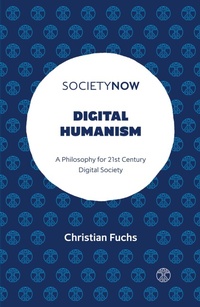
Digital Humanism
A Philosophy for 21st Century Digital Society
Published on 19. September 2022
Book
Paperback/Softback
308 pages
978-1-80382-422-2 (ISBN)
Description
Our contemporary global digital society is not always a good place to live. Authoritarianism, hatred, false news, post-truth culture, the COVID-19 anti-vaccination movement, COVID-19 conspiracy theories, and political polarisation are organised via the Internet. The public sphere is highly polarised. Today, many humans tend to think of other humans mainly in terms of friends and enemies. Robots and Artificial Intelligence-based automation have created new challenges for the world of work. Decades of neoliberalism have increased inequalities. The COVID-19 pandemic has shown the vulnerability of humanity to viruses and health crises.
Humanity and society are in a major crisis and digitalisation mediates this crisis. Digital Humanism explores how Humanism can help us to critically understand how digital technologies shape society and humanity, providing an introduction to Humanism in the digital age. Fuchs introduces the approach of Digital Humanism and outlines foundations of a Radical Digital Humanism, analysing what decolonisation of academia and the study of the digital, media and communication means; what the roles are of robots, automation, and Artificial Intelligence in digital capitalism, and how the communication of death and dying has been mediated by digital technologies, capitalist necropower, and digital capitalism. In order to save humanity and society, we need Radical Digital Humanism now.
Humanity and society are in a major crisis and digitalisation mediates this crisis. Digital Humanism explores how Humanism can help us to critically understand how digital technologies shape society and humanity, providing an introduction to Humanism in the digital age. Fuchs introduces the approach of Digital Humanism and outlines foundations of a Radical Digital Humanism, analysing what decolonisation of academia and the study of the digital, media and communication means; what the roles are of robots, automation, and Artificial Intelligence in digital capitalism, and how the communication of death and dying has been mediated by digital technologies, capitalist necropower, and digital capitalism. In order to save humanity and society, we need Radical Digital Humanism now.
Reviews / Votes
Digital Humanism is the book we have been waiting for. Techno gurus, posthumanists, environmentalists, postcolonialists, post-structuralists will have you believe that humanist ethics is no longer relevant to the contemporary world. Yet, as this book demonstrates unflinchingly, never before has humanism been so relevant to the contemporary period. Humanism offers a philosophical and ethical reflection on the recklessness and havoc wrought by human choices and constitutes an attempt to formulate the conditions for a hospitable social world. Digital Humanism refuses to transform humans into machines and to think of machines as humans. This is why this book is such an important and timely intervention. -- Eva Illouz, Director of Studies at EHESS, ParisMore details
Series
Language
English
Place of publication
Bingley
United Kingdom
Target group
Professional and scholarly
Dimensions
Height: 198 mm
Width: 129 mm
Thickness: 15 mm
Weight
295 gr
ISBN-13
978-1-80382-422-2 (9781803824222)
Copyright in bibliographic data and cover images is held by Nielsen Book Services Limited or by the publishers or by their respective licensors: all rights reserved.
Schweitzer Classification
Other editions
Additional editions

E-Book
09/2022
1st Edition
Emerald Publishing Limited
€22.49
Available for download
Person
Christian Fuchs is one of the world's foremost expert on how to critically study and theorise the roles of social media, digital media and the Internet in society. His fields of research are critical theory, media sociology, communication theory, digital media and society, political economy of communication. He is the Chair Professor of Media Systems and Media Organisation at Paderborn University's Department of Media Studies and is the editor of the journal tripleC: Communication, Capitalism & Critique.
Content
Chapter 1. Introduction
Chapter 2. What is Humanism?
Chapter 3. What is Digital Humanism?
Chapter 4. Decolonising Academia: A Radical Humanist Perspective
Chapter 5. Robots and Artificial Intelligence (AI) in Digital Capitalism
Chapter 6. Policy Discourses on Robots and Artificial Intelligence (AI) in the EU, the USA, and China
Chapter 7. Necropower, Death, and Digital Communication in Covid-19 Capitalism
Chapter 8. Conclusion
Chapter 2. What is Humanism?
Chapter 3. What is Digital Humanism?
Chapter 4. Decolonising Academia: A Radical Humanist Perspective
Chapter 5. Robots and Artificial Intelligence (AI) in Digital Capitalism
Chapter 6. Policy Discourses on Robots and Artificial Intelligence (AI) in the EU, the USA, and China
Chapter 7. Necropower, Death, and Digital Communication in Covid-19 Capitalism
Chapter 8. Conclusion