

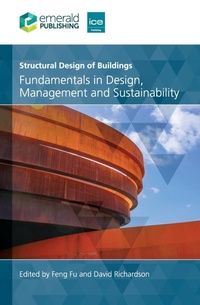
Structural Design of Buildings
Fundamentals in Design, Management and Sustainability
Published on 28. June 2024
Book
Hardback
264 pages
978-1-83549-577-3 (ISBN)
Description
Structural Design of Buildings: Fundamentals in Design, Management and Sustainability is the essential reference for all structural engineers involved in the design of buildings and other structures. The book forms part of the Structural Design of Buildings series and takes a project-oriented approach, covering key issues that design professionals face at the outset of a project such as structural design processes, managing risk, loadings, sustainability, and computational design.
Broken down into the key areas for understanding and undertaking structural design and with a fully international approach, this book features coverage of
design considerations
sustainability in the built environment
BIM
Risk management
different types of loadings
finite element
computational design
materials science
concrete technology.
The book contains information on collaboration with other professionals, design objectives, leadership in design, use of software and a sustainable approach to design. It is a timely and essential read for consultants, designers, technicians and contractors tasked with structural design of buildings.
Broken down into the key areas for understanding and undertaking structural design and with a fully international approach, this book features coverage of
design considerations
sustainability in the built environment
BIM
Risk management
different types of loadings
finite element
computational design
materials science
concrete technology.
The book contains information on collaboration with other professionals, design objectives, leadership in design, use of software and a sustainable approach to design. It is a timely and essential read for consultants, designers, technicians and contractors tasked with structural design of buildings.
More details
Language
English
Place of publication
Bingley
United Kingdom
Target group
Professional and scholarly
Product notice
sewn/stitched
Cloth over boards
Dimensions
Height: 248 mm
Width: 171 mm
Thickness: 16 mm
Weight
635 gr
ISBN-13
978-1-83549-577-3 (9781835495773)
Copyright in bibliographic data and cover images is held by Nielsen Book Services Limited or by the publishers or by their respective licensors: all rights reserved.
Schweitzer Classification
Other editions
Additional editions
Feng Fu | David Richardson
Structural Design of Buildings
Fundamentals in Design, Management and Sustainability
E-Book
06/2024
1st Edition
Emerald Publishing Limited
€86.49
Available for download
Persons
Feng Fu Ph.D., MBA, CEng, FIStructE, FASCE, FICE, FHEA is a Chartered Structural Engineer and Associate Professor of Structural Engineering at the School of Engineering and Mathematical Sciences, City, University London, UK.
David Richardson BEng(Hons) CEng FIStructE FHEA is a Chartered Structural Engineer and Associate Professor of Structural Design at the School of Civil Engineering, University of Leeds, UK.
David Richardson BEng(Hons) CEng FIStructE FHEA is a Chartered Structural Engineer and Associate Professor of Structural Design at the School of Civil Engineering, University of Leeds, UK.
Content
Foreword
Preface
Acknowledgements
Editors
Contributors
Introduction
Chapter 1: Tackling structural engineering projects David Richardson
1.1 Introduction
1.2 Design development
1.3 Project Procurement
1.4 RIBA Plan of Work
1.5 Construction contracts
1.6 CDM regulations
1.7 Other relevant factors
Chapter 2: Managing risk in structural engineering Saeed Ziaie
2.1 Introduction
2.2 Concept of risk
2.3 Project life cycle
2.4 Design process and technical assurance
2.5 CDM
2.6 Construction time, cost and buildability
2.7 Structural adequacy and extreme challenge
2.8 Service loading, statics and dynamics
2.9 Codes of practice
2.10 Innovation, hazards and risks
2.11 Conclusions
Chapter 3: Structural Design Processes Iain A MacLeod & Salam Al-Bizri
3.1 Controlling the design Process
3.1.1 Introduction:
3.1.2 Process map
3.1.3 Sub-processes
3.1.4 Process control strategies
3.1.5 Technical assessment processes
3.1.6 Analysis modelling
3.1.7 Concluding Remarks
3.2 Achieving zero accidents, zero delays and zero defects
3.2.1 Introduction: 3.2.2 A fully integrated organisational framework
3.2.3 Fully integrated organisational framework implementation
3.2.4 Concluding Remarks
Chapter 4: Loading R. B. Marshall
4.1 Introduction
4.2 Typology and method of application
4.3 Combinations of load
4.4 Permanent (dead) loads
4.5 Imposed (live) loads
4.6 Wind loads
4.7 Seismic loads
4.8 Blast loads
4.9 Self-straining load effects
4.10 Fire loads
4.11 Fluid loads
4.12 Silo loads
4.13 Soil/earth loads
4.14 Conclusions
Chapter 5: Introduction to Materials science for structural designers F.A.Veer
5.1 Introduction
5.2 An atomistic point of view of strength, stiffness, expansion, elongation and failure
5.3 Eco-impact of structural materials
5.4 Metals
5.5 Ceramics
5.6 Polymers, composites and wood
5. 7 Advised further reading
Chapter 6: Advances in Concrete Technology Ravindra Kumar Dhir and Chao Qun Lye
6.1 Composite Cement Concrete
6.2 Concrete Chemical Admixtures
6.3 Goepolymer Concrete
6.4 Recycled Aggregate Concrete
6.5 Fibre-Reinforced Concrete
6.6 Nano-Concrete
6.7 Lightweight Aggregate and Heavyweight Aggregate Concrete
6.8 Smart Concretes
6.9 3D Printed Concrete
6.10 Design of Concrete by Performance
6.11 Concluding Remarks
Chapter 7 Sustainability Elisabeth Marlow and Meike Borchers
7.1 Introduction: putting sustainability into a global context
7.2 Sustainable development and policy for the built environment
7.3 Measuring sustainability
7.4 Implementing a sustainable design approach in buildings
7.5 Sustainable urban renewal
7.6 Conclusion
Chapter 8 Computational Design and Finite Element Analysis Peter Debney
8.1 Introduction: Why use Computational Design?
8.2 Benefits of Computational Design
8.3 What is Computational Design?
8.4 Parametric Design
8.5 Finite Element Analysis
8.5 Optimisation
8.6 Putting Computational Design into action
8.7 Conclusion
Chapter 9 Automated BIM collaboration Sepehr Abrishami
9.1 Purpose
9.2 Literature Review
9.3 Research Methodology
9.4 Data Collection: Framework development and validation
Preface
Acknowledgements
Editors
Contributors
Introduction
Chapter 1: Tackling structural engineering projects David Richardson
1.1 Introduction
1.2 Design development
1.3 Project Procurement
1.4 RIBA Plan of Work
1.5 Construction contracts
1.6 CDM regulations
1.7 Other relevant factors
Chapter 2: Managing risk in structural engineering Saeed Ziaie
2.1 Introduction
2.2 Concept of risk
2.3 Project life cycle
2.4 Design process and technical assurance
2.5 CDM
2.6 Construction time, cost and buildability
2.7 Structural adequacy and extreme challenge
2.8 Service loading, statics and dynamics
2.9 Codes of practice
2.10 Innovation, hazards and risks
2.11 Conclusions
Chapter 3: Structural Design Processes Iain A MacLeod & Salam Al-Bizri
3.1 Controlling the design Process
3.1.1 Introduction:
3.1.2 Process map
3.1.3 Sub-processes
3.1.4 Process control strategies
3.1.5 Technical assessment processes
3.1.6 Analysis modelling
3.1.7 Concluding Remarks
3.2 Achieving zero accidents, zero delays and zero defects
3.2.1 Introduction: 3.2.2 A fully integrated organisational framework
3.2.3 Fully integrated organisational framework implementation
3.2.4 Concluding Remarks
Chapter 4: Loading R. B. Marshall
4.1 Introduction
4.2 Typology and method of application
4.3 Combinations of load
4.4 Permanent (dead) loads
4.5 Imposed (live) loads
4.6 Wind loads
4.7 Seismic loads
4.8 Blast loads
4.9 Self-straining load effects
4.10 Fire loads
4.11 Fluid loads
4.12 Silo loads
4.13 Soil/earth loads
4.14 Conclusions
Chapter 5: Introduction to Materials science for structural designers F.A.Veer
5.1 Introduction
5.2 An atomistic point of view of strength, stiffness, expansion, elongation and failure
5.3 Eco-impact of structural materials
5.4 Metals
5.5 Ceramics
5.6 Polymers, composites and wood
5. 7 Advised further reading
Chapter 6: Advances in Concrete Technology Ravindra Kumar Dhir and Chao Qun Lye
6.1 Composite Cement Concrete
6.2 Concrete Chemical Admixtures
6.3 Goepolymer Concrete
6.4 Recycled Aggregate Concrete
6.5 Fibre-Reinforced Concrete
6.6 Nano-Concrete
6.7 Lightweight Aggregate and Heavyweight Aggregate Concrete
6.8 Smart Concretes
6.9 3D Printed Concrete
6.10 Design of Concrete by Performance
6.11 Concluding Remarks
Chapter 7 Sustainability Elisabeth Marlow and Meike Borchers
7.1 Introduction: putting sustainability into a global context
7.2 Sustainable development and policy for the built environment
7.3 Measuring sustainability
7.4 Implementing a sustainable design approach in buildings
7.5 Sustainable urban renewal
7.6 Conclusion
Chapter 8 Computational Design and Finite Element Analysis Peter Debney
8.1 Introduction: Why use Computational Design?
8.2 Benefits of Computational Design
8.3 What is Computational Design?
8.4 Parametric Design
8.5 Finite Element Analysis
8.5 Optimisation
8.6 Putting Computational Design into action
8.7 Conclusion
Chapter 9 Automated BIM collaboration Sepehr Abrishami
9.1 Purpose
9.2 Literature Review
9.3 Research Methodology
9.4 Data Collection: Framework development and validation