


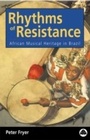
Rhythms of Resistance
African Musical Heritage in Brazil
Published on 20. March 2000
Book
Paperback/Softback
282 pages
978-0-7453-0731-2 (ISBN)
Description
African rhythms are at the heart of contemporary black Brazilian music. Surveying a musical legacy that encompasses over 400 years, Rhythms of Resistance traces the development of this rich cultural heritage.
Acclaimed author Peter Fryer describes how slaves, mariners and merchants brought African music from Angola and the ports of East Africa to Latin America. In particular, they brought it to Brazil - today the country with the largest black population of any outside Africa. Fryer examines how the rhythms and beats of Africa were combined with European popular music to create a unique sound and dance tradition. Fryer focuses on the political nature of this musical crossover and the role of an African heritage in the cultural identity of Brazilian blacks today.
Rhythms of Resistance is an absorbing account of a theme in global music and is rich in fascinating historical detail.
Acclaimed author Peter Fryer describes how slaves, mariners and merchants brought African music from Angola and the ports of East Africa to Latin America. In particular, they brought it to Brazil - today the country with the largest black population of any outside Africa. Fryer examines how the rhythms and beats of Africa were combined with European popular music to create a unique sound and dance tradition. Fryer focuses on the political nature of this musical crossover and the role of an African heritage in the cultural identity of Brazilian blacks today.
Rhythms of Resistance is an absorbing account of a theme in global music and is rich in fascinating historical detail.
Reviews / Votes
'Peter Fryer has now taken the study of the history of Brazilian music to another level' -- Journal of Iberian and Latin American StudiesMore details
Language
English
Place of publication
London
United Kingdom
Target group
Professional and scholarly
Product notice
Paperback (UK-trade)
Illustrations
2 b&w maps, 14 b&w photographs
Dimensions
Height: 234 mm
Width: 156 mm
Thickness: 17 mm
Weight
481 gr
ISBN-13
978-0-7453-0731-2 (9780745307312)
Copyright in bibliographic data and cover images is held by Nielsen Book Services Limited or by the publishers or by their respective licensors: all rights reserved.
Schweitzer Classification
Other editions
Additional editions
E-Book
03/2000
1st Edition
Pluto Press
€122.99
Available for download
Person
Peter Fryer (1927-2006) was a British writer and journalist, whose coverage of the arrival of citizens from the Caribbean onboard the HMT Empire Windrush led to a deep and long-lasting interest in the histories of Black Britons. In 1984, he wrote the classic book Staying Power: The History of Black People in Britain (Pluto, 2018).
Content
Maps
List of illustrations
Preface
Introduction
1. The heritage of Nigeria and Benin: music for worship
2. The Angola heritage: capoeira and berimbau
3. The 'Angola warble': street cries and worksongs
4. Brazil's dramatic dances
5. Three vanished instruments
6. The African dance heritage
7. Brazil's Atlantic dances
8. The emergence of Brazilian popular music
9. Maxixe and urban samba
Appendix A: Continuity and change in the music of the Kongo-Angola culture area
Appendix B: African musical instruments in Brazil
Appendix C: The Brazilian musical heritage in Nigeria and Benin
Appendix D: The music and dance of Cape Verde
Appendix E: Relacao da fofa que veya agora da Bahia: extract
Discography
Notes
Index
List of illustrations
Preface
Introduction
1. The heritage of Nigeria and Benin: music for worship
2. The Angola heritage: capoeira and berimbau
3. The 'Angola warble': street cries and worksongs
4. Brazil's dramatic dances
5. Three vanished instruments
6. The African dance heritage
7. Brazil's Atlantic dances
8. The emergence of Brazilian popular music
9. Maxixe and urban samba
Appendix A: Continuity and change in the music of the Kongo-Angola culture area
Appendix B: African musical instruments in Brazil
Appendix C: The Brazilian musical heritage in Nigeria and Benin
Appendix D: The music and dance of Cape Verde
Appendix E: Relacao da fofa que veya agora da Bahia: extract
Discography
Notes
Index