


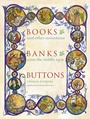
Books, Banks, Buttons
And Other Inventions from the Middle Ages
Published on 14. May 2003
Book
Hardback
240 pages
978-0-231-12812-4 (ISBN)
Description
Once regarded by historians as a period of intellectual stagnation, the Middle Ages were actually a time of extraordinary cultural and technological innovation. This entertaining romp through the inventions of the period tells the story of the first appearance of dozens of items and ideas of lasting significance. From this misunderstood age we get our buttons, our underwear, and our trousers; we entertain ourselves with medieval playing cards, tarot cards, and chess. It was during the Middle Ages that domesticated cats first found their way into our houses, along with glazed windows, dining tables and chairs, and fireplaces. Numerous labor-saving devices originated then as well, including the wheelbarrow, the windmill and watermill, and the effective use of the horse. War became more deadly with the introduction of gunpowder, while travel over water became less so thanks to the compass and the rudder. Time itself emerged into recognizably modern form, with the advent of clocks -- based on the escapement mechanism -- that measured hours of equal length independent of the changing seasons.
More cosmic notions of time developed as well, as the new realm of purgatory broke the traditional dichotomy of heaven and hell. Even Santa Claus first captured the imagination of children during the Middle Ages. Ranging from the invention of eyeglasses (by a now-forgotten layperson who sought to keep his methods secret, the better to profit from them) to the creation of the fork (at first regarded as an instrument of diabolical perversion but embraced when it helped people handle another invention of the age, pasta), this beautifully illustrated volume is a fitting tribute to an era from which we still benefit today.
More cosmic notions of time developed as well, as the new realm of purgatory broke the traditional dichotomy of heaven and hell. Even Santa Claus first captured the imagination of children during the Middle Ages. Ranging from the invention of eyeglasses (by a now-forgotten layperson who sought to keep his methods secret, the better to profit from them) to the creation of the fork (at first regarded as an instrument of diabolical perversion but embraced when it helped people handle another invention of the age, pasta), this beautifully illustrated volume is a fitting tribute to an era from which we still benefit today.
Reviews / Votes
[Frugoni] deftly fashions a narrative that takes readers on an informative, often charming and wryly humorous, journey... What particularly distinguishes this volume, though, is the more than 100 exquisite illustrations that aptly represent social and religious attitudes toward the inventions and innovations of the time... Highly recommended. Choice This enchanting tale, masterfully recounted by a pre-eminent historian of the Middle Ages, reveals the fertile imagination and extraordinary inventiveness of a period whose legacy to the modern world included not just books, banks, and buttons, but also eyeglasses, playing cards, pasta, table forks, underwear, the mechanical clock, and domesticated cats inside the house. Library Journal Written in an engaging and open style with many delightful color illustrations showing the various objects, the book examines such commonplace items as forks, glazed windows, paper watermarks, rudders and wheelbarrows, placing them in their medieval context with the support of contemporary sources. History Magazine It is likely that this book will lead new students to develop a fascination with the Middle Ages while introducing seasoned scholars to topics they have overlooked. -- Michael E. Hoenicke Moore, Southern Illinois University Speculum January 2005 A thoroughly engaging look at the slow, subtle development of civilization. -- Dan Smith Blue Ridge Business Journal 10/3/05 These contents provide a scholarly overview of the changes evinced by era while retaining a readable style and refreshing pace. -- Gray Pleuth Bloomsbury Review 12/1/05More details
Language
English
Place of publication
New York
United States
Target group
Professional and scholarly
Product notice
Cloth over boards
Illustrations
100 s/w Abbildungen
100 color illus.
Dimensions
Height: 281 mm
Width: 213 mm
Weight
907 gr
ISBN-13
978-0-231-12812-4 (9780231128124)
Copyright in bibliographic data is held by Nielsen Book Services Limited or its licensors: all rights reserved.
Schweitzer Classification
Other editions
Additional editions
Book
06/2005
Columbia University Press
€37.17
Article exhausted; check different version
Persons
Chiara Frugoni is professor of medieval history at the University of Rome II, a frequent contributor to La Repubblica and the Manifesto, and the author of many books, including Francis of Assisi: A Life, A Distant City: Images of Urban Experience in the Medieval World, and A Day in the Life of a Medieval City (forthcoming). William McCuaig is a translator living in Toronto.
Content
1. Reading and Keeping the Books2. Time for Pleasure and Time for Duty3. Dressing and Undressing4. And Then Came the Fork5. Making War6. By Land and Sea