

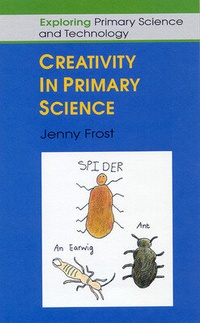
CREATIVITY IN PRIMARY SCIENCE
Published on 16. January 1997
Book
Paperback/Softback
208 pages
978-0-335-19552-7 (ISBN)
Description
* How do primary teachers incorporate all the facets of science in their teaching?
* How do primary teachers plan and replan their science teaching in the light of how children are learning?
* How do primary teachers retain lively and imaginative science teaching within the constraints of a specified curriculum?
This book is about the very best of primary classroom practice in science; six teachers, six schools, six science topics, with children from ages five to eleven years. The teaching and children's learning are described in a straightforward style, richly illustrated by pen and ink drawings made from photographs, and by examples of children's work.
The author has provided a commentary on the particular classroom examples by linking them to a wider discussion of science in primary schools and by sharing the teachers' own rationale for their decisions.
The book was written initially for beginning teachers, but experienced teachers who reviewed the drafts, welcomed the combination of 'real' classroom examples coupled with a more theoretical commentary. Above all, they welcomed the essence of the book which, as the opening sentence indicates, is "about creativity in teaching and a celebration of the skills and expertise of primary teachers in the area of science."
The book will be invaluable reading for both trainee and practising primary school teachers.
* How do primary teachers plan and replan their science teaching in the light of how children are learning?
* How do primary teachers retain lively and imaginative science teaching within the constraints of a specified curriculum?
This book is about the very best of primary classroom practice in science; six teachers, six schools, six science topics, with children from ages five to eleven years. The teaching and children's learning are described in a straightforward style, richly illustrated by pen and ink drawings made from photographs, and by examples of children's work.
The author has provided a commentary on the particular classroom examples by linking them to a wider discussion of science in primary schools and by sharing the teachers' own rationale for their decisions.
The book was written initially for beginning teachers, but experienced teachers who reviewed the drafts, welcomed the combination of 'real' classroom examples coupled with a more theoretical commentary. Above all, they welcomed the essence of the book which, as the opening sentence indicates, is "about creativity in teaching and a celebration of the skills and expertise of primary teachers in the area of science."
The book will be invaluable reading for both trainee and practising primary school teachers.
Reviews / Votes
"Student teachers will find the studies very helpful because of their detail and may gain the confidence to risk trying some imaginative ideas of their own. Science co-ordinators wanting to encourage a more adventurous approach will find the book makes the point well for them." - Times Educational Supplement "...an accessible, helpful book which provides many examples of good practice for teachers to reflect on." - Primary Science Review "...if you would welcome a mixture of encouragement, enlightenment and sound practical advice, then read this excellent littlebook." - QMS "The book is an inspiring read." - Education 3 to 13More details
Person
Jenny Frost taught in West Africa and in a London comprehensive school before joining the Institute of Education in 1970 where she is now a senior lecturer. Her professional interests cover both primary and secondary science, particularly teacher education at preservice and inservice levels. She has undertaken research on the implementation of balanced science courses in secondary schools and is currrently researching the application of statements of competence to the professional development of science teachers. She has undertaken consultancies in UK and abroad. Her writing includes titles in the Nuffield 13-16 series, chapters in Science in the Locality (1985) and consultancy for the primary science series Let's Explore (1992). Her recent book Teaching Science (1995), which she co-authored with several colleagues, explores teaching strategies in secondary science and is characterised by the rich detail of actual classrooms, well illustrated by black and white photographs. Teaching Science and Creativity in Primary Science illustrate her growing interest in the difficult process of describing and analysing significant features of classroom practice.
Content
Acknowledgements
Part one
Introduction
creativity in teaching
Science education
aims and research
Part two: Case studies
Parks, woods and wastelands
'Rabbit's house'
Ourselves
The Channel Tunnel
The River Thames
Seeing and light
Part three
Actions to reflections
References
Index.
Part one
Introduction
creativity in teaching
Science education
aims and research
Part two: Case studies
Parks, woods and wastelands
'Rabbit's house'
Ourselves
The Channel Tunnel
The River Thames
Seeing and light
Part three
Actions to reflections
References
Index.