

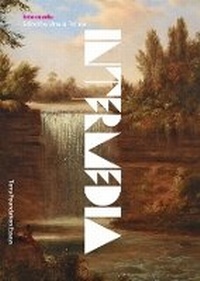
Intermedia: Volume 6
Will be published approx. on 14. February 2023
Book
Paperback/Softback
176 pages
978-0-932171-70-2 (ISBN)
Description
The history of innovative intermedia art practices in America.
In 1965, American artist and Fluxus cofounder Dick Higgins stated that much of the best art being made at the time fell between media. He linked the dismantling of divisions among media to decompartmentalization in society and the impending dawn of a "classless" society. After high art, he wrote, came the deluge brought on by Marcel Duchamp's ready-mades, Robert Rauschenberg's combines, and Alan Kaprow's happenings. Intermedia, the term Higgins selected to describe this trend, referred to works of art that fuse different, often nontraditional, media. In intermedia, boundaries between mediums dissolve and new mediums emerge. Never a prescriptive term, intermedia remains fluid, both as an artistic practice and an art historical category.
The essays in this volume consider a range of subjects from nineteenth- and twentieth-century American art and visual culture, exploring instances of intermedia within specific cultural, social, and historical contexts and in relation to theories of media, image-making, and materiality. They present a rich account of American artistic practice as an open system of medial interrelation and exchange, highlighting experimental cross-pollinations and mutations among artistic forms.
In 1965, American artist and Fluxus cofounder Dick Higgins stated that much of the best art being made at the time fell between media. He linked the dismantling of divisions among media to decompartmentalization in society and the impending dawn of a "classless" society. After high art, he wrote, came the deluge brought on by Marcel Duchamp's ready-mades, Robert Rauschenberg's combines, and Alan Kaprow's happenings. Intermedia, the term Higgins selected to describe this trend, referred to works of art that fuse different, often nontraditional, media. In intermedia, boundaries between mediums dissolve and new mediums emerge. Never a prescriptive term, intermedia remains fluid, both as an artistic practice and an art historical category.
The essays in this volume consider a range of subjects from nineteenth- and twentieth-century American art and visual culture, exploring instances of intermedia within specific cultural, social, and historical contexts and in relation to theories of media, image-making, and materiality. They present a rich account of American artistic practice as an open system of medial interrelation and exchange, highlighting experimental cross-pollinations and mutations among artistic forms.
More details
Series
Language
English
Place of publication
United States
Target group
Professional and scholarly
Illustrations
82 color plates
Dimensions
Height: 241 mm
Width: 171 mm
Thickness: 28 mm
Weight
739 gr
ISBN-13
978-0-932171-70-2 (9780932171702)
Copyright in bibliographic data and cover images is held by Nielsen Book Services Limited or by the publishers or by their respective licensors: all rights reserved.
Schweitzer Classification
Persons
Ursula Frohne is professor of art history at Westfaelische Wilhelms-Universitaet Muenster. Rachael DeLue is the Christopher Binyon Sarofim '86 Professor in American Art in the Department of Art & Archaeology at Princeton University. She is editor of Picturing and the author, most recently, of Arthur Dove: Always Connect.
Content
1) Michelle Smiley, "The Circulating Medium: Joseph Saxton, Minting, and the American Daguerreotype"
2) Anna Arabindan-Kesson, "From Poetry into Paint: Robert S. Duncanson and The Song of Hiawatha"
3) Maggie M. Cao, "The Readymade and the Counterfeit: The Material Conditions of Art and Money"
4) Sebastian Egenhofer, "Optics and Humor: Light, Pictures, and Subjectivity in the Work of Dan Graham"
5) Eva Ehninger, "Visualizing the City: Interrelations between Painting and Photography"
6) Natilee Harren, "Proposals for Intermedia Art Education: Robert Watts' Experimental Workshop at the University of California, Santa Cruz, 1968-1969"
2) Anna Arabindan-Kesson, "From Poetry into Paint: Robert S. Duncanson and The Song of Hiawatha"
3) Maggie M. Cao, "The Readymade and the Counterfeit: The Material Conditions of Art and Money"
4) Sebastian Egenhofer, "Optics and Humor: Light, Pictures, and Subjectivity in the Work of Dan Graham"
5) Eva Ehninger, "Visualizing the City: Interrelations between Painting and Photography"
6) Natilee Harren, "Proposals for Intermedia Art Education: Robert Watts' Experimental Workshop at the University of California, Santa Cruz, 1968-1969"