

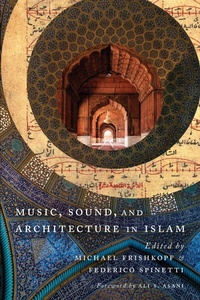
Music, Sound, and Architecture in Islam
Published on 13. March 2018
Book
Paperback/Softback
480 pages
978-1-4773-1246-9 (ISBN)
Description
Tracing the connections between music making and built space in both historical and contemporary times, Music, Sound, and Architecture in Islam brings together domains of intellectual reflection that have rarely been in dialogue to promote a greater understanding of the centrality of sound production in constructed environments in Muslim religious and cultural expression.
Representing the fields of ethnomusicology, anthropology, art history, architecture, history of architecture, religious studies, and Islamic studies, the volume's contributors consider sonic performances ranging from poetry recitation to art, folk, popular, and ritual musics-as well as religious expressions that are not usually labeled as "music" from an Islamic perspective-in relation to monumental, vernacular, ephemeral, and landscape architectures; interior design; decoration and furniture; urban planning; and geography. Underscoring the intimate relationship between traditional Muslim sonic performances, such as the recitation of the Qur'an or devotional songs, and conventional Muslim architectural spaces, from mosques and Sufi shrines to historic aristocratic villas, gardens, and gymnasiums, the book reveals Islam as an ideal site for investigating the relationship between sound and architecture, which in turn proves to be an innovative and significant angle from which to explore Muslim cultures.
Representing the fields of ethnomusicology, anthropology, art history, architecture, history of architecture, religious studies, and Islamic studies, the volume's contributors consider sonic performances ranging from poetry recitation to art, folk, popular, and ritual musics-as well as religious expressions that are not usually labeled as "music" from an Islamic perspective-in relation to monumental, vernacular, ephemeral, and landscape architectures; interior design; decoration and furniture; urban planning; and geography. Underscoring the intimate relationship between traditional Muslim sonic performances, such as the recitation of the Qur'an or devotional songs, and conventional Muslim architectural spaces, from mosques and Sufi shrines to historic aristocratic villas, gardens, and gymnasiums, the book reveals Islam as an ideal site for investigating the relationship between sound and architecture, which in turn proves to be an innovative and significant angle from which to explore Muslim cultures.
Reviews / Votes
This volume presents a compelling case for increased attention to sound as both a design principle and a primary factor that shapes the social utility of built environments....the chapters provide a powerful demonstration of the multifaceted ways that the interaction between sounds and surfaces can hold meaning for the people who create, experience, and transform them...The difficult task that the editors have undertaken to create a multidisciplinary and multisensory exploration of sound and space is accomplished admirably while leaving room for further exploration of sound and space in Islamic cultures that were not included in the volume. (Ethnomusicology)More details
Language
English
Place of publication
Austin, TX
United States
Target group
Professional and scholarly
Dimensions
Height: 230 mm
Width: 156 mm
Thickness: 32 mm
Weight
759 gr
ISBN-13
978-1-4773-1246-9 (9781477312469)
Copyright in bibliographic data and cover images is held by Nielsen Book Services Limited or by the publishers or by their respective licensors: all rights reserved.
Schweitzer Classification
Persons
MICHAEL FRISHKOPF is a professor of music and Director of the Canadian Centre for Ethnomusicology at the University of Alberta. He is the editor of Music and Media in the Arab World.
FEDERICO SPINETTI is a professor of ethnomusicology at the University of Cologne. He is the editor of Giuseppe Donizetti Pasha: Musical and Historical Trajectories between Italy and Turkey.
FEDERICO SPINETTI is a professor of ethnomusicology at the University of Cologne. He is the editor of Giuseppe Donizetti Pasha: Musical and Historical Trajectories between Italy and Turkey.
Content
List of Figures, Plates, Charts, and Tables
Foreword, by Ali S. Asani
Acknowledgments
Introduction: Music, Sound, and Architecture in Islam, by Michael Frishkopf and Federico Spinetti
Part One: Transregional
1. Listening to Islamic Gardens and Landscapes, by D. Fairchild Ruggles
Part Two: The Ottoman Empire and Turkey
2. A Sound Status among the Ottoman Elite: Architectural Patrons of Sixteenth-Century Istanbul Mosques and Their Recitation Programs, by Nina Ergin
3. A Concert Platform: A Space for a Style in Turkish Music, by John Morgan O'Connell
4. Articulating Otherness in the Construction of Alevi-Bektasi Rituals and Ritual Space in a Transnational Perspective, by Irene Markoff
Part Three: The Arab World
5. Venerating Cairo's Saints through Monument and Ritual: Islamic Reform and the Rise of the Architext, by Michael Frishkopf
6. Nightingales and Sweet Basil: The Cultural Geography of Aleppine Song, by Jonathan H. Shannon
7. Aural Geometry: Poetry, Music, and Architecture in the Arabic Tradition, by Samer Akkach
Part Four: Andalusia and Europe
8. Tents of Silk and Trees of Light in the Lands of Najd: The Aural and the Visual at a Mawlid Celebration in the Alhambra, by Cynthia Robinson
9. Aristocratic Residences and the Majlis in Umayyad COrdoba, by Glaire D. Anderson
10. Sounds of Love and Hate: Sufi Rap, Ghetto Patrimony, and the Concrete Politics of the French Urban Periphery, by Paul A. Silverstein
Part Five: Central and South Asia
11. Ideal Form and Meaning in Sufi Shrines of Pakistan: A Return to the Spirit, by Kamil Khan Mumtaz
12. The Social and Sacred Microcosm of the Kiiz UEi: Space and Sound in Rituals for the Dead among the Kazakhs of Mongolia, by Saida Daukeyeva
Part Six: Iran
13. Listening to Pictures in Iran, by Anthony Welch
14. Of Mirrors and Frames: Music, Sound, and Architecture at the Iranian Zurkhaneh, by Federico Spinetti
References
Contributors
Index
Foreword, by Ali S. Asani
Acknowledgments
Introduction: Music, Sound, and Architecture in Islam, by Michael Frishkopf and Federico Spinetti
Part One: Transregional
1. Listening to Islamic Gardens and Landscapes, by D. Fairchild Ruggles
Part Two: The Ottoman Empire and Turkey
2. A Sound Status among the Ottoman Elite: Architectural Patrons of Sixteenth-Century Istanbul Mosques and Their Recitation Programs, by Nina Ergin
3. A Concert Platform: A Space for a Style in Turkish Music, by John Morgan O'Connell
4. Articulating Otherness in the Construction of Alevi-Bektasi Rituals and Ritual Space in a Transnational Perspective, by Irene Markoff
Part Three: The Arab World
5. Venerating Cairo's Saints through Monument and Ritual: Islamic Reform and the Rise of the Architext, by Michael Frishkopf
6. Nightingales and Sweet Basil: The Cultural Geography of Aleppine Song, by Jonathan H. Shannon
7. Aural Geometry: Poetry, Music, and Architecture in the Arabic Tradition, by Samer Akkach
Part Four: Andalusia and Europe
8. Tents of Silk and Trees of Light in the Lands of Najd: The Aural and the Visual at a Mawlid Celebration in the Alhambra, by Cynthia Robinson
9. Aristocratic Residences and the Majlis in Umayyad COrdoba, by Glaire D. Anderson
10. Sounds of Love and Hate: Sufi Rap, Ghetto Patrimony, and the Concrete Politics of the French Urban Periphery, by Paul A. Silverstein
Part Five: Central and South Asia
11. Ideal Form and Meaning in Sufi Shrines of Pakistan: A Return to the Spirit, by Kamil Khan Mumtaz
12. The Social and Sacred Microcosm of the Kiiz UEi: Space and Sound in Rituals for the Dead among the Kazakhs of Mongolia, by Saida Daukeyeva
Part Six: Iran
13. Listening to Pictures in Iran, by Anthony Welch
14. Of Mirrors and Frames: Music, Sound, and Architecture at the Iranian Zurkhaneh, by Federico Spinetti
References
Contributors
Index