

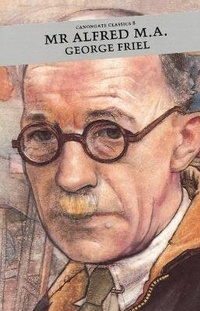
Mr Alfred, M.A.
Published on 1. July 2010
Book
Paperback/Softback
192 pages
978-0-86241-163-3 (ISBN)
Description
Introduced by Douglas Gifford. Mr Alfred is an elderly schoolteacher dogged by a sense of failure. The rejection of his poetry and his nightly escape to the pub all contribute to his malaise. Perhaps most harrowing is his innocent but obsessive love for Rose, one of his pupils. This 'affair' is maliciously reported and he is torn from his familiar job and transferred to an even rougher school. Against a nightmarish background of gang warfare and public desecration the story reaches a frightening climax. This novel provides significant observation of a critical period in the saga of modern, urban youth. But its most striking achievement is in its portrait of Mr Alfred whose values and sensitive nature are so tragically at odds with his environment.
Reviews / Votes
'A bright book, full of perceptions.' The TimesMore details
Edition
Main
Language
English
Place of publication
Edinburgh
United Kingdom
Product notice
Paperback (UK-B)
Dimensions
Height: 129 mm
Width: 198 mm
ISBN-13
978-0-86241-163-3 (9780862411633)
Copyright in bibliographic data and cover images is held by Nielsen Book Services Limited or by the publishers or by their respective licensors: all rights reserved.
Schweitzer Classification
Other editions
Additional editions
Persons
George Friel was born in 1910, the fourth of seven children. He attended Glasgow University, where he began to write. Until 1940 he worked as a teacher. After serving in the war he returned to live in Bishopbriggs, where he resumed his teaching career. He wrote slowly, and his three great novels were published between 1964 and 1972; The Glasgow Trilogy includes The Boy who Wanted Peace, Mr Alfred MA and Grace and Miss Partridge. His refusal to compromise and his integrity were out of fashion for his times, and he experienced much rejection during his lifetime. It is ironic that the literary rediscovery and rebirth of Scotland, of which he is so important a part, began shortly after his death in 1975.