

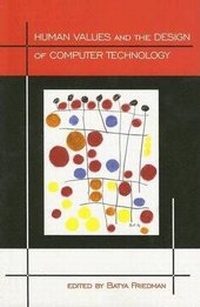
Human Values and the Design of Computer Technology
Published on 15. November 2004
Book
Paperback/Softback
334 pages
978-1-57586-080-0 (ISBN)
Description
Human values - including accountability, privacy, autonomy, and respect for person - emerge from the computer systems that we build and how we choose to use them. Yet, important questions on human values and system design have remained largely unexplored. If human values are controversial, then on what basis do some values override others in the design of, for example, hardware, algorithms, and databases? Do users interact with computer systems as social actors? If so, should designers of computer persona and agents seek to build on such human tendencies, or check them? How have design decisions in hospitals, research labs, and computer corporations protected or degraded such values? This volume brings together leading researchers and system designers who take up these questions, and more.
Reviews / Votes
"Hot stuff." Michael Swaine, Dr. Dobb's JournalMore details
Series
Language
English
Place of publication
Stanford
United States
Target group
Professional and scholarly
Product notice
Paperback (trade)
Dimensions
Height: 228 mm
Width: 152 mm
Thickness: 20 mm
Weight
465 gr
ISBN-13
978-1-57586-080-0 (9781575860800)
Copyright in bibliographic data and cover images is held by Nielsen Book Services Limited or by the publishers or by their respective licensors: all rights reserved.
Schweitzer Classification
Person
Content
Introduction; Part I. Conceptualizing Human Values in Design: 1. Bias in computer systems; 2. Accountability in a computerized society; 3. Disability, inability, and cyberspace; 4. Do categories have politics? The language/action perspective reconsidered; 5. Categories, disciplines, and social coordination; 6. Commentary on Suchman article and Winograd response; 7. Social impact statements: Engaging public participation in information technology design; Part II. Computers as Persons? - Implications for Design: 8. Computers are social actors: a review of current research; 9. When the interface is a face: 'social' human-computer interaction; 10. 'It's the computer's fault' : reasoning about computers as moral agents; 11. Interface agents: metaphors with character; 12. Human agency and responsible computing: Implications for computer system design; Part III. Practising Value-Sensitive Design: 13. Workplace database systems: difficulties of data collection and presentation; 14. Eliminating a hardware switch: weighing economics and values in a design decision; 15. Steps toward universal access within a communications company; 16. Social choice about privacy: intelligent vehicle-highway systems in the United States.