

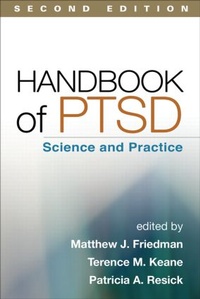
Handbook of PTSD
Science and Practice
2nd Edition
Published on 8. August 2014
Book
Hardback
718 pages
978-1-4625-1617-9 (ISBN)
Description
*Major revision of the leading scientific work in the field: 70% new material includes numerous new chapters.
*Addresses important changes in the DSM-5 (including a new diagnostic category for PTSD); Friedman chaired the DSM-5 Work Group on PTSD.
*Hot topic with perennial demand, including increasing interest from the VA.
*Stellar editors and contributors provide unparalleled expertise and insight.
*Addresses important changes in the DSM-5 (including a new diagnostic category for PTSD); Friedman chaired the DSM-5 Work Group on PTSD.
*Hot topic with perennial demand, including increasing interest from the VA.
*Stellar editors and contributors provide unparalleled expertise and insight.
Reviews / Votes
.-_x000D_A scholarly tour de force. The virtuosity lies in the convergence of three factors of any significant writing endeavor: aspiration, organization, and, most critically, execution....It is hard to imagine anyone working in the field of PTSD...who would not find this comprehensive collection of reviews grounding as well as inspirational. (on the first edition)--PsycCRITIQUES, 7/30/2008??_x000D_Highly organized, balanced, evidence based, and comprehensive....An essential resource for anyone who works as a clinician or researcher in the trauma field, and it is recommended for residency and graduate training programs....Irrespective of the reader's school of thought, discipline, or level of training, this book provides a multitude of ways to enrich and inspire a better understanding of this complex field. (on the first edition)--New England Journal of Medicine, 6/1/2008??_x000D_The editors have assembled voices from psychology and psychiatry, research, and clinical practice. Superb editing ensures that the writing is nearly seamless, sounding as though it were written by a single author rather than by many expert contributors....Each chapter raises the level of discourse about traumatic stress in ways that are integrative rather than divisive....Friedman, Keane, and Resick provide a clear roadmap for the next 10 years of research and clinical innovation. (on the first edition)--Journal of Trauma & Dissociation, 4/1/2009??_x000D_Anyone looking for a sophisticated introduction to trauma and PTSD will find the Handbook of PTSD an excellent resource that will provide a solid review of scholarship and practice. (on the first edition)--Social Service Review, 3/1/2009??_x000D_This second edition offers a comprehensive view of PTSD, using a historical perspective in combination with the most relevant research to present updated concepts....The book proves to be a strong resource for improving readers' overall comprehension of virtually every aspect of PTSD.--Doody's Review Service, 7/21/2015More details
Edition
2nd edition
Language
English
Place of publication
New York
United States
Publishing group
Guilford Publications
Target group
College/higher education
Professional and scholarly
Clinicians and researchers in clinical psychology, psychiatry, social work, psychiatric nursing, and counseling. Serves as a text in graduate-level courses.
Dimensions
Height: 254 mm
Width: 178 mm
Weight
1570 gr
ISBN-13
978-1-4625-1617-9 (9781462516179)
Copyright in bibliographic data and cover images is held by Nielsen Book Services Limited or by the publishers or by their respective licensors: all rights reserved.
Schweitzer Classification
Other editions
New editions
Matthew J. Friedman | Terence M. Keane | Paula P. Schnurr
Handbook of PTSD, Third Edition
Science and Practice
Book
10/2021
3rd Edition
Guilford Press
€129.50
Shipment within 15-20 days
Additional editions
Book
12/2015
2nd Edition
Guilford Press
€71.98
Article exhausted; check for reprint
Persons
Matthew J. Friedman, MD, PhD, was Executive Director of the National Center for PTSD, White River Junction VA Medical Center, for almost 25 years. He now serves as Senior Advisor to the Center and remains Professor of Psychiatry and of Pharmacology and Toxicology at the Geisel School of Medicine at Dartmouth College. In 2014 he helped to establish the National PTSD Brain Bank, a collaborative effort of the National Center for PTSD and other leading academic and research institutions. Dr. Friedman is a Distinguished Lifetime Fellow of the American Psychiatric Association, past president of the International Society for Traumatic Stress Studies (ISTSS), and past chair of the scientific advisory board of the Anxiety and Depression Association of America (ADAA). He chaired the American Psychiatric Association's DSM-5 Work Group that developed diagnostic criteria for PTSD and related disorders. He is a recipient of the ISTSS Lifetime Achievement Award, among many other honors. Terence M. Keane, PhD, is Director of the Behavioral Sciences Division of the National Center for PTSD, Associate Chief of Staff for Research at the VA Boston Healthcare System, and Professor of Psychiatry and Assistant Dean for Research at Boston University School of Medicine. Dr. Keane is past president of ADAA, ISTSS, and the Division of Trauma Psychology of the American Psychological Association (APA Division 56). He is a recipient of the ISTSS Lifetime Achievement Award, among many other awards. Patricia A. Resick, PhD, ABPP, is Professor in the Department of Psychiatry and Behavioral Sciences at Duke University Medical Center. She was Director of the Women's Health Sciences Division of the National Center for PTSD at VA Boston Healthcare System from 2003 to 2013. Dr. Resick has served on the editorial boards of nine scientific journals, as Associate Editor of the Journal of Consulting and Clinical Psychology, and as president of ISTSS and of the Association for Behavioral and Cognitive Therapies (ABCT). She is a recipient of awards including the Robert S. Laufer Memorial Award for Outstanding Scientific Achievement from ISTSS, the Leadership Award from the Association for VA Psychologist Leaders, the Outstanding Contributions Award for Educational/Training Activities from ABCT, and the Lifetime Achievement Award from APA Division 56.
Content
I. Historical Overview: Setting the Context
1. PTSD from DSM-III to DSM-5: Progress and Challenges, Matthew J. Friedman, Patricia A. Resick, and Terence M. Keane
2. DSM-5 Criteria for PTSD, Matthew J. Friedman and Patricia A. Resick
3. The History of Psychic Trauma, Lars Weisaeth
4. A Psychological History of PTSD, Candice M. Monson, Matthew J. Friedman, and Heidi La Bash
II. Scientific Foundations and Theoretical Perspectives
5. Advances in Design and Analysis in Trauma Research, Daniel W. King, Lynda A. King, Anica Pless Kaiser, and Lewina O. Lee
6. Epidemiology of Trauma and PTSD, Fran H. Norris and Laurie B. Slone
7. Child Traumatic Stress: Prevalence, Trends, Risk, and Impact, John A. Fairbank, Frank W. Putnam, and William W. Harris
8. Risk Pathways for PTSD: Making Sense of the Literature, Dawne S. Vogt, Daniel W. King, and Lynda A. King
9. Psychological Theories of PTSD, Seth J. Gillihan, Shawn P. Cahill, and Edna B. Foa
10. Neurocognitive Alterations Associated with PTSD: Neuropsychological Deficits, Information-Processing Biases, and Implications for Mild Traumatic Brain Injury, Jennifer J. Vasterling and Sara Lippa
11. Remembering and Forgetting, Chris R. Brewin
12. Trauma-Induced Dissociation, Anne P. DePrince and Jennifer J. Freyd
13. The Dissociative Subtype of PTSD, Ruth A. Lanius, Erika J. Wolf, Mark W. Miller, Paul A. Frewen, Eric Vermetten, Bethany Brand, and David Spiegel
14. Neurocircuitry and Neuroplasticity in PTSD, Michael Nash, Isaac Galatzer-Levy, John H. Krystal, Ronald Duman, and Alexander Neumeister
15. Integrating the Neuroendocrinology, Neurochemistry, and Neuroimmunology of PTSD to Date and the Challenges Ahead, Ann M. Rasmusson and Arieh Y. Shalev
16. Genetics of PTSD, Karestan C. Koenen, Guia Guffanti, Lulu Yan, Michele Haloossim, Monica Uddin, Nicole R. Nugent, and Ananda Amstadter
17. Gender Issues in PTSD, Rachel Kimerling, Julie C. Weitlauf, Katherine M. Iverson, Julie A. Karpenko, and Shaili Jain
18. A Developmental Perspective on Childhood Traumatic Stress, Adam D. Brown, Emily Becker-Weidman, and Glenn N. Saxe
19. Trauma in Older Adults, Joan M. Cook, Avron Spiro III, and Danny G. Kaloupek
III. Clinical Practice: Evidence-Based State of the Art
20. Assessment of PTSD and Its Comorbidities in Adults, Annemarie F. Reardon, Deborah J. Brief, Mark W. Miller, and Terence M. Keane
21. Assessment of Childhood PTSD, Ernestine C. Briggs, Kate Nooner, and Lisa M. Amaya-Jackson
22. Early Interventions for Trauma, Richard A. Bryant
23. Psychosocial Treatments for Adults with PTSD, Patricia A. Resick, Candice M. Monson, Cassidy A. Gutner, and Marta M. Maslej
24. Psychosocial Treatments for Children and Adolescents with PTSD, Judith A. Cohen and Anthony P. Mannarino
25. Empirically Supported Couple and Family Therapies for PTSD, Candice M. Monson, Alexandra Macdonald, Steffany J. Fredman, Jeremiah A. Schumm, and Casey Taft
26. Group Treatments for PTSD: What Do We Know and What Do We Need to Know?, J. Gayle Beck and Denise M. Sloan
27. Pharmacotherapy for PTSD, Matthew J. Friedman and Jonathan R. T. Davidson
28. Trauma Exposure, PTSD, and Physical Health, Paula P. Schnurr, Jennifer S. Wachen, Bonnie L. Green, and Stacey Kaltman
29. Culture and PTSD, Roberto Lewis-Fernandez, Devon E. Hinton, and Luana Marques
30. PTSD and the Law: Forensic Considerations, Dean G. Kilpatrick and Alexander C. McFarlane
IV. Emerging Territory
31. Internet-Based Interventions for PTSD, Alyssa Boasso, Hanna Kadesch, and Brett T. Litz
32. Telemental Health Technology and PTSD Care, Leslie A. Morland, Julia E. Hoffman, Carolyn J. Greene, and Craig S. Rosen
33. Resilience, Steve M. Southwick, Heather Douglas-Palumberi, and Robert H. Pietrzak
34. Public Mental Health Interventions Following Disasters and Mass Violence, Patricia J. Watson, Laura Gibson, and Josef I. Ruzek
35. Implementation of Best Practices for Management of PTSD and Other Trauma-Related Problems, Josef I. Ruzek and Sara J. Landes
36. Key Questions and an Agenda for Future Research, Matthew J. Friedman, Patricia A. Resick, and Terence M. Keane
1. PTSD from DSM-III to DSM-5: Progress and Challenges, Matthew J. Friedman, Patricia A. Resick, and Terence M. Keane
2. DSM-5 Criteria for PTSD, Matthew J. Friedman and Patricia A. Resick
3. The History of Psychic Trauma, Lars Weisaeth
4. A Psychological History of PTSD, Candice M. Monson, Matthew J. Friedman, and Heidi La Bash
II. Scientific Foundations and Theoretical Perspectives
5. Advances in Design and Analysis in Trauma Research, Daniel W. King, Lynda A. King, Anica Pless Kaiser, and Lewina O. Lee
6. Epidemiology of Trauma and PTSD, Fran H. Norris and Laurie B. Slone
7. Child Traumatic Stress: Prevalence, Trends, Risk, and Impact, John A. Fairbank, Frank W. Putnam, and William W. Harris
8. Risk Pathways for PTSD: Making Sense of the Literature, Dawne S. Vogt, Daniel W. King, and Lynda A. King
9. Psychological Theories of PTSD, Seth J. Gillihan, Shawn P. Cahill, and Edna B. Foa
10. Neurocognitive Alterations Associated with PTSD: Neuropsychological Deficits, Information-Processing Biases, and Implications for Mild Traumatic Brain Injury, Jennifer J. Vasterling and Sara Lippa
11. Remembering and Forgetting, Chris R. Brewin
12. Trauma-Induced Dissociation, Anne P. DePrince and Jennifer J. Freyd
13. The Dissociative Subtype of PTSD, Ruth A. Lanius, Erika J. Wolf, Mark W. Miller, Paul A. Frewen, Eric Vermetten, Bethany Brand, and David Spiegel
14. Neurocircuitry and Neuroplasticity in PTSD, Michael Nash, Isaac Galatzer-Levy, John H. Krystal, Ronald Duman, and Alexander Neumeister
15. Integrating the Neuroendocrinology, Neurochemistry, and Neuroimmunology of PTSD to Date and the Challenges Ahead, Ann M. Rasmusson and Arieh Y. Shalev
16. Genetics of PTSD, Karestan C. Koenen, Guia Guffanti, Lulu Yan, Michele Haloossim, Monica Uddin, Nicole R. Nugent, and Ananda Amstadter
17. Gender Issues in PTSD, Rachel Kimerling, Julie C. Weitlauf, Katherine M. Iverson, Julie A. Karpenko, and Shaili Jain
18. A Developmental Perspective on Childhood Traumatic Stress, Adam D. Brown, Emily Becker-Weidman, and Glenn N. Saxe
19. Trauma in Older Adults, Joan M. Cook, Avron Spiro III, and Danny G. Kaloupek
III. Clinical Practice: Evidence-Based State of the Art
20. Assessment of PTSD and Its Comorbidities in Adults, Annemarie F. Reardon, Deborah J. Brief, Mark W. Miller, and Terence M. Keane
21. Assessment of Childhood PTSD, Ernestine C. Briggs, Kate Nooner, and Lisa M. Amaya-Jackson
22. Early Interventions for Trauma, Richard A. Bryant
23. Psychosocial Treatments for Adults with PTSD, Patricia A. Resick, Candice M. Monson, Cassidy A. Gutner, and Marta M. Maslej
24. Psychosocial Treatments for Children and Adolescents with PTSD, Judith A. Cohen and Anthony P. Mannarino
25. Empirically Supported Couple and Family Therapies for PTSD, Candice M. Monson, Alexandra Macdonald, Steffany J. Fredman, Jeremiah A. Schumm, and Casey Taft
26. Group Treatments for PTSD: What Do We Know and What Do We Need to Know?, J. Gayle Beck and Denise M. Sloan
27. Pharmacotherapy for PTSD, Matthew J. Friedman and Jonathan R. T. Davidson
28. Trauma Exposure, PTSD, and Physical Health, Paula P. Schnurr, Jennifer S. Wachen, Bonnie L. Green, and Stacey Kaltman
29. Culture and PTSD, Roberto Lewis-Fernandez, Devon E. Hinton, and Luana Marques
30. PTSD and the Law: Forensic Considerations, Dean G. Kilpatrick and Alexander C. McFarlane
IV. Emerging Territory
31. Internet-Based Interventions for PTSD, Alyssa Boasso, Hanna Kadesch, and Brett T. Litz
32. Telemental Health Technology and PTSD Care, Leslie A. Morland, Julia E. Hoffman, Carolyn J. Greene, and Craig S. Rosen
33. Resilience, Steve M. Southwick, Heather Douglas-Palumberi, and Robert H. Pietrzak
34. Public Mental Health Interventions Following Disasters and Mass Violence, Patricia J. Watson, Laura Gibson, and Josef I. Ruzek
35. Implementation of Best Practices for Management of PTSD and Other Trauma-Related Problems, Josef I. Ruzek and Sara J. Landes
36. Key Questions and an Agenda for Future Research, Matthew J. Friedman, Patricia A. Resick, and Terence M. Keane