

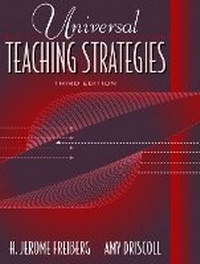
Universal Teaching Strategies
3rd Edition
Published on 1. September 1999
Book
Paperback/Softback
480 pages
978-0-205-30285-7 (ISBN)
Description
This text presents teaching from three specific actions - Organizing, Instructing, and Assessing - and is divided into three sections which reflect each of these teaching actions. The strategies presented in each section are truly universal in nature - they cut across grade levels, subject areas, and teaching situations. The book emphasizes Context, Content, and Learner as essential elements in the decision-making process. This text bridges the gap between theory, research, and practice with clear and effective writing, and a framework that combines the context, content, and learner with what teachers need in the real world: organizing, instructing, and assessing. Universal Teaching Strategies expands both the pedagogical teaching knowledge of teachers and their instructional repertoires.
More details
Edition
3rd edition
Language
English
Place of publication
United States
Publishing group
Pearson Education (US)
Target group
Professional and scholarly
Dimensions
Height: 240 mm
Width: 180 mm
Thickness: 25 mm
Weight
720 gr
ISBN-13
978-0-205-30285-7 (9780205302857)
Copyright in bibliographic data and cover images is held by Nielsen Book Services Limited or by the publishers or by their respective licensors: all rights reserved.
Schweitzer Classification
Other editions
New editions
H. Jerome Freiberg | Amy Driscoll
Universal Teaching Strategies
Book
09/2004
4th Edition
Pearson
€151.76
Article exhausted; check for reprint
Content
Most chapters begin with "Introduction" and end with "Summary," "Reference(s)," and "Samples and Examples."
PREFACE.
I.ORGANIZING STRATEGIES.
1.Teaching for Tomorrow: Context, Content, and Learners.
Universal Teaching Strategies.
The Context of Teaching for Tomorrow.
The Content of Teaching for Tomorrow.
The Learners of Today and Tomorrow.
Facing Tomorrow.
2.Planning for Instruction: Visualizing What Could Be.
Three Voices of Planning.
Functions of Planning.
Planning Phases.
Considerations for Planning.
Sources of Information for Planning.
Students with Special Needs.
3.Designing Effective Instruction: Creating a Blueprint.
Models of Instructional Design.
Designs for Varied Time Periods.
Lesson Beginnings and Endings.
Instructional Objectives.
Instructional Design and Inclusion.
Efficiency in Design.
Collaborative Planning and Designs.
4.The Effective Use of Time: Doing More with Less.
Thinking about Time for Teaching and Learning.
Time and the Inclusive Classroom.
Time Savers.
5.Classroom Management: Advancework.
Context Advancework.
Content Advancework.
Learner Advancework.
6.Classroom Management: Beyond Discipline.
Classroom Management Strategies.
Models of Classroom Management.
Smoothness and Momentum.
Students with Special Needs.
II.INSTRUCTING STRATEGIES.
7.Lecture: From Passive to Active Learning.
Style without Substance.
Learner, Context, and Content.
Teacher Control.
Teaching Note Taking.
8.Questioning and Discussion: Creating a Dialogue.
Types of Questions.
Cautions and Concerns.
Classroom Discussion.
Other Key Points.
9.Interactive Practice for Learning: Beyond Drill.
Content.
Context.
Learner.
Interactive Practice Strategies.
10.Grouping for Instruction: Involvement and Interaction.
Implications for Grouping.
Grouping for Teaching and Learning.
11.Reflective Teaching and Learning: Students as Shareholders.
Context.
Learner.
Content.
Reflective Teaching Strategies.
12.Making Learning Real: Engaging Students in Content.
Context.
Content.
Learner.
Teaching with Improvisation and Service Learning.
Teaching Roles for Improvisation and Service Learning.
13.Using Community Resources, Audiovisuals, Computers, and Multimedia: Varying the Stimuli.
Using Community Resources, Audiovisuals, Computers, and Multimedia.
Audiovisual Stimuli.
Computers and Multimedia.
III.ASSESSING STRATEGIES.
14.Assessment of Learning: Let Me Count the Ways.
Purposes of Assessment.
How to Assess Learning - Let Me Count the Ways.
Assessment and Inclusion.
Final Considerations for Assessment.
15.Self-Improvement through Self-Assessment.
Self-Assessment: Creating Change from Within.
Two Teachers Analyze Their Classrooms.
Student Feedback.
Student Feedback Instruments.
Data from Peer Observations.
Author Index.
Subject Index.
PREFACE.
I.ORGANIZING STRATEGIES.
1.Teaching for Tomorrow: Context, Content, and Learners.
Universal Teaching Strategies.
The Context of Teaching for Tomorrow.
The Content of Teaching for Tomorrow.
The Learners of Today and Tomorrow.
Facing Tomorrow.
2.Planning for Instruction: Visualizing What Could Be.
Three Voices of Planning.
Functions of Planning.
Planning Phases.
Considerations for Planning.
Sources of Information for Planning.
Students with Special Needs.
3.Designing Effective Instruction: Creating a Blueprint.
Models of Instructional Design.
Designs for Varied Time Periods.
Lesson Beginnings and Endings.
Instructional Objectives.
Instructional Design and Inclusion.
Efficiency in Design.
Collaborative Planning and Designs.
4.The Effective Use of Time: Doing More with Less.
Thinking about Time for Teaching and Learning.
Time and the Inclusive Classroom.
Time Savers.
5.Classroom Management: Advancework.
Context Advancework.
Content Advancework.
Learner Advancework.
6.Classroom Management: Beyond Discipline.
Classroom Management Strategies.
Models of Classroom Management.
Smoothness and Momentum.
Students with Special Needs.
II.INSTRUCTING STRATEGIES.
7.Lecture: From Passive to Active Learning.
Style without Substance.
Learner, Context, and Content.
Teacher Control.
Teaching Note Taking.
8.Questioning and Discussion: Creating a Dialogue.
Types of Questions.
Cautions and Concerns.
Classroom Discussion.
Other Key Points.
9.Interactive Practice for Learning: Beyond Drill.
Content.
Context.
Learner.
Interactive Practice Strategies.
10.Grouping for Instruction: Involvement and Interaction.
Implications for Grouping.
Grouping for Teaching and Learning.
11.Reflective Teaching and Learning: Students as Shareholders.
Context.
Learner.
Content.
Reflective Teaching Strategies.
12.Making Learning Real: Engaging Students in Content.
Context.
Content.
Learner.
Teaching with Improvisation and Service Learning.
Teaching Roles for Improvisation and Service Learning.
13.Using Community Resources, Audiovisuals, Computers, and Multimedia: Varying the Stimuli.
Using Community Resources, Audiovisuals, Computers, and Multimedia.
Audiovisual Stimuli.
Computers and Multimedia.
III.ASSESSING STRATEGIES.
14.Assessment of Learning: Let Me Count the Ways.
Purposes of Assessment.
How to Assess Learning - Let Me Count the Ways.
Assessment and Inclusion.
Final Considerations for Assessment.
15.Self-Improvement through Self-Assessment.
Self-Assessment: Creating Change from Within.
Two Teachers Analyze Their Classrooms.
Student Feedback.
Student Feedback Instruments.
Data from Peer Observations.
Author Index.
Subject Index.