

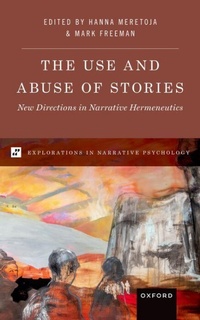
The Use and Abuse of Stories
New Directions in Narrative Hermeneutics
Published on 27. June 2023
Book
Hardback
392 pages
978-0-19-757102-6 (ISBN)
Description
Narrative practice has come under attack in the current "post-truth" era. In fact, many associate "narrative hermeneutics"--the field of inquiry concerned with reflection on the meaning and interpretation of stories--directly with this putative movement beyond truth.
Challenging this view, The Use and Abuse of Stories argues that this broad arena of inquiry instead serves as a vitally important vehicle for addressing and redressing the social and political problems at hand. Hanna Meretoja and Mark Freeman have gathered an interdisciplinary group of esteemed authors to explore how interpretation is relevant to current discussions in narrative studies and to the broader debate that revolves around issues of truth, facts, and narrative. The contributions turn to the tradition of narrative hermeneutics to emphasize that narrative is a cultural meaning-making practice that is integral to how we make sense of who we are and who we could be.
Addressing topics ranging from the dangers of political narratives to questions of truth in medical and psychiatric practice, this volume shows how narrative hermeneutics contributes to topical debates both in interdisciplinary narrative studies and in the current cultural and political situation in which issues of truth have gained new urgency.
Challenging this view, The Use and Abuse of Stories argues that this broad arena of inquiry instead serves as a vitally important vehicle for addressing and redressing the social and political problems at hand. Hanna Meretoja and Mark Freeman have gathered an interdisciplinary group of esteemed authors to explore how interpretation is relevant to current discussions in narrative studies and to the broader debate that revolves around issues of truth, facts, and narrative. The contributions turn to the tradition of narrative hermeneutics to emphasize that narrative is a cultural meaning-making practice that is integral to how we make sense of who we are and who we could be.
Addressing topics ranging from the dangers of political narratives to questions of truth in medical and psychiatric practice, this volume shows how narrative hermeneutics contributes to topical debates both in interdisciplinary narrative studies and in the current cultural and political situation in which issues of truth have gained new urgency.
Reviews / Votes
This innovative collection brings together experts from a range of fields including literature, psychology, philosophy, education, and medicine to explore the dangers of narrative and the recuperative possibilities of a narrative hermeneutics. Timely, and wide-ranging in scope, this book will be of great value to scholars and practitioners who want to understand why stories are so pervasive in a 'post-truth' era and how they may yet spark our political imagination. * Sujatha Fernandes, author of Curated Stories: The Uses and Misuses of Storytelling (Oxford, 2017) * This is a necessary book for these times. Amid darkness, suspicion, and cold estrangement come searchers to shed light on our shipwreck. These essays clear an intellectually rigorous path from post-truth to reciprocal solicitude for the Other. Authentic dialogue and relation are again within reach. * Rita Charon, author of Narrative Medicine: Honoring the Stories of Illness * We human beings are hopelessly hermeneutical beings. We can't help but make up stories-be they 'true' or 'false' or somewhere in between-to make sense of our lives, ourselves, our worlds. This volume, an impressive collection of solid and wide-ranging scholarship, constitutes a searching, sorely-needed meditation on the role of the narrative turn itself in both contributing to-and countering-the emergence of our so-called 'post-truth' age. It's a book which narrativists in every field, not to mention politicians of every stripe, should take seriously indeed. * William L. Randall, author of The Narrative Complexity of Ordinary Life: Tales from the Coffee Shop * How can we humans live amid increasingly violent conflicting interpretations of our world and each other? These essays allow readers to judge how far narrative hermeneutics can help with this troubling problem. * Arthur Frank, author of Letting Stories Breathe and King Lear: Shakespeare's Dark Consolations *More details
Series
Language
English
Place of publication
New York
United States
Target group
Professional and scholarly
Product notice
sewn/stitched
Cloth over boards
Dimensions
Height: 237 mm
Width: 162 mm
Thickness: 30 mm
Weight
644 gr
ISBN-13
978-0-19-757102-6 (9780197571026)
Copyright in bibliographic data and cover images is held by Nielsen Book Services Limited or by the publishers or by their respective licensors: all rights reserved.
Schweitzer Classification
Other editions
Additional editions
Mark P. Freeman | Hanna Meretoja
The Use and Abuse of Stories
New Directions in Narrative Hermeneutics
E-Book
05/2023
OUP eBook
€69.99
Available for download
Mark P. Freeman | Hanna Meretoja
The Use and Abuse of Stories
New Directions in Narrative Hermeneutics
E-Book
05/2023
OUP eBook
€69.99
Available for download
Persons
Hanna Meretoja is Professor of Comparative Literature and Director of SELMA: Centre for the Study of Storytelling, Experientiality and Memory at the University of Turku (Finland) and Principal Investigator in the Academy of Finland research consortium "Instrumental Narratives: The Limits of Storytelling and New Story-Critical Narrative Theory" (2018-2023). Her monographs include The Ethics of Storytelling: Narrative Hermeneutics, History, and the Possible (Oxford, 2018) and The Narrative Turn in Fiction and Theory (2014), and she has co-edited The Routledge Companion to Literature and Trauma (2020, with Colin Davis) and Storytelling and Ethics: Literature, Visual Arts and the Power of Narrative (2018), Memory Studies special issue "Cultural Memorial Forms" (2021, with Eneken Laanes), and Poetics Today special issue "Critical Approaches to the Storytelling Boom" (2022, with Maria Maekelae).
Mark Freeman is Distinguished Professor of Ethics and Society in the
Department of Psychology at the College of the Holy Cross. He is the author of numerous works, including Rewriting the Self: History, Memory, Narrative (1993); Hindsight: The Promise and Peril of Looking Backward (Oxford, 2010); The Priority of the Other: Thinking and Living Beyond the Self (Oxford, 2014); and, most recently, Do I Look at You with Love? Reimagining the Story of Dementia (2021). Winner of the Theodore R. Sarbin Award from the Society for Theoretical and Philosophical Psychology and the Joseph B. Gittler Award from the American Psychological Foundation, Freeman is a Fellow in the American Psychological Association and serves as Editor for the Oxford University Press series "Explorations in Narrative Psychology."
Mark Freeman is Distinguished Professor of Ethics and Society in the
Department of Psychology at the College of the Holy Cross. He is the author of numerous works, including Rewriting the Self: History, Memory, Narrative (1993); Hindsight: The Promise and Peril of Looking Backward (Oxford, 2010); The Priority of the Other: Thinking and Living Beyond the Self (Oxford, 2014); and, most recently, Do I Look at You with Love? Reimagining the Story of Dementia (2021). Winner of the Theodore R. Sarbin Award from the Society for Theoretical and Philosophical Psychology and the Joseph B. Gittler Award from the American Psychological Foundation, Freeman is a Fellow in the American Psychological Association and serves as Editor for the Oxford University Press series "Explorations in Narrative Psychology."
Content
Introduction: Challenges and Prospects of Narrative Hermeneutics in Tumultuous Times
Hanna Meretoja and Mark Freeman
Part I: Politics of Storytelling
Chapter 1: The Inevitability, and Danger, of Narrative
Mark Freeman
Chapter 2: Testimony: Truth, Lies, and the Hermeneutics of Suspicion
Colin Davis
Chapter 3: Hermeneutic Awareness in Uncertain Times: Post-truth, Narrative Agency, and Existential Diminishment
Hanna Meretoja
Part II: Understanding the Self
Chapter 4: Verstehen and narrative
Jens Brockmeier
Chapter 5: "Be Loyal to the Story": Sorrow, Narrative, and Truth-telling
Molly Andrews
Chapter 6: Narrative as an Interpretation of Self-Pattern
Shaun Gallagher
Chapter 7: Speaking of Elves, Dragons, and Werewolves: Narrative Hermeneutics and Other-than-Human Identities
Clive Baldwin, Lauren Ripley, and Shania Arsenault
Part III: Understanding the Other
Chapter 8: Identity, Understanding, and Narrative
Georgia Warnke
Chapter 9: Found in Translation: Solicitude and Linguistic Hospitality in Storytelling
Andreea Deciu Ritivoi
Chapter 10: The Hermeneutics of Darkness: Interpreting Perpetrators on their Crimes
Brian Schiff, Kaylee Altimore, and Genevieve Bougher
Chapter 11: Perpetrator Histories, Silencing and Untold Stories: A View from Contemporary Psychoanalysis
Roger Frie
Part IV: Narrative Practices
Chapter 12: Literary and Film Narratives
Jakob Lothe
Chapter 13: Queer Perspectives on Narrative Practices in Asylum Politics
Ada Schwanck
Chapter 14: Narrative Medicine: The Book at the Gates of Biomedicine
Danielle Spencer
Chapter 15: Psychiatric Truth and Narrative Hermeneutics
Bradley Lewis
Index
Hanna Meretoja and Mark Freeman
Part I: Politics of Storytelling
Chapter 1: The Inevitability, and Danger, of Narrative
Mark Freeman
Chapter 2: Testimony: Truth, Lies, and the Hermeneutics of Suspicion
Colin Davis
Chapter 3: Hermeneutic Awareness in Uncertain Times: Post-truth, Narrative Agency, and Existential Diminishment
Hanna Meretoja
Part II: Understanding the Self
Chapter 4: Verstehen and narrative
Jens Brockmeier
Chapter 5: "Be Loyal to the Story": Sorrow, Narrative, and Truth-telling
Molly Andrews
Chapter 6: Narrative as an Interpretation of Self-Pattern
Shaun Gallagher
Chapter 7: Speaking of Elves, Dragons, and Werewolves: Narrative Hermeneutics and Other-than-Human Identities
Clive Baldwin, Lauren Ripley, and Shania Arsenault
Part III: Understanding the Other
Chapter 8: Identity, Understanding, and Narrative
Georgia Warnke
Chapter 9: Found in Translation: Solicitude and Linguistic Hospitality in Storytelling
Andreea Deciu Ritivoi
Chapter 10: The Hermeneutics of Darkness: Interpreting Perpetrators on their Crimes
Brian Schiff, Kaylee Altimore, and Genevieve Bougher
Chapter 11: Perpetrator Histories, Silencing and Untold Stories: A View from Contemporary Psychoanalysis
Roger Frie
Part IV: Narrative Practices
Chapter 12: Literary and Film Narratives
Jakob Lothe
Chapter 13: Queer Perspectives on Narrative Practices in Asylum Politics
Ada Schwanck
Chapter 14: Narrative Medicine: The Book at the Gates of Biomedicine
Danielle Spencer
Chapter 15: Psychiatric Truth and Narrative Hermeneutics
Bradley Lewis
Index