


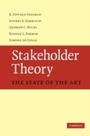
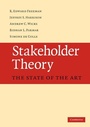
Stakeholder Theory
The State of the Art
1st Edition
Published on 1. April 2010
Book
Hardback
362 pages
978-0-521-19081-7 (ISBN)
Description
In 1984, R. Edward Freeman published his landmark book, Strategic Management: A Stakeholder Approach, a work that set the agenda for what we now call stakeholder theory. In the intervening years, the literature on stakeholder theory has become vast and diverse. This book examines this body of research and assesses its relevance for our understanding of modern business. Beginning with a discussion of the origins and development of stakeholder theory, it shows how this corpus of theory has influenced a variety of different fields, including strategic management, finance, accounting, management, marketing, law, health care, public policy, and environment. It also features in-depth discussions of two important areas that stakeholder theory has helped to shape and define: business ethics and corporate social responsibility. The book concludes by arguing that we should re-frame capitalism in the terms of stakeholder theory so that we come to see business as creating value for stakeholders.
Reviews / Votes
'The book is a great tool for those who want to have a deep understanding of different perspectives of stakeholder theory. It draws together research of over thirty years as it has been applied in a number of business contexts, in a way that allows readers to understand the evolution of theory, how it has been applied and what future avenues need exploration.' Michael Jay Polonsky, Deakin University, Melbourne 'Ed Freeman and his colleagues have produced an erudite, subtle, vigorously argued account of stakeholder theory. Their provocative book will not be the last word on the subject, but it is the best contribution so far to an extraordinarily important conversation.' Edwin Hartman, New York UniversityMore details
Language
English
Place of publication
Cambridge
United Kingdom
Target group
Professional and scholarly
Illustrations
5 Line drawings, unspecified
Dimensions
Height: 260 mm
Width: 183 mm
Thickness: 24 mm
Weight
876 gr
ISBN-13
978-0-521-19081-7 (9780521190817)
Copyright in bibliographic data and cover images is held by Nielsen Book Services Limited or by the publishers or by their respective licensors: all rights reserved.
Schweitzer Classification
Other editions
Additional editions
E-Book
04/2010
1st Edition
Cambridge University Press
€38.49
Available for download
Book
04/2010
1st Edition
Cambridge University Press
€63.80
Shipment within 15-20 days
E-Book
04/2010
1st Edition
Cambridge University Press
€31.99
Available for download
Persons
R. Edward Freeman is Olsson Professor of Business Administration and Co-Director of the Olsson Center for Applied Ethics at the Darden School of Business, University of Virginia. Jeffrey S. Harrison is the W. David Robbins Chair of Strategic Management and Director of the Innovation and Entrepreneurship Program at the Robins School of Business, University of Richmond. Andrew C. Wicks is Associate Professor of Business Administration, Co-Director of the Olsson Center for Ethics, and Academic Advisor for the Business Roundtable Institute for Corporate Ethics at the Darden School of Business, University of Virginia. Bidhan Parmar is Lecturer in Business Administration at the Darden School of Business, University of Virginia. Simone de Colle is a PhD candidate in management and business ethics at the Darden School of Business, University of Virginia.
Content
List of figures; Acknowledgements; Preface; Part I. The Genesis of Stakeholder Theory: 1. The problems that stakeholder theory tries to solve; 2. The development of stakeholder theory: a brief history; 3. Stakeholder theory, pragmatism, and method; Part II. Stakeholder Theory and the Traditional Disciplines of Business: 4. Stakeholder theory and strategic management; 5. Stakeholder theory in finance, accounting, management and marketing; 6. Stakeholder theory in law, health care, public policy and environment; Part III. Stakeholder Theory, Ethics, and Corporate Social Responsibility (CSR): 7. Stakeholder theory and business ethics; 8. Stakeholder theory and corporate social responsibility (CSR); Part IV. Stakeholder Theory: Some Future Possibilities: 9. Stakeholder theory and capitalism; 10. Questions on the horizon; Bibliography; Index.