

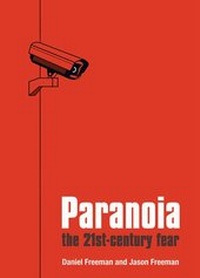
Paranoia
The 21st Century Fear
Published on 23. October 2008
Book
Hardback
198 pages
978-0-19-923750-0 (ISBN)
Description
Are we living in a uniquely paranoid age? Catalysed by the threat of terrorism, fears about others have reached a new intensity. The roll call of apparent dangers seems to increase by the day: muggers, child abductors, drug dealers, hoodied teenagers. Crime has apparently reached such high levels that CCTV cameras are required in every town centre, and parents are so fearful that many children never go out alone.
Until recently, no one suspected just how common paranoia was. But new research suggests that around a quarter of us have regular paranoid thoughts, and probably lots more have them occasionally. Paranoia is so prevalent that there 's a very good chance that all of us will, at some point in our lives, be among the 25%.
Yet, although paranoia is as common as depression or anxiety, most of us know almost nothing about it. What is paranoia? What causes it? Are some people more prone to paranoia than others? Are we more paranoid now than we used to be? How should we deal with our paranoid thoughts? And how can we reduce the amount of paranoia in our society? Co-written by one of the world 's leading psychologists of paranoia, and drawing on the latest scientific research, this lively and accessible book answers
these key questions, highlighting for the first time the central role of paranoia in our world today.
Until recently, no one suspected just how common paranoia was. But new research suggests that around a quarter of us have regular paranoid thoughts, and probably lots more have them occasionally. Paranoia is so prevalent that there 's a very good chance that all of us will, at some point in our lives, be among the 25%.
Yet, although paranoia is as common as depression or anxiety, most of us know almost nothing about it. What is paranoia? What causes it? Are some people more prone to paranoia than others? Are we more paranoid now than we used to be? How should we deal with our paranoid thoughts? And how can we reduce the amount of paranoia in our society? Co-written by one of the world 's leading psychologists of paranoia, and drawing on the latest scientific research, this lively and accessible book answers
these key questions, highlighting for the first time the central role of paranoia in our world today.
Reviews / Votes
Wide-ranging, up-to-date and enjoyable, it is a must-read for anyone curious about human psychology and modern life. * Professor Richard Bentall, Bangor University * An absorbing, entertaining, and illuminating examination of one of the defining topics of the age. * Professor Aaron T.Beck, University of Philadelphia * Highlights the astonishing prevalence of paranoia in society while catching a hold of what paranoia is, what causes it, and what feelings it can generate. Taking a scientific perspective, it's accessible and authoritative at the same time. * Irish Times * An iconoclastic analysis of modern-day paranoia; highly recommended. * Library Journal *More details
Language
English
Place of publication
Oxford
United Kingdom
Illustrations
10 B&W halftones
Dimensions
Height: 178 mm
Width: 127 mm
Thickness: 18 mm
Weight
264 gr
ISBN-13
978-0-19-923750-0 (9780199237500)
Copyright in bibliographic data and cover images is held by Nielsen Book Services Limited or by the publishers or by their respective licensors: all rights reserved.
Schweitzer Classification
Persons
Daniel Freeman is a Wellcome Trust Fellow at the Institute of Psychiatry, King's College London, and a consultant clinical psychologist in the South London and Maudsley NHS Trust. He publishes prolifically in the leading international journals, makes regular keynote addresses at international conferences, and is an Associate Editor of the British Journal of Clinical Psychology. He studied natural sciences at Cambridge University, specialising in experimental
psychology, and has completed doctorates in psychology and clinical psychology at the Institute of Psychiatry, King's College London. He is a co-author of the first self-help book for people affected by suspicious thoughts Overcoming Paranoid and Suspicious Thoughts (Freeman, D., Freeman, J., & Garety, P.;
Robinson Constable; 2006).
Jason Freeman is a freelance writer and editor working in the areas of popular psychology and self-help, film, and children's fiction. He is the co-author of Overcoming Paranoid and Suspicious Thoughts.
psychology, and has completed doctorates in psychology and clinical psychology at the Institute of Psychiatry, King's College London. He is a co-author of the first self-help book for people affected by suspicious thoughts Overcoming Paranoid and Suspicious Thoughts (Freeman, D., Freeman, J., & Garety, P.;
Robinson Constable; 2006).
Jason Freeman is a freelance writer and editor working in the areas of popular psychology and self-help, film, and children's fiction. He is the co-author of Overcoming Paranoid and Suspicious Thoughts.
Content
1. Introduction ; 2. What is paranoia? ; 3. Are paranoid fears increasing? ; 4. The causes of paranoia: how we see ourselves and others ; 5. How we feel inside ; 6. How we reason ; 7. Combating paranoia ; 8. Conclusion