

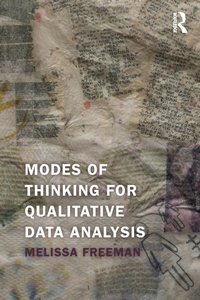
Modes of Thinking for Qualitative Data Analysis
1st Edition
Published on 20. September 2016
Book
Paperback/Softback
136 pages
978-1-62958-179-8 (ISBN)
Description
Modes of Thinking for Qualitative Data Analysis argues for engagement with the conceptual underpinnings of five prominent analytical strategies used by qualitative researchers: Categorical Thinking, Narrative Thinking, Dialectical Thinking, Poetical Thinking, and Diagrammatical Thinking. By presenting such disparate modes of research in the space of a single text, Freeman not only draws attention to the distinct methodological and theoretical contributions of each, she also establishes a platform for choosing among particular research strategies by virtue of their strengths and limitations. Experienced qualitative researchers, novices, and graduate students from many disciplines will gain new insight from the theory-practice relationship of analysis advanced in this text.
Reviews / Votes
"We've long needed this book, a book which would take students and scholars alike through the complex process of doing qualitative analysis. Melissa Freeman's Modes of Thinking for Qualitative Data Analysis meets these needs. Its creative, comparative focus on forms of thinking, from categorical, to narrative, dialectical, poetical, diagrammatical, opens new windows on how to interpret empirical material." - Norman K. Denzin, University of Illinois, Urbana-Champaign"Melissa Freeman has developed a compelling typology for understanding qualitative work... Her work counters the standard classifications which connect methods with a particular methodology or tradition and leads to confusion. Instead, she argues persuasively, and with examples, that for a truly reflexive stance and a critical understanding of research, researchers must engage in "pentimento," or must see again, to understand essences and create innovative possibilities." - Lynn Butler-Kisber, McGill University
More details
Language
English
Place of publication
Walnut Creek
United States
Target group
College/higher education
Professional and scholarly
Product notice
Paperback (trade)
Unsewn / adhesive bound
Illustrations
6 s/w Zeichnungen, 2 s/w Tabellen
2 Tables, black and white; 6 Line drawings, black and white
Dimensions
Height: 229 mm
Width: 152 mm
Thickness: 9 mm
Weight
237 gr
ISBN-13
978-1-62958-179-8 (9781629581798)
Copyright in bibliographic data and cover images is held by Nielsen Book Services Limited or by the publishers or by their respective licensors: all rights reserved.
Schweitzer Classification
Other editions
New editions
Melissa Freeman
Modes of Thinking for Qualitative Data Analysis
Book
06/2025
2nd Edition
Routledge
€76.10
Shipment within 10-20 days
Additional editions
Melissa Freeman
Modes of Thinking for Qualitative Data Analysis
Book
09/2016
1st Edition
Left Coast Press Inc
€183.50
Article exhausted; check for reprint
Person
Melissa Freeman is Professor of Qualitative Research Methodologies in the College of Education at The University of Georgia.
Content
Contents
List of Tables and Figures
Preface
Introduction
Why Focus on Analysis?
Thinking, not Thought
Brief Introduction to the Modes of Thinking
Modes of Thinking for Qualitative Data Analysis
The Modes of Thinking in Dynamic Relation
Categorical Thinking
Introduction to Categorical Thinking
Characteristics of Categorical Thinking
Categorical Thinking in Practice
Deciding on Categorical Thinking for Analysis
Narrative Thinking
Introduction to Narrative Thinking
Characteristics of Narrative Thinking
Narrative Thinking in Practice
Deciding on Narrative Thinking for Analysis
Dialectical Thinking
Introduction to Dialectical Thinking
Characteristics of Dialectical Thinking
Dialectical Thinking in Practice
Deciding on Dialectical Thinking for Analysis
Poetical Thinking
Introduction to Poetical Thinking
Characteristics of Poetical Thinking
Poetical Thinking in Practice
Deciding on Poetical Thinking for Analysis
Diagrammatical Thinking
Introduction to Diagrammatical Thinking
Characteristics of Diagrammatical Thinking
Diagrammatical Thinking in Practice
Deciding on Diagrammatical Thinking for Analysis
Teaching Qualitative Analysis
On Diversity
On Tradition
On Reflexive Dialogical Practice
Final Thoughts
List of Tables and Figures
Table 1.1: Modes of Thinking for Qualitative Data Analysis page xx
Table 4.1: Two Approaches to Dialectical Thinking in Practice page xx
Figure 1.1: Modes of Thinking in Dynamic Relation page xx
Figure 2.1: Connecting Categories to Concepts page xx
Figure 3.1: Dimensions of Plot page xx
Figure 4.1: Dialectical Friction and Emergence page xx
Figure 5.1: Poetics as Infinite Dialogue page xx
Figure 6.1: A Phenomenon Becoming page xx
List of Tables and Figures
Preface
Introduction
Why Focus on Analysis?
Thinking, not Thought
Brief Introduction to the Modes of Thinking
Modes of Thinking for Qualitative Data Analysis
The Modes of Thinking in Dynamic Relation
Categorical Thinking
Introduction to Categorical Thinking
Characteristics of Categorical Thinking
Categorical Thinking in Practice
Deciding on Categorical Thinking for Analysis
Narrative Thinking
Introduction to Narrative Thinking
Characteristics of Narrative Thinking
Narrative Thinking in Practice
Deciding on Narrative Thinking for Analysis
Dialectical Thinking
Introduction to Dialectical Thinking
Characteristics of Dialectical Thinking
Dialectical Thinking in Practice
Deciding on Dialectical Thinking for Analysis
Poetical Thinking
Introduction to Poetical Thinking
Characteristics of Poetical Thinking
Poetical Thinking in Practice
Deciding on Poetical Thinking for Analysis
Diagrammatical Thinking
Introduction to Diagrammatical Thinking
Characteristics of Diagrammatical Thinking
Diagrammatical Thinking in Practice
Deciding on Diagrammatical Thinking for Analysis
Teaching Qualitative Analysis
On Diversity
On Tradition
On Reflexive Dialogical Practice
Final Thoughts
List of Tables and Figures
Table 1.1: Modes of Thinking for Qualitative Data Analysis page xx
Table 4.1: Two Approaches to Dialectical Thinking in Practice page xx
Figure 1.1: Modes of Thinking in Dynamic Relation page xx
Figure 2.1: Connecting Categories to Concepts page xx
Figure 3.1: Dimensions of Plot page xx
Figure 4.1: Dialectical Friction and Emergence page xx
Figure 5.1: Poetics as Infinite Dialogue page xx
Figure 6.1: A Phenomenon Becoming page xx